

يدعم نمو الشعر النشط للعناية بالشعر: روتين بسيط
Editorial Teamقائمة المحتويات
- لماذا الجذور الصحية مهمة لنمو الشعر النشط
- مكونات طبيعية لنمو الشعر تدعم البصيلات بالفعل
- قم ببناء روتين نمو الشعر الذي يناسب يومك
- كم من الوقت يستغرق نمو الشعر ؟ الجداول الزمنية الواقعية
- اختيار منتجات نمو الشعر بدون الضجيج
- كيف تقيس التقدم وتعرف متى ترى طبيب الأمراض الجلدية
- خامسا - الاستنتاج
- الاسئلة المتكررة
آخر تحديث: 17 أكتوبر 2026
Why Healthy Roots Matter for Active Hair Growth
Hair growth starts at the root, not the ends. A scalp-focused routine is the foundation for hair that looks fuller, feels stronger, and sheds less over time.
Active hair growth is the phase when a follicle is producing a new strand, and that process depends on a scalp that is clean, calm, and well-nourished.
That is why we treat scalp care as the first step, not an afterthought.
Shedding vs. Breakage vs. Pattern Hair Loss
These three look similar in the shower drain but have different causes. Shedding is whole strands falling from the root, often seasonal or stress-related. Breakage is strands snapping mid-length, usually from heat, hard water, or rough brushing. Pattern hair loss is a gradual thinning at the temples or crown, driven by genetics and hormones (pubmed.ncbi.nlm.nih.gov).
The distinction matters because the fix is different. Breakage responds well to gentler handling and hydration. Shedding often settles once scalp health improves. Pattern hair loss needs a dermatologist's input, and no cosmetic product should promise to reverse it.
Natural Ingredients for Hair Growth That Actually Support the Follicle
Botanical ingredients can support the scalp environment, but they work best when each one has a clear job. The strongest natural ingredients for hair growth are the ones with a documented role in scalp comfort, moisture retention, or strand strength.
Our approach is simple: fewer ingredients, each chosen for a purpose, listed in plain language. That is what transparency means to us.
Rosemary, Black Seed, and Castor Oil: What Each One Does
- Rosemary oil supports scalp health and healthy-looking hair growth, and it is one of the most studied botanicals for scalp stimulation.
- Black seed oil helps nourish the scalp and reduce breakage, which matters for hair that snaps before it reaches length.
- Castor oil supports moisture retention and stronger-looking hair, sealing hydration into dry strands.
Paired with a nutrient-rich botanical oil blend, these three form the base of our Organic Growth Oil (AED 120.00). It is a concentrated blend designed to nourish the scalp and create the right environment for stronger, fuller-looking hair.

Build a Hair Growth Routine That Fits Your Day
A hair growth routine only works if it survives real life, work, gym, sleep, and a climate that makes heavy products uncomfortable. The version below is built around application order, frequency, and wash-out, because those three decisions matter more than the number of products you own.
The weekly rhythm
Think in three layers: scalp nights, wash days, and daily handling.
- Scalp nights (two to three per week): apply a few drops of botanical oil directly to the scalp, not the lengths. Part the hair in sections so the oil reaches the skin rather than sitting on top of strands.
- Massage (3-5 minutes): use fingertips or a scalp massager in small circles, moving from the hairline to the crown. This distributes the oil and loosens surface buildup without tugging at the root.
- Leave on for several hours or overnight: a shower cap keeps pillows and bedding clean and helps the oil stay where it was placed.
- Wash the next morning: use a gentle cleansing shampoo, focusing on the scalp rather than the ends. One shampoo is usually enough; a second pass only on the scalp if the oil feels heavy.
Application order that actually matters
- Scalp first, lengths last. Oil belongs on the scalp; conditioner belongs on the lengths. Reversing this is the most common reason people say oil "weighs my hair down."
- Massage before washing, not after. Massaging oiled scalp is gentler than massaging clean, wet hair, which stretches and snaps easily.
- Cleanse the scalp, condition the ends. Shampoo at the root, conditioner from mid-length to tips, and rinse thoroughly, residue at the scalp is a common cause of itching and buildup.
- Detangle before styling. Comb damp hair gently before any heat or tension, not after.
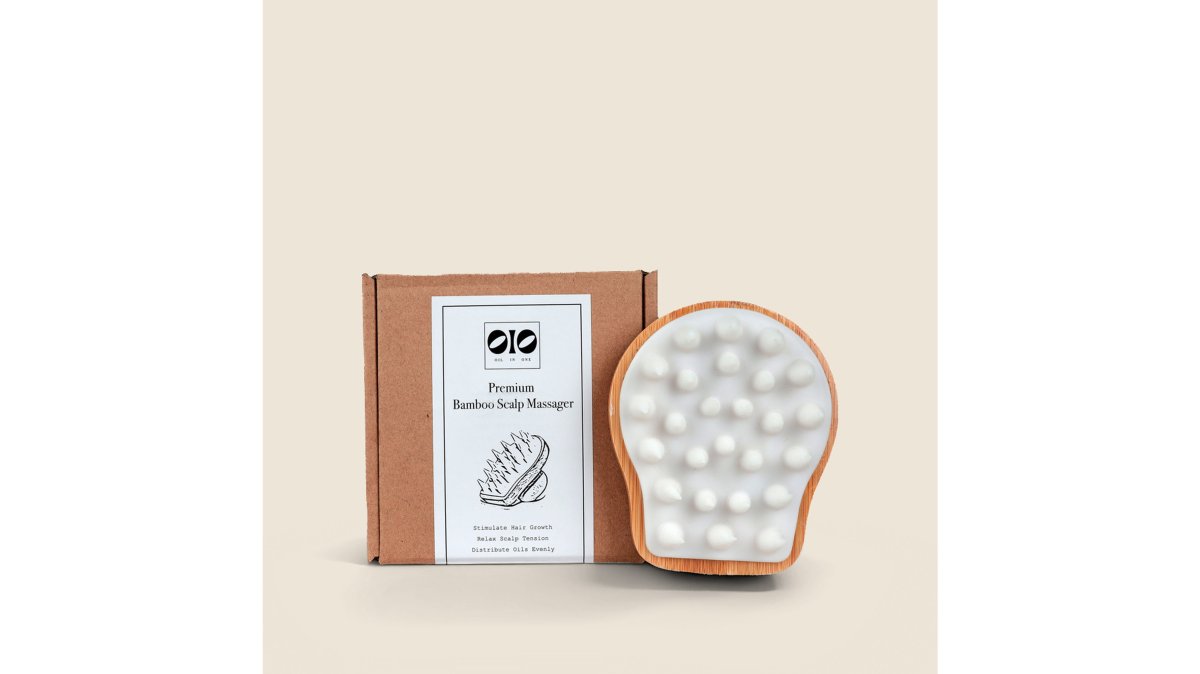
Our Bamboo Scalp Massager (AED 60.00) makes the massage step easier, and the Sandalwood Comb (AED 60.00) handles damp detangling without the static and snagging plastic combs cause.


Adjusting for climate, hair type, and schedule
- Hot, humid months: oil two nights a week rather than three, and wash the next morning without fail. Heavy oil left in for days in heat is uncomfortable and unnecessary.
- Hard water: a gentle chelating or clarifying wash once every week or two helps prevent mineral buildup that makes hair feel rough and look dull.
- Fine or oily hair: keep oil on the scalp only, use fewer drops, and choose nights when you can wash the next morning.
- Curly or coily hair: section carefully, use more massage and less combing, and detangle with fingers or a wide-tooth comb while conditioned.
- Short on time: one scalp night per week still beats an ambitious routine you abandon after a fortnight.
How Long Does Hair Growth Take? Realistic Timelines
Most people notice a difference in how their hair feels within a few weeks, but visible new growth takes months. Hair grows slowly, and no product speeds up the biology. What a good routine can do is support the scalp environment so the follicle can do its job, and reduce the breakage that makes hair look thinner than it is.
The growth cycle in plain terms
Each follicle cycles through growth, transition, and rest phases. At any moment, most strands are in the growth phase, which is why consistent scalp care matters more than occasional intense treatments. Strands grow at a steady, slow rate, so a change you can see at the scalp takes a full season to show at the ends. That is biology, not a product failure.
Cosmetic fullness vs. new growth
These are different outcomes and should be judged differently:
- Cosmetic fullness is what you see and feel, less breakage, smoother strands, better hydration, and a scalp that looks calm. This can improve within weeks and is a legitimate result.
- New growth is a new strand emerging from a follicle. It is slow, and no cosmetic oil should promise to reverse pattern hair loss or regrow hair in a fortnight.
- Reduced shedding often shows up first in the shower drain, before any visible change in density.
What the evidence supports, and what it does not
Some botanicals, including rosemary oil, have been studied for scalp support and healthy-looking hair, and are widely used in scalp routines. That is different from a clinical claim of regrowth. Most practitioners find that cosmetic products support the scalp environment and strand strength; they do not treat medical hair loss. Be cautious with any product that promises overnight regrowth, guaranteed density, or a cure for genetic thinning.
A realistic month-by-month view
- Weeks 1-4: scalp comfort, less itching, and easier detangling are the first signs. Judge the routine on how the scalp feels, not on length.
- Months 2-3: reduced shedding during washing and brushing is a common pattern. Strand strength and shine follow.
- Months 4-6: fuller-looking density is the slowest change and the one most affected by breakage reduction rather than new growth.
- Beyond six months: assess with photos taken on the same day each month in the same lighting. If thinning continues despite a consistent routine, that is a signal to seek professional assessment, not to add more products.
That timeline is why we tell customers to focus on the process. If your scalp feels calmer and you are losing fewer strands in the shower, the routine is working even before you see new length.
Choosing Hair Growth Products Without the Hype
Ignore any product that promises overnight regrowth. Hair growth products should support scalp health, reduce breakage, and hydrate strands, and they should tell you exactly what is inside them.
A short checklist we use when judging any formula:
- Are all ingredients listed in plain language?
- Does each ingredient have a clear purpose?
- Is the base light enough to wash out easily?
- Is it suitable for all hair types and both men and women?
- Does it avoid claims it cannot back up?
Our formulas are 100% natural, non-greasy, and designed to wash out easily, which matters in a hot climate where heavy products feel uncomfortable. They are built for the local conditions many of our customers deal with, including hard water and intense heat.
How to Measure Progress and Know When to See a Dermatologist
Track three things: how many strands you lose during washing, how your scalp feels, and how your hair looks in the same lighting each month.
Many customers tell us the first change they notice is less shedding. As Maryam put it after using our Growth Oil, "I don't lose as much hair during my showers and brushing." Hajer A. noticed her scalp felt calmer: "I barely get an itchy scalp."
See a dermatologist if you notice sudden or patchy loss, a painful or inflamed scalp, or thinning that continues despite a consistent routine. Those signs need medical assessment, and no cosmetic oil should stand in for that.
Conclusion
The hardest part of hair care is patience, because real change at the root happens slowly and quietly.
Oil In One offers a 100% natural Organic Growth Oil (AED 120.00) with rosemary, black seed, and castor oil, a Bamboo Scalp Massager (AED 60.00) for even distribution, and a Sandalwood Comb (AED 60.00) for gentle detangling.
Shop the Oil In One routine and give your scalp the simple, consistent care it needs.
Frequently Asked Questions
What is the fastest way to promote hair growth?
There is no overnight fix. The fastest realistic route is a consistent scalp-first hair growth routine: cleanse without stripping, apply a botanical oil like Oil In One Organic Growth Oil (AED 120) two to three times a week, massage for 3 to 5 minutes with a bamboo scalp massager, and protect strands from heat and hard water. Most people notice less shedding and softer regrowth at 8 to 12 weeks, with fuller-looking hair around 16 to 24 weeks.
What are some natural ingredients that can help with hair growth?
Rosemary oil, black seed oil, and castor oil are the most studied botanicals for scalp support. Rosemary supports scalp health and healthy-looking hair growth, black seed oil nourishes the scalp and helps reduce breakage, and castor oil supports moisture retention for stronger-looking strands. Oil In One Organic Growth Oil combines all three in a light base that absorbs without leaving hair greasy, so you can leave it on for a few hours or overnight before washing.
How long does hair growth take to show visible results?
Hair grows roughly 1 cm per month, so visible change takes time. Expect reduced shedding and a calmer scalp within 4 to 8 weeks, new baby hairs at 8 to 12 weeks, and noticeably fuller-looking hair at 16 to 24 weeks. Consistency matters more than intensity: skipping weeks resets progress. If you see no change at all after six months of a steady routine, speak to a dermatologist to rule out underlying causes.
When should I speak to a dermatologist about hair thinning?
Book an appointment if you notice sudden or patchy shedding, a receding hairline that changes within weeks, scalp pain, redness, or flaking that does not respond to gentle cleansing, or if hair loss runs in your family and started before age 30. A dermatologist can check for iron deficiency, thyroid issues, or pattern hair loss. Natural hair growth products support scalp health, but they do not replace medical diagnosis for underlying conditions.