

How to Choose a Curly Hair Cleansing Bar vs Shampoo
Editorial TeamLast Updated: November 1, 2026
Quick Summary
A curly hair cleansing bar is a solid, water-activated cleanser that lifts oil and buildup without stripping the moisture curls need, but only if it is a syndet bar rather than a soap bar. Choose a syndet bar for gentle, pH-friendly cleansing, and avoid soap-based bars that leave a waxy film and cause frizz.
- Syndet bars list surfactants like sodium cocoyl isethionate; soap bars list sodium olivate or sodium cocoate.
- Curls need two to three weeks before you can judge whether a bar suits them.
- Build lather in your hands first, then apply foam to the scalp, not the ends.
- Clarify every two to four weeks to remove product and mineral buildup.
- Stop using the bar if waxy feel returns within two or three washes after clarifying.
Table of Contents
- What a Curly Hair Cleansing Bar Actually Is
- Are Shampoo Bars Good for Curly Hair?
- Shampoo Bar vs Liquid Shampoo for Curls
- Shampoo Bar vs Soap: How to Tell Them Apart
- Matching the Bar to Your Curl Pattern and Scalp
- How to Use a Shampoo Bar on Curly Hair
- Transition, Hard Water and Troubleshooting
- Start With a Scalp-First Cleansing Routine
- Frequently Asked Questions
What a Curly Hair Cleansing Bar Actually Is
The confusion starts with the word "bar." Two very different products share that shape and behave nothing alike on curls.
A syndet bar is a solid synthetic detergent. It contains mild surfactants, often sodium cocoyl isethionate or sodium lauroyl methyl isethionate, plus conditioning agents.
A soap-based bar is saponified oil. True soap has a naturally high pH, which lifts the hair cuticle and leaves a waxy film behind.
If you want to see the kind of bar we mean, look at the Organic Cleansing Bar and read the ingredient list before you buy anything.

Are Shampoo Bars Good for Curly Hair?
Yes, a well-made shampoo bar can be good for curly hair, provided it is a syndet bar and not a soap bar. The catch: "shampoo bar" is not a regulated term.
How Bars Affect Curl Definition, Dryness and Frizz
Curl definition depends on the hair shaft staying smooth and hydrated. A gentle syndet bar cleans without over-stripping, so the cuticle lies flatter and curl clumps hold their shape.
Three things go wrong when the bar is wrong for you:
- High pH soap bars swell the cuticle, and the curl pattern loosens into frizz.
- Over-cleansing removes the natural oils that keep textured hair supple, which shows up as dryness and roughness.
- Residue from soap or heavy butters weighs curls down and flattens definition.
Don't judge a bar after one wash. Curls need two to three weeks to show the real result.
Shampoo Bar vs Liquid Shampoo for Curls
Neither wins outright. For shampoo and conditioner picks suited to the local climate, see best shampoo and conditioner for UAE climate. Liquid shampoo gives easier control over dose and distribution through thick curls. A bar gives concentrated product, no water content, and a smaller footprint.
Here is how they compare in practice:
| Factor | Cleansing Bar | Liquid Shampoo |
|---|---|---|
| Cleansing strength | Adjustable by how much you glide | Fixed by formula |
| Water content | None, so it lasts longer | Mostly water |
| Travel | Carry-on friendly | Liquid limits apply |
| Hard water performance | Depends on formulation | Depends on formulation |
| Cost per wash | Usually lower over time | Higher per wash |
| Risk on curls | Soap-based bars cause buildup | Sulfates can over-strip |
Sulfates, pH Balance and Gentle Cleansing
pH matters just as much. Hair and scalp sit slightly acidic. A high-pH soap bar raises the cuticle and leaves it rough; a syndet bar can be buffered closer to skin pH, which is why formulation beats marketing claims.
Watch out: a bar labelled "natural" or "organic" is not automatically gentle. Saponified olive oil is natural and still high pH.
Shampoo Bar vs Soap: How to Tell Them Apart
Read the ingredient list, not the front of the box.
Soap-based bars list saponified oils, typically as sodium olivate, sodium cocoate, or sodium palmate.
Syndet bars list surfactants by name: sodium cocoyl isethionate, sodium lauroyl sarcosinate, cocamidopropyl betaine.
A quick field test helps too.
If the label is vague, ask the brand directly. Ours lists every ingredient in plain language for exactly this reason.
Matching the Bar to Your Curl Pattern and Scalp
There is no universal best bar. If you need help choosing products suited to your specific scalp type, see how to choose hair care products for dry scalp. The useful question is "which bar fits this head of hair and this scalp." Four variables do most of the work: curl pattern, porosity, density, and scalp condition. Read them together, not in isolation.
Start with porosity, not just pattern
Porosity describes how readily the cuticle takes in and holds water, and it changes which cleanser feels right more than curl pattern alone.
- Low porosity hair resists water and product, so heavy butters and oils create buildup fast.
- Medium porosity is the most forgiving. Most syndet bars work; match the bar to your scalp rather than your ends.
- High porosity hair drinks water and loses it quickly. It tolerates slightly richer syndet bars with conditioning agents but is most vulnerable to rough handling, so gentle surfactants matter more than heavy post-wash oils.
Then layer in curl pattern
- Loose waves (2A-2C): waves flatten easily under heavy product. Choose a lighter syndet bar, wash two to three times a week, and rinse cool to keep the cuticle flat.
- Curls (3A-3C): a gentle syndet bar with some conditioning agents, washed two to three times a week. Focus lather on the scalp and let the rinse carry it through the lengths.
- Coils (4A-4C): wash least often, cleanse carefully mid-shaft, and moisturize plenty after. A syndet bar that rinses clean without a waxy film matters most here, because residue is harder to remove from tightly coiled hair.
Density changes how you apply, not what you buy
Density is how many strands sit on your scalp, and it affects distribution more than formulation.
- Low density: a little lather goes a long way. Build foam in your hands first so you do not over-apply.
- Medium density: the standard hand-lather method works well.
- High density: you may need to reload the bar once mid-wash to reach the scalp under the canopy. Sectioning hair into four to six parts before washing makes a bar far more practical.
Match the scalp condition last
- Oily scalp: a syndet bar used more often, with lather kept on the scalp and rinsed through the lengths, controls oil without over-stripping ends.
- Dry or flaky scalp: look for calming botanicals and avoid strong fragrance. Do not chase a squeaky-clean feel; it usually signals over-cleansing.
- Sensitive, eczema-prone scalp: patch test first, favour short ingredient lists, and avoid added fragrance or essential oils high on the list.
How to Use a Shampoo Bar on Curly Hair
Using a bar on curls is not the same as rubbing it on your head like a soap bar. Done properly, it takes about the same time as a liquid wash.
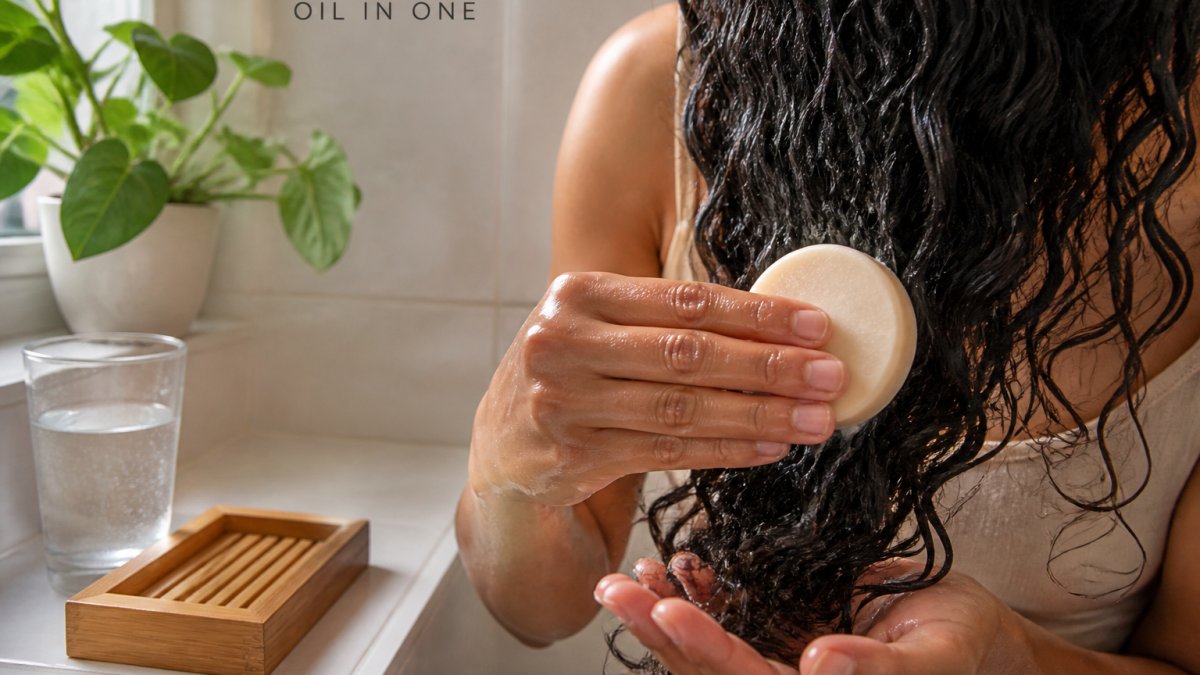
- Soak thoroughly. Water does most of the work. Wet hair to the roots.
- Build lather in your hands first. Rub the bar between wet palms until you have a creamy foam.
- Apply to the scalp, not the ends. Work the foam in with fingertips. Let it rinse through the lengths.
- Skip the mid-shaft scrub. Curls tangle easily; friction causes breakage.
- Rinse longer than feels necessary. Residue is the enemy of definition.
- Store it dry. A bar left in a puddle dissolves and wastes product.
Best for: scalp-focused washers who want control over cleansing strength. Skip if: you have very long, dense hair and need fast distribution.
Transition, Hard Water and Troubleshooting
The first two weeks are usually the awkward part. Hair washed with strong surfactants often overproduces oil at first, and a gentler bar can feel like it is not cleaning enough. Give it a fortnight before you judge. But not every problem is a transition problem, and treating a formulation mismatch as "just an adjustment period" wastes weeks.
The transition period, realistically
A common pattern is:
- Days 1-4: hair may feel oilier at the roots or less "squeaky" than usual as the scalp recalibrates to gentler cleansing.
- Days 5-10: oil production typically settles. Curls may look slightly flatter before they look better.
- Weeks 2-3: most people can judge whether the bar suits them. If the scalp still feels coated or the ends feel rough, it is usually the bar, not the transition.
Symptom-to-cause guide
| What you notice | Likely cause | What to try |
|---|---|---|
| Waxy, coated feel after rinsing | Soap-based bar or high-pH formula leaving residue | Check the label for sodium olivate, sodium cocoate, or sodium palmate; switch to a syndet bar |
| Rough, dull ends | Cuticle lifted by high pH or over-cleansing | Reduce wash frequency, check pH-friendly formulation, add a light conditioning step |
| Tangling that is worse than usual | Friction from rubbing the bar directly on hair, or residue | Build lather in hands, apply to scalp only, rinse longer |
| Flaking that appeared after switching | Residue or a reaction to fragrance or an ingredient | Clarify once, then patch test; if it persists, simplify the ingredient list |
| Hair feels clean but stiff | Mineral deposits from hard water, or too much product | Clarifying wash, then reassess |
| Shedding | Usually not caused by the bar itself | Check whether shedding started before the switch; see our guide to hair shedding from hard water |
Hard water in this region
Mineral-heavy water leaves deposits that make hair feel rough and look dull, and it can make any cleanser foam less. Two practical responses:
- Clarify on a schedule, not in a panic. A clarifying wash every two to four weeks removes product and mineral buildup before it becomes a problem. If you swim or wash daily in hard water, lean toward the shorter end of that range.
- Use a chelating wash occasionally. A chelating product binds mineral ions and removes them; it is different from a clarifying wash, which targets product residue. Most people need a chelating wash far less often than a clarifying one.
A final rinse with filtered or softened water, where available, reduces deposits between washes. Not essential, but it helps if your water is very hard.
When to clarify, and when to stop using the bar
- Clarify if hair feels coated, stiff, or suddenly less able to hold definition, and the cause is not obvious. One clarifying wash is a diagnostic step, not a routine.
- Stop using the bar if the waxy feel returns within two or three washes after clarifying, or if flaking or itching persists. That pattern points to a soap-based bar or an ingredient your scalp does not tolerate, not to transition.
If shedding is your concern, our article on hair shedding from hard water covers the causes and practical fixes. Blaming a new bar for shedding that started before you switched is a common misread.
Start With a Scalp-First Cleansing Routine
Your scalp decides how your curls behave. For the full curly hair routine to slot the cleansing bar into, see what is a good hair routine for curly hair.
That is the logic behind everything we make. From there, a light botanical oil applied to the scalp seals in moisture and protects each strand.
Our customers tend to notice the small things first.
Frequently Asked Questions
What is the difference between a curly hair cleansing bar and shampoo?
A curly hair cleansing bar is a solid, concentrated cleanser, while shampoo is mostly water with surfactants and thickeners. Bars usually last longer per gram and are easier to travel with, but liquids are simpler to spread through dense curls. The decisive factor is formulation: look for sulfate-free syndet bars with a balanced pH. Soap-based bars with high pH can leave residue and roughness on textured hair, especially in hard water.
Can a cleansing bar dry out curly hair?
It can if the bar is soap-based or high in sulfates. True soap has a high pH, which lifts the cuticle and strips moisture, leaving curls rough and frizzy. A sulfate-free syndet bar with gentle cleansing agents keeps the hair shaft smoother. Always follow with conditioner or a conditioner bar, focus the bar on the scalp rather than mid-shaft, and rinse thoroughly to avoid buildup.
How do you use a shampoo bar on curly hair?
Wet hair fully, then rub the bar between your palms until you get a creamy lather. Apply that lather to the scalp first and massage with fingertips, not nails. Let the runoff clean the mid-shaft and ends. Detangle with conditioner while wet, then scrunch and air-dry or diffuse. Rinse with cooler water to reduce frizz, and store the bar dry between washes so it does not soften.
How often should you wash curly hair with a cleansing bar or shampoo?
Most curly and textured hair does well with one to two washes a week. If your scalp gets oily or flaky, cleanse more often with a gentle, sulfate-free bar rather than a harsh shampoo. In hard water areas, a final rinse with filtered water helps. Watch your scalp, not the calendar: itching, buildup or flaking means adjust frequency, and pair every wash with moisture to protect curl definition.
Choosing between a curly hair cleansing bar and a shampoo comes down to reading labels, knowing your scalp, and giving a new routine enough time to prove itself. If you want a routine built from transparent botanical ingredients, Oil In One offers a scalp-first approach with plain-language labels, non-greasy formulas that wash out easily, and a simple step count you can actually keep up with. Get started with Oil In One and give your curls a cleanser that respects your scalp.
