

9 Natural Hair Oil Mistakes That Stall Growth in the UAE
Editorial TeamLast Updated: October 28, 2026
Quick Summary
The best natural hair oil depends on your hair and scalp type rather than the label. Lightweight oils like grapeseed or jojoba suit fine or oily hair, while richer oils like castor, olive or argan suit dry, coarse or curly hair. Start with a few drops and patch test first.
- Fine or oily scalps do best with grapeseed or jojoba applied mainly to the mid-lengths and ends.
- Dry, coarse or curly hair often suits heavier sealants such as castor, olive, avocado or argan.
- Start with a few drops for short hair and a teaspoon for long hair, once or twice a week.
- Dilute rosemary essential oil in a carrier oil and patch test for 24-48 hours before use.
- Check the botanical name and its position in the ingredient list, since ingredients are listed by weight.
Table of Contents
- How to Choose a Natural Hair Oil for Your Hair Type
- Best Oil for Dry Scalp: What to Look For
- Rosemary Oil for Hair Growth: What the Evidence Shows
- How to Oil Your Scalp Without Greasy Results
- Hard Water, Heat and Hair Fall in the UAE
- Patch Testing and Safe Use for Sensitive Scalps
- Start Your Routine With a Simple Scalp-First Oil
- Frequently Asked Questions
How to Choose a Natural Hair Oil for Your Hair Type
Choosing the best natural hair oil UAE shoppers can rely on starts with knowing your hair, not the label.
Match the Oil to Your Hair and Scalp Type
| Hair or scalp type | What to look for | Oils that tend to suit | What to avoid |
|---|---|---|---|
| Fine, limp hair | Lightweight, fast-absorbing, low residue | Grapeseed, sweet almond, jojoba (in small amounts) | Castor oil, heavy coconut oil on roots |
| Oily scalp | Non-comedogenic, easily rinsed | Grapeseed, jojoba, diluted tea tree (patch tested) | Thick butters, mineral-heavy blends |
| Dry, coarse or curly hair | Heavier sealants that hold moisture | Castor, olive, avocado, shea-based blends | Very light oils used alone |
| Low-porosity hair | Thin oils that spread without filming | Grapeseed, jojoba, squalane | Thick coconut oil left on for hours |
| High-porosity hair | Richer oils that seal the cuticle | Argan, castor, olive, avocado | Water-only mists with no sealant |
| Sensitive or eczema-prone scalp | Short ingredient lists, fragrance-free | Plain jojoba, sweet almond, squalane | Essential-oil-heavy blends, fragranced formulas |
Natural Hair Oil for Low-Porosity Hair
Apply a small amount to damp hair rather than dry. Warmth and a little moisture help the oil spread. Our routine focuses on lightweight botanical oils for exactly this reason: they seal in what you have already added without weighing the hair down.
Lighter Oils for Fine or Oily Scalps
Fine hair and oily scalps need restraint. Use less oil, and focus it on the mid-lengths and ends rather than the root. Lighter oils rinse out more easily, which matters if you wash your hair daily. A few drops of jojoba or grapeseed on the ends is usually enough; if your roots feel greasy by evening, you used too much or applied too close to the scalp.
How Much to Use and How Often
Start with a few drops for short hair and a teaspoon for long hair. Apply once or twice a week at first. If your hair feels weighed down, reduce the amount before you reduce the frequency. If your scalp feels dry between washes, add a light scalp massage with a few drops rather than a full application.
A Note on Ingredient Labels
Look for the botanical name in the ingredient list (for example, Simmondsia chinensis for jojoba or Argania spinosa for argan) and check where it sits in the order. Ingredients are listed by weight, so an oil that appears after fragrance or preservatives is present in a small amount. Short, plain-language lists are easier to compare than long blends with many extracts.
Best Oil for Dry Scalp: What to Look For
If irritation persists, speak to a doctor or dermatologist rather than adding more products. For practical natural steps to calm an itchy, irritated scalp, read how to soothe an itchy scalp naturally in seven steps.
Rosemary Oil for Hair Growth: What the Evidence Shows
Rosemary oil is one of the most talked-about ingredients in natural hair care, and it deserves a careful look. Interest in it comes largely from traditional use and from smaller studies, so the honest answer is that the evidence is limited and results vary from person to person. To see how long visible results typically take, read how long rosemary oil takes to grow hair.
What Rosemary Oil Can and Cannot Do
Most practitioners find that rosemary oil is best treated as a scalp-care ingredient that supports a healthy environment, not as a treatment for hair loss. For an honest review of what actually works, see our rosemary hair oil review. If you are experiencing sudden or patchy shedding, see a dermatologist, oil is not a substitute for diagnosis.
How to Use Rosemary Oil Safely
Essential oils are concentrated and should not be applied neat to the scalp (Aromatherapy Guideline for Midwifery Practice). Dilute rosemary essential oil in a carrier oil such as jojoba, grapeseed, or sweet almond. A common starting ratio is a few drops of rosemary essential oil per tablespoon of carrier oil, roughly 1-2% dilution. If you buy a pre-blended rosemary hair oil, follow the label rather than adding more essential oil.
A Realistic Timeline
Oil In One includes rosemary-based botanicals in its scalp-first routines, but no single ingredient replaces consistent care and a healthy scalp. Rosemary oil is one part of a routine, alongside gentle washing, a balanced diet, and protecting hair from heat and sun, not a guaranteed fix.
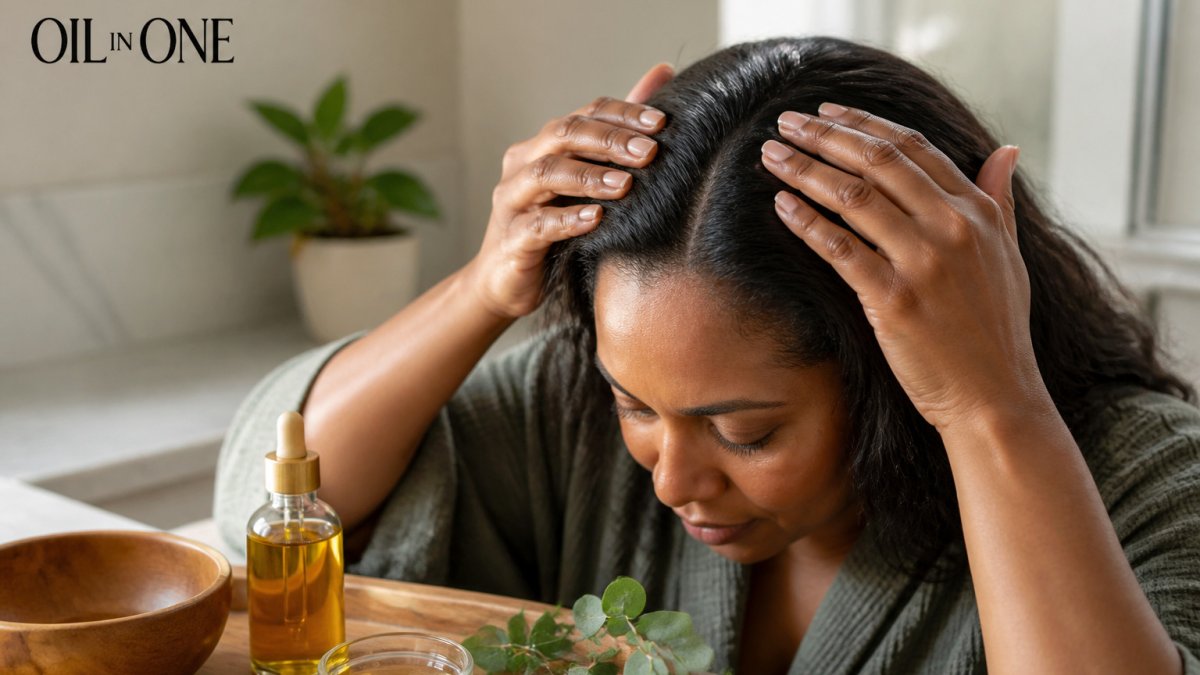
How to Oil Your Scalp Without Greasy Results
Leave it on for a set period, then shampoo thoroughly. Watch out: rinsing once is often not enough for oily-feeling hair, so plan on a second wash. Apply once or twice a week at first, and increase only if your scalp and hair feel comfortable.
Hard Water, Heat and Hair Fall in the UAE
A natural hair oil cannot change your water supply, but it can help protect the hair you have. Some people also find a periodic clarifying wash helpful for removing mineral residue. Keep expectations realistic: oil supports the hair and scalp, and shedding has many causes beyond climate.
Patch Testing and Safe Use for Sensitive Scalps
Stop using the product if you notice redness, burning, swelling, or increased itching. If you have a diagnosed scalp condition, check with a healthcare professional before starting a new routine.
Start Your Routine With a Simple Scalp-First Oil
Oil In One builds its products around this idea: a scalp-first approach, transparent ingredients, and routines that fit into a normal week. If you want to see what that looks like in practice, you can shop the Oil In One range and compare the formulas against the criteria above.
Frequently Asked Questions
Which oil is best for hair in the UAE?
Oil In One makes natural hair care with botanical ingredients and a light oil base. Its ingredients are listed in plain language. Visit the website to review the current product information.
Is rosemary oil good for hair growth?
Rosemary oil is widely used in natural hair care for scalp stimulation, and some small studies have explored its effect on hair growth. The evidence is limited and not conclusive, so treat it as a supportive ingredient rather than a guaranteed solution. Dilute it in a carrier oil, apply it to the scalp, and be realistic about timelines, since visible changes take several months. If you have a sensitive scalp, patch test first.
How often should you oil your hair?
For most people, oiling the scalp two to three times a week is a practical starting point. Leave the oil on for at least 30 minutes, or overnight for dryer hair, then wash it out with a gentle shampoo. Over-oiling can cause buildup, especially in humid conditions, so if your hair feels heavy or your scalp becomes itchy, reduce frequency. Adjust based on how your hair and scalp respond over several weeks.
Which natural oil is best for a dry or itchy scalp?
For a dry or itchy scalp, look for a light oil with moisturising botanical ingredients that calm the skin without clogging pores. Oils with a lighter texture absorb faster and leave less residue, which helps if you are prone to flakes. Apply a small amount to the scalp rather than the lengths, massage gently, and rinse thoroughly. If itching persists or flaking worsens, speak with a dermatologist, as the cause may not be purely dryness.
