

How Long Does Rosemary Oil Take to Grow Hair?
Editorial TeamLast Updated: October 26, 2026
Quick Summary
Rosemary oil has no fixed timeline for hair growth, and the research is small and early. The most-cited trial followed participants for about six months, so changes are best judged over several months of consistent use rather than weeks.
- The most-cited rosemary oil trial followed participants for about six months.
- Rosemary oil evidence comes mainly from small trials and laboratory work.
- Take monthly photos in the same light and angle to track progress fairly.
- Use diluted oil two or three times a week, leaving it on for 30 minutes.
- Stop and seek advice if irritation persists, worsens, or spreads beyond the scalp.
Table of Contents
- What the Evidence Says About Rosemary Oil and Hair Growth
- Rosemary Oil for Hair Growth Results Timeline
- How Often to Use Rosemary Oil for Hair Growth
- How to Apply Rosemary Oil to Scalp Step by Step
- Rosemary Oil Scalp Irritation and Side Effects
- Hair Loss Causes and When to Seek Medical Advice
- Booking a Consultation or Starting Your Scalp-First Routine
- Frequently Asked Questions
What the Evidence Says About Rosemary Oil and Hair Growth
Rosemary oil is one of the most talked-about natural options for thinning hair, and many people want to know how long it takes to work. The honest answer is that the research is small, and it does not give a single fixed timeline. At Oil In One, we think that gap matters more than any promise on a label, so this guide starts with what the evidence actually shows.
Rosemary essential oil has been studied for its possible effect on hair, mostly in small trials and laboratory work. Most of that research is early, and results should be read with care. Still, it gives a reasonable starting point for setting expectations.
Many people ask whether rosemary oil can support hair growth at all. Hair growth depends on many factors, including genetics, hormones, nutrition, and the stage of your hair growth cycle.
The six-month rosemary oil study and how it compares with minoxidil
The study most often cited is a small trial that followed participants for about six months. It compared rosemary oil with minoxidil, a medication widely used for hair loss. In that trial, participants using rosemary oil showed improvements in hair count, though the group using minoxidil showed comparable or stronger results in some measures.
This comparison is useful, but it has limits. Minoxidil is a regulated medicine with a long track record, and rosemary oil is a botanical with far less evidence behind it. Treat the trial as a sign of possible benefit, not as proof that rosemary oil works like minoxidil.
A practical way to think about it:
- Rosemary oil: a natural option with early, limited evidence
- Minoxidil: a medication with stronger, longer-running evidence
- Neither: a substitute for a medical diagnosis
Evidence quality and study limitations
Several things make it hard to be certain about rosemary oil results:
- Small sample sizes limit how far the findings can be applied
- Trials often run for a short time, so long-term effects are unclear
- Study designs and measurement methods vary between trials
- Some studies are funded or run by companies with an interest in the product
Because of this, any claim of a dramatic result should be viewed with caution. More and larger studies are needed before stronger conclusions can be drawn.
Rosemary Oil for Hair Growth Results Timeline
Most people want a clear answer to one question: when will I see a difference? The honest answer is that no timeline is guaranteed, because results depend on your hair type, the cause of your thinning, and how consistently you use the oil. What the evidence does support is a realistic way to set expectations and measure change fairly.
The most-cited rosemary oil trial assessed participants after about six months.
A realistic timeline by outcome
Different goals change at different speeds, and it helps to track them separately rather than expecting one dramatic result:
How to measure progress consistently
Build a simple record:
-
Take photos of your part and hairline in the same light, at the same angle, once a month.
-
Check part width by comparing the same section of scalp in each photo rather than judging from memory.
-
If you see a dermatologist or trichologist, ask them to assess the same areas at each visit so changes are measured the same way.
If your scalp becomes irritated, speak with a healthcare professional.
How Often to Use Rosemary Oil for Hair Growth
- Apply the diluted oil two or three times a week, and see our guide to how often to oil the scalp for growth for more detail.
- Massage the scalp for two to three minutes
- Leave it on for 30 minutes, or overnight if your scalp tolerates it
- Wash it out with a gentle shampoo
The usual routine, at a glance:
| Step | What to do | Time or frequency |
|---|---|---|
| Apply | Massage diluted oil into the scalp | Two or three times a week |
| Massage | Work the scalp gently | Two to three minutes |
| Leave on | Keep the oil on the scalp | 30 minutes, or overnight if tolerated |
| Wash out | Rinse with a gentle shampoo | After the oil is left on |
How to Apply Rosemary Oil to Scalp Step by Step
- Rosemary essential oil or a rosemary-infused oil
- A carrier oil such as jojoba or argan, and our step-by-step guide to using rosemary essential oil for hair growth walks through each stage.
- A small bowl and a dropper or spoon
- A wide-tooth comb or your fingers
- A gentle shampoo
Diluting essential oil with a carrier oil
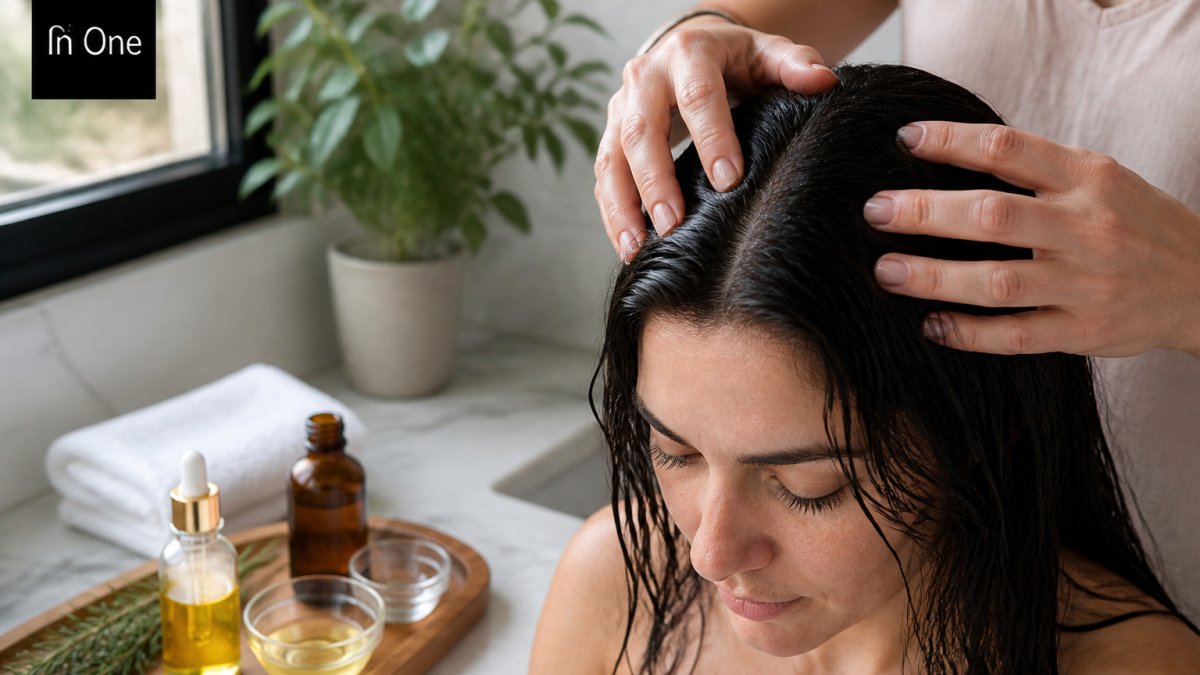
Essential oils are very concentrated. Applied undiluted, they can irritate the scalp. A common approach is to use about one to three drops of rosemary essential oil per tablespoon of carrier oil. Start with the lower amount and adjust only if your scalp tolerates it well.
Rosemary Oil Scalp Irritation and Side Effects
Rosemary oil is generally well tolerated by many people, but irritation and allergic reactions can happen, and sensitive scalps or skin prone to eczema may react more easily. The more common concern in user discussions is not a rash but a change in shedding, and that deserves a clear answer rather than vague reassurance.
Signs to watch for
- Redness, burning, or stinging on the scalp
- Itching that continues after washing
- Small bumps, rash, or swelling
- Increased shedding that seems unusual for you
What to do if irritation occurs
If irritation persists, worsens, or spreads beyond the scalp, speak with a dermatologist or doctor.
What to do if shedding increases
If you have a known allergy to plants in the mint family, or you have had a reaction to an essential oil before, speak with a healthcare professional before starting.
Hair Loss Causes and When to Seek Medical Advice
A doctor or dermatologist can help identify the cause and recommend suitable treatment. Rosemary oil may fit into a wider routine for scalp care, but it works best alongside a proper diagnosis.
Booking a Consultation or Starting Your Scalp-First Routine
For scalp massage, the Bamboo Scalp Massager is priced at AED 60.00. It is designed to support scalp health, promote relaxation, and enhance your haircare routine.

Speak with a professional if you have concerns about your scalp health.
Frequently Asked Questions
How often should I put rosemary oil on my hair for growth?
Most people apply rosemary oil to the scalp two to three times per week, using a diluted blend and leaving it on for at least 30 minutes or overnight. Consistency matters more than frequency: applying it daily does not speed results and can increase the chance of irritation. Track your routine in a simple log so you can compare shedding and density over several months. If scalp itching, redness or flaking appears, reduce frequency or pause and seek advice from a dermatologist before continuing.
Is it normal for rosemary oil to itch?
A mild tingling sensation is common with rosemary oil because it is a stimulating essential oil. Persistent itching, burning, redness or rash is not normal and suggests irritation or an allergic reaction. Always patch test a diluted blend on a small area of skin for 24 to 48 hours before applying it to your scalp. Wash the oil out promptly if discomfort starts, and stop use if symptoms do not settle within a day or two.
Does rosemary oil help hair growth according to science?
A six-month study compared rosemary oil with minoxidil and reported similar improvements in hair count for participants, but the study was small and the evidence base is limited. Research on rosemary oil for hair growth remains preliminary, so it should not be treated as a guaranteed or proven treatment. Results vary between individuals, and hair loss has many causes that rosemary oil cannot address. Discuss persistent thinning with a doctor for a proper diagnosis.
When should I stop using rosemary oil or ask a dermatologist?
Stop using rosemary oil and seek advice if you notice persistent itching, burning, redness, swelling, a rash or increased shedding that continues after you stop. Consult a dermatologist if you have an eczema-prone or sensitive scalp, if hair loss is sudden or patchy, or if you see no change after about six months of consistent use. A dermatologist can check for underlying causes such as thyroid problems, nutritional deficiencies or scalp conditions that need different treatment.
