

How to Strengthen Weak Hair Without Heat: A Step-by-Step Routine
Editorial TeamLast Updated: November 10, 2026
Quick Summary
To strengthen weak hair without heat, wash two to three times a week with lukewarm water and gentle shampoo, condition every wash, and use a weekly mask. Air dry using a microfibre towel, detangle from the ends upward, and avoid tight styles. Gentle scalp massage with a light oil supports the scalp over several months.
- Wash two to three times a week with lukewarm water, focusing shampoo on the scalp.
- Detangle wet hair starting at the ends and working upward.
- Use a microfibre towel and squeeze rather than rubbing the hair dry.
- Choose low-tension styles and a silk or satin pillowcase to reduce friction.
- Judge your routine at three months, not three weeks.
Table of Contents
- Why Your Hair Gets Weak and How to Tell the Cause
- Step 1: Build a Gentle Washing Routine
- Step 2: Condition and Use Masks to Rebuild Strength
- Step 3: Air Dry Hair Without Frizz or Heat
- Step 4: Protect Strands With Heatless and Low-Tension Styles
- Step 5: Feed the Scalp and Hair From Within
- Your Heat-Free Plan: When to See a Dermatologist
- Frequently Asked Questions
Why Your Hair Gets Weak and How to Tell the Cause
Weak hair is rarely random. Most people blame the last product they tried, but the real cause is usually friction, over-washing, or a scalp that isn't healthy enough to grow strong strands.
Hard water and intense heat are two common local factors that make hair feel dry and brittle in the UAE. Sun and dry air strip moisture from the strands, while mineral build-up from hard water makes them feel rough. Neither is solved by a heavier product alone.
Before you start any routine, look at your hair and scalp honestly. Notice when shedding happens, where breakage sits along the strand, and whether your scalp feels itchy, tight, or flaky.
Breakage, Shedding or Thinning: What Each Looks Like
These three problems look similar from a distance, but they have different causes.
- Breakage: Short, broken hairs along the length, often with split ends. It usually comes from friction, rough towel drying, or heat.
- Shedding: Whole hairs with a visible root bulb falling out during washing or brushing. A moderate amount is normal, but a sudden increase is worth noticing.
- Thinning: Hair that looks sparser at the parting or crown over time, often reflecting a scalp that needs more care.
Check your brush and shower drain after a few days. If most strands are short and broken, focus on Steps 1 to 4. If you see full-length strands with roots, focus more on the scalp in Step 5.
Step 1: Build a Gentle Washing Routine
Washing is where most weak hair starts to break. Hot water, harsh shampoo, and vigorous scrubbing lift the outer layer of each strand.
Wash two to three times a week, depending on your scalp. Use lukewarm water, and focus the shampoo on the scalp rather than the lengths. Let the suds rinse down the hair instead of rubbing them along the strands.
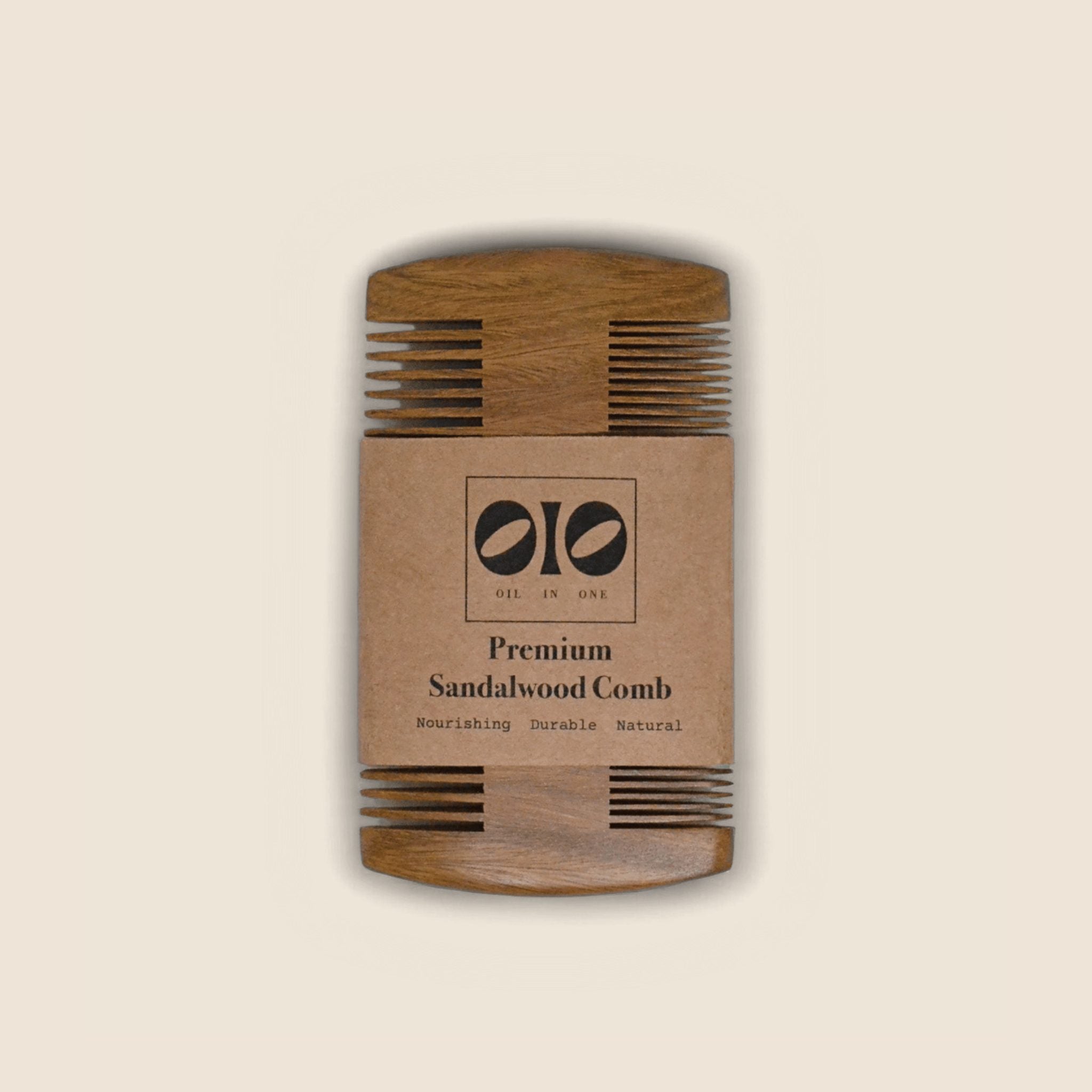
When detangling wet hair, start at the ends and work upward. A wide-tooth sandalwood comb can help you detangle wet hair with less pulling.
Watch out: Washing every day with a strong clarifying shampoo can dry out the scalp and make it more reactive, so it's worth matching your wash schedule to how your scalp actually feels.
Step 2: Condition and Use Masks to Rebuild Strength
Conditioner smooths the cuticle and reduces friction, which helps weak strands hold together. Apply it from mid-length to the ends, leave it on for a few minutes, then rinse with cool water to help seal the cuticle.
A weekly mask adds deeper moisture. Apply it to damp hair, cover it, and leave it on for the time shown on the label.
For a simple routine that combines conditioning with oil treatments, read our guide to supports active hair growth for hair care: a simple routine. If you want a step-by-step approach to masks, how to use a hair mask for dry hair, step by step walks through each part of the process.
Keep your expectations realistic. Hair grows about a centimetre a month, so visible strength takes weeks of consistent care, not days.
Step 3: Air Dry Hair Without Frizz or Heat
Air drying is the simplest way to avoid heat damage, but it is not passive. How you remove water, arrange the hair while it dries, and how long you leave it wet all affect friction, frizz, and breakage.
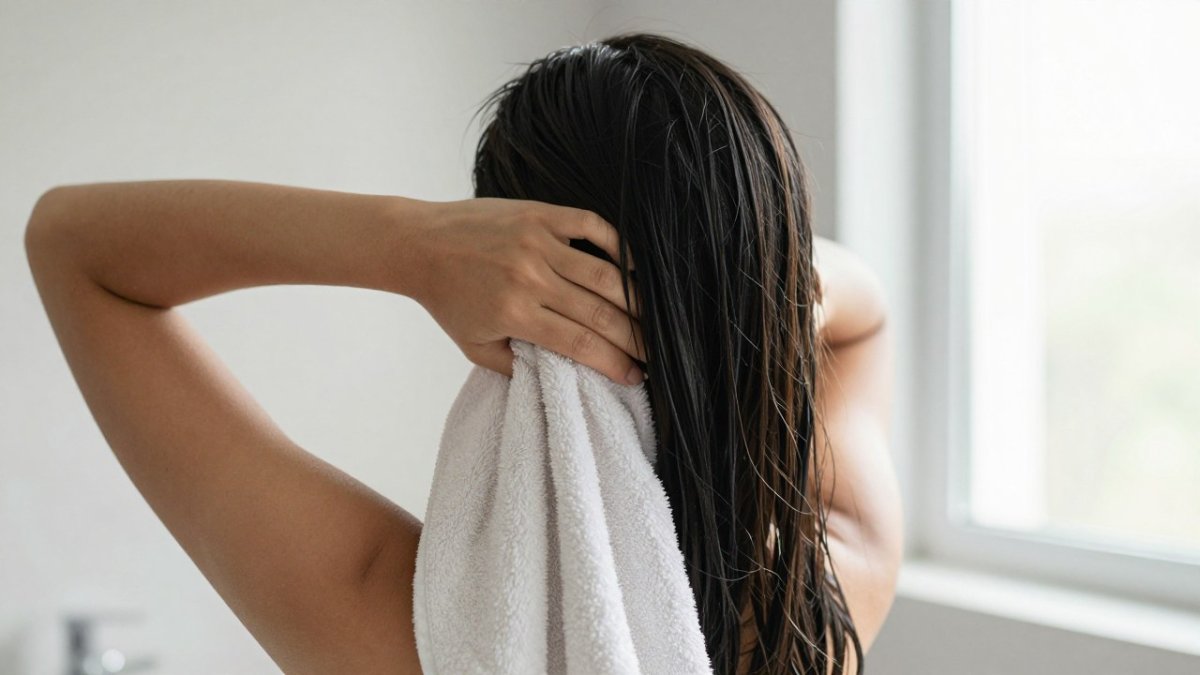
Wet hair stretches more than dry hair and the cuticle is raised, so every rub, tug, and tight tie does more damage than it would on dry strands.
Remove water before you touch the length
Start by squeezing, not rubbing. Cup the hair in a microfibre towel or a clean cotton t-shirt and press from root to end in sections.
A common pattern is to wrap the hair in a towel turban for 10 to 15 minutes, then let it down.
Watch out: Rubbing the hair with a towel in a back-and-forth motion is one of the most common causes of mid-length breakage, because it roughs up the cuticle while the hair is wet and elastic.
Detangle in the right order
Apply a leave-in conditioner or light detangling spray to damp hair before you comb. Start at the ends with a wide-tooth comb or your fingers, and work upward in small sections.
For curly and coily hair, detangle in the shower with conditioner still in, using your fingers or a wide-tooth comb, then rinse gently. For fine or straight hair, a few drops of lightweight leave-in are usually enough; heavy creams weigh fine hair down and make it look limp before it dries.
Dry by hair type
The way you let hair dry should change with your texture.
- Fine or straight hair: Squeeze out water, apply a light leave-in, and let it hang loose. Part it loosely so air reaches the scalp. Fine hair dries relatively quickly, often within one to two hours, and benefits from a small amount of oil on the ends only.
- Wavy or curly hair: Scrunch the hair upward with your hands or a cotton t-shirt to encourage curl clumps, then leave it alone. Touching curly hair while it dries breaks the clumps and creates frizz. Many people with curls find that "plopping", wrapping the hair in a cotton t-shirt for 15 to 20 minutes, removes enough water to speed drying without disturbing the curl pattern.
- Coily hair: Coils hold water for a long time, so drying can take most of a day. Squeeze in sections, apply leave-in while damp, and let the hair dry in loose twists or braids if you need to sleep before it is fully dry. Avoid tying it tightly while damp.
Reduce friction while it dries
Friction does not stop when you put the towel down. Pillowcases, collars, and chair backs all rub against drying hair.
Do not brush hair while it is drying if it is wavy, curly, or coily. Brushing disturbs the drying pattern and causes frizz. If you need to smooth straight hair, wait until it is completely dry and use a wide-tooth comb or a soft brush with gentle strokes.
Give it time
Air drying takes hours, and sometimes overnight. Plan washing for days when you do not need to leave the house immediately, or wash in the early evening so the hair has time to dry before bed.
If you live in a humid climate, hair can feel damp for longer even after it looks dry.
Drying method changes how much breakage and frizz you see, so here is how each hair type is best handled while it dries.
| Hair type | Best drying approach | Key difference |
|---|---|---|
| Fine or straight | Light leave-in, hang loose | Dries within one to two hours |
| Wavy or curly | Scrunch, then leave alone | Touching breaks curl clumps |
| Coily | Dry in loose twists or braids | Can take most of a day |
| Colour-treated or low-porosity | Section hair while drying | Roots can stay damp for hours |
Step 4: Protect Strands With Heatless and Low-Tension Styles
Tight hairstyles pull on the hair follicle and can cause breakage along the hairline and temples. Low-tension styles keep the strands together without stress.
Heatless curls, such as those made with flexi rods or a loose braid set overnight, give shape without a curling iron.
Keep the hair loose when possible. Each time you tie it up, you add a point of tension.
Step 5: Feed the Scalp and Hair From Within
Strong hair grows from a healthy scalp, but "feed the scalp" is often repeated without explaining what that means. The scalp is skin, and hair follicles sit inside it. When the scalp is inflamed, flaky, or tight, the follicle environment is poorer, and strands can emerge weaker or shed earlier. Scalp care and nutrition work on different timescales, so it helps to know what each can and cannot do.
What scalp care can and cannot do
Massage and light oils are a comfort-focused part of a scalp routine. What scalp massage does not do is regrow hair lost to a medical cause, and it will not fix breakage along the lengths.
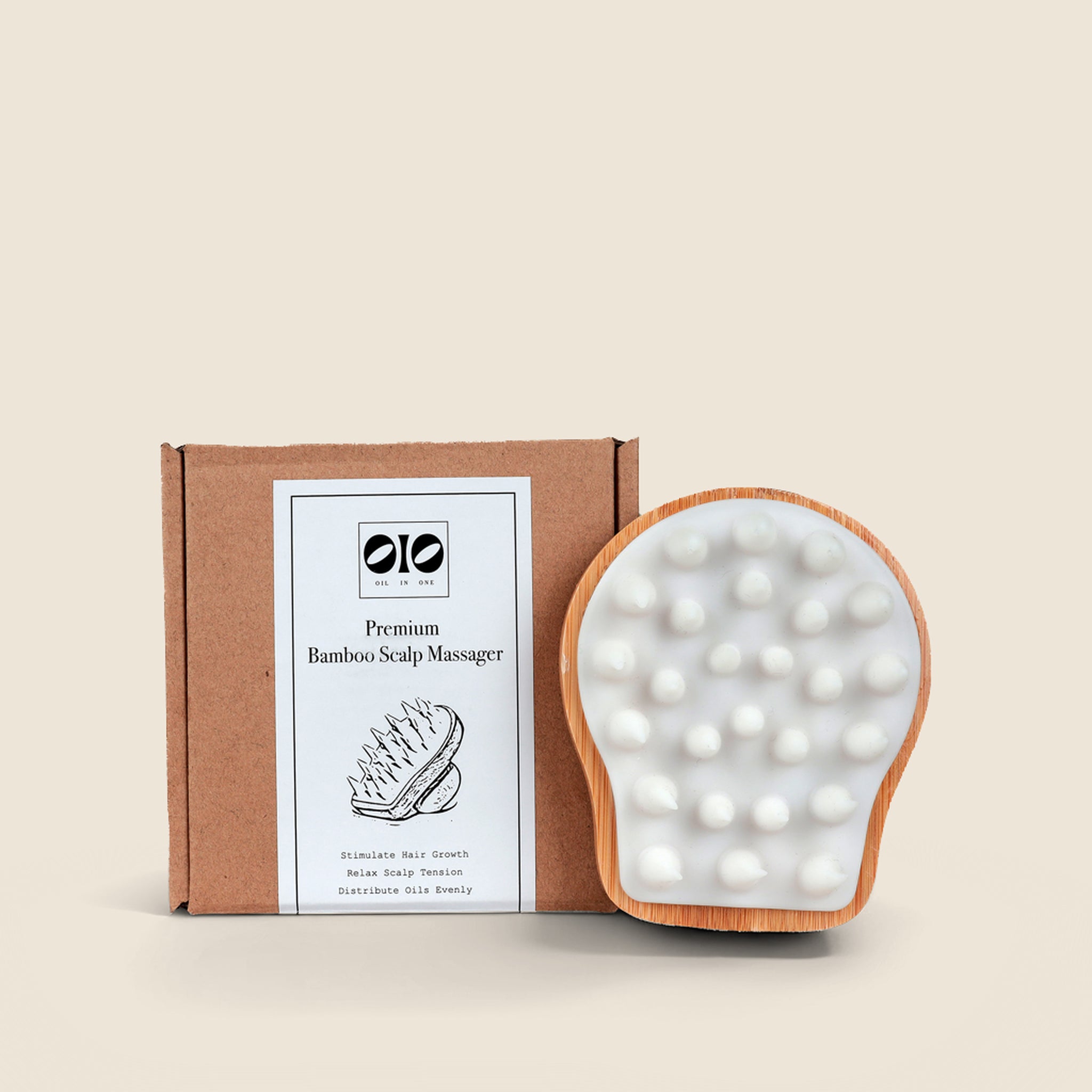
Apply a few drops of a light scalp oil along each parting, right at the root, and massage with your fingertips rather than your nails. A bamboo scalp massager can help you cover the scalp evenly without scratching.
Watch out: If your scalp is red, painful, or heavily flaky, massage and oil can make it worse. Stop and have a clinician look at it before continuing.
Nutrition: focus on the gaps that matter
Hair is mostly protein, so adequate protein intake supports the structure of each strand. Most people do not need a supplement; they need regular meals that include a protein source. Iron, zinc, vitamin D, and vitamin B12 are the nutrients most often checked when hair is weak or shedding, but a deficiency should be confirmed by a clinician rather than assumed from symptoms.
A balanced diet, rather than a shelf of supplements, is the more reliable foundation.
Set realistic timelines
Hair grows about a centimetre a month, and a new strand takes months to emerge and lengthen. Scalp care and nutrition changes are slow by nature.
Judge your routine at three months, not three weeks. If nothing has changed by then, or if shedding is worsening, that is a signal to look for a cause rather than to add another product.
When to involve a clinician
Some hair weakness is not a routine problem. Sudden or patchy hair loss, a scalp that is painful, red, or heavily scaly, or shedding that continues for several months despite good care are reasons to see a dermatologist.
If you want to see how often to use scalp oils, read how often to oil scalp for hair growth: a 2026 guide.
Your Heat-Free Plan: When to See a Dermatologist
Put the steps together into a simple weekly routine: gentle washing two to three times a week, conditioning every wash, a weekly mask, air drying, low-tension styles, and a few minutes of scalp massage several times a week. Give it at least 15 weeks before you judge the results.
Some signs need a professional, not just a better routine. See a dermatologist if you notice sudden or patchy hair loss, a scalp that is painful, red, or heavily scaly, or shedding that continues for several months despite good care.
Oil In One is built around simple, transparent care for the scalp and hair. Shop the range and begin your heat-free plan today.
Frequently Asked Questions
How can I strengthen weak hair without heat?
Start by washing less often with a gentle cleanser, conditioning the lengths and ends every wash, and patting hair dry rather than rubbing it. Use a weekly protein-balanced mask, avoid tight styles that pull on the roots, and massage the scalp for a few minutes to support the routine. Most people need several weeks of consistent care before they see less breakage, so judge progress over a full month rather than a few days.
How often should I wash weak hair?
Many people with weak or fragile hair do well washing two to three times a week, depending on scalp oiliness, activity level and hair type. Washing less often reduces friction and stripping of natural oils. Use lukewarm water, focus shampoo on the scalp, and apply conditioner from mid-lengths to ends. If your scalp feels itchy or flaky between washes, adjust the frequency and check whether the product suits your skin.
Does air-drying help prevent hair damage?
Yes. Heat from dryers and straighteners weakens the hair shaft, so letting hair air dry removes that stress entirely. To keep frizz down while it dries, squeeze out excess water rather than rubbing, apply a light leave-in conditioner to damp lengths, and detangle with a wide-tooth comb while hair is still wet. Avoid sleeping on wet hair, since friction against a pillow is a common cause of breakage.
When should I see a dermatologist about weak or thinning hair?
See a dermatologist if you notice sudden or patchy hair loss, widening partings, scalp pain, redness, scaling that does not improve, or thinning that continues after a few months of gentle care. Persistent itch or flaking can also point to a scalp condition that needs treatment. A professional can tell whether the cause is breakage, shedding or an underlying issue, which determines the right approach.
