

9 Non-Greasy Scalp Oil Mistakes That Leave Flakes Behind
Editorial TeamLast Updated: October 30, 2026
Quick Summary
A non-greasy scalp oil uses a light, fast-absorbing carrier oil with few ingredients and no heavy waxes or butters, so it rinses out with one normal shampoo. Heavy oils and synthetic fragrance are the main causes of residue, so apply just a few drops to the parting and wash thoroughly.
- Choose a scalp oil with a light carrier oil as its first ingredient.
- Apply a few drops to the parting rather than saturating the scalp.
- Check labels for "parfum" or "fragrance", which signal a synthetic blend.
- Lightweight oils such as jojoba and fractionated coconut rinse out more easily.
- Lather shampoo a second time to remove residue before conditioning.
Table of Contents
Most people who try a scalp oil give up within a few weeks, and the reason is rarely the oil itself. Greasiness, stubborn residue and a scalp that flakes more than before are the usual complaints. This guide explains where those problems come from and how to choose a non-greasy scalp oil that washes out cleanly. Scalp oil is a light botanical oil applied directly to the scalp to soften flakes, calm itch and seal in moisture. Dry, flaky scalps respond well to this approach when the oil is light enough to rinse away.
Heavy oils and oils with added fragrance are the two most common reasons a scalp oil leaves buildup. A thick oil sits on the skin and mixes with sebum, and a flake that has been loosened but not fully rinsed can get trapped under that film. Many people find that switching to a lighter base oil cuts the greasiness noticeably within the first wash.
The mistakes below are the ones we see most often. Each one is easy to fix once you know it.
Watch out: applying too much oil to a scalp that is already oily. A few drops spread across the parting goes further than a saturated scalp.
What Makes a Scalp Oil Non-Greasy and Easy to Wash Out
A non-greasy scalp oil usually has a light, fast-absorbing base and very little heavy residue.
Look for these traits when comparing products:
- A light carrier oil as the first ingredient
- A small number of botanicals, each with a clear purpose
- No heavy waxes or thick butters in the base
- A formula that rinses out with one normal shampoo
Oil In One builds its scalp formulas on a light oil base with plain-language ingredient labels.
Choosing a Lightweight Scalp Oil for Dry Scalp
Dry scalp needs moisture, but it does not need a heavy coating. A lightweight oil gives you the softening effect without the residue. Many people find that a small amount applied to the parting and massaged in with the fingertips works better than a generous pour.
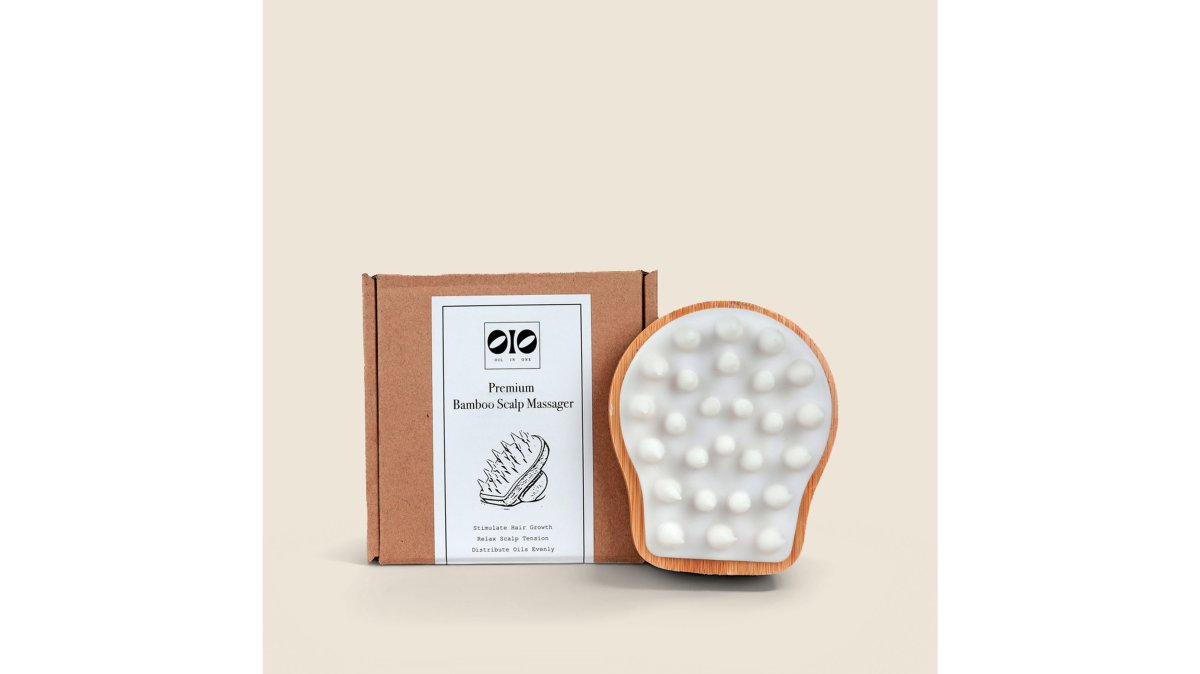
Start with a few drops, massage for a few minutes, and leave it for the time directed on the label. Rinse with shampoo, and repeat the shampoo if the scalp still feels coated. The Bamboo Scalp Massager at AED 60.00 is one option for spreading the oil during your routine.
Reading the Ingredient List for Fragrance and Heavy Oils
Synthetic fragrance is one of the main causes of irritation on a sensitive scalp, and it adds a layer that is hard to rinse. Check the ingredient list for "parfum" or "fragrance," which usually signals a synthetic blend. Unscented and fragrance-free are not the same thing: unscented products may still contain masking ingredients.
Heavy oils to watch for include thick castor-based blends and high-concentration butters. If the list is long and the first few ingredients are heavy, expect more greasiness. Oil In One lists every ingredient in plain language.
Natural Oils for Flaky Scalp and Which Ones Suit Which Hair
Different botanical oils suit different hair. Lighter oils such as jojoba and fractionated coconut spread easily and rinse well, which makes them a good fit for fine or oily-prone hair. Richer oils such as argan and almond feel more nourishing but can leave more residue on thin hair. For a closer look at which botanicals calm itch, see the breakdown of soothing botanical oils.
For flakes, the goal is to soften the scalp so flakes loosen and rinse away. A light oil applied at the root and washed out with a gentle shampoo does this without adding weight. A common mistake is choosing a heavy oil for thick hair and then wondering why the scalp feels coated after washing.
Hair Oil for Low Porosity Hair: Keeping It Light
Low porosity hair resists absorbing moisture, so oil often sits on top of the strand. This makes heavy formulas especially likely to leave greasiness. Lightweight oils are usually the better choice, and applying them to damp hair rather than dry hair can help them spread. Our dedicated guide to oils for low porosity hair covers which formulas stay light.
Use less product than you think you need, and rinse thoroughly. If the strands still feel coated after washing, reduce the amount next time rather than adding more shampoo.
How to Remove Oil From Hair Without Residue
Wash with a gentle shampoo, then lather a second time. Warm water loosens oil more effectively than cold, but keep it comfortable on the scalp. A bamboo scalp massager used during shampooing helps lift surface buildup. Follow with a light rinse and check whether the scalp still feels slick. If it does, shampoo once more before conditioning.
For face and body, the Organic Cleansing Bar at AED 80.00 is available as a cleansing option.
Building a Flake-Free Scalp Routine You Can Keep Up
A routine works only if you can keep doing it. To pick the rest of your products to pair with the oil, read how to choose hair care products for dry scalp. Apply a light oil once or twice a week, massage for a few minutes, leave it for the recommended time, and wash out thoroughly. Pair this with a gentle shampoo and avoid stacking several heavy products at once. For natural calming steps to add to your routine, see how to soothe an itchy scalp naturally.
Watch out: layering a thick oil over a styling product. The combined residue is the most common cause of a greasy, flaky scalp that will not rinse clean.
Start with one light oil, one wash routine and one consistent schedule. Adjust the amount, not the number of products, if the scalp still feels heavy. Shop the Oil In One range when you are ready to build a simple routine around a light, transparent formula.
Frequently Asked Questions
What kind of oil should I use on my scalp?
Choose a light, plant-based oil that absorbs quickly and rinses out with one or two shampoos. Lightweight options such as fractionated coconut oil, jojoba and argan are commonly used for dry or flaky scalps because they spread easily without a heavy film. Check the ingredient list for synthetic fragrance, which can irritate sensitive skin, and patch test first if your scalp reacts easily to products. Apply a small amount to the scalp rather than the lengths, massage gently, leave it for 20 to 30 minutes, then wash with a gentle shampoo.
Can scalp oil help with a dry, flaky scalp?
A light oil can soften dry flakes and reduce tightness, which many people find more comfortable. It does not treat every cause of flaking, though. Persistent or itchy flaking can have several causes, so if it continues despite a consistent routine, speak with a dermatologist or pharmacist in the UAE. Use only a small amount, because too much oil left on the scalp can trap dead skin and make flakes look worse.

How do I wash oil out of my hair without leaving residue?
Massage a small amount of gentle shampoo into dry hair first, then add water and lather again. Focus the shampoo on the scalp, where the oil sits, and rinse thoroughly with lukewarm water. If your water is hard, a clarifying shampoo used once every week or two can prevent buildup. Finish by checking the scalp with your fingertips; it should feel clean rather than slippery.
