
Derma Stamp vs. Derma Roller for Hair and Beard Growth: Which Is Best?
The Oil In One TeamDerma Roller vs. Derma Stamp: Which is Better for Your Skin?
When it comes to microneedling, two popular tools dominate the conversation: the derma roller and the derma stamp. Both tools offer impressive skin benefits, but understanding their differences is crucial to choosing the right one for your needs. If you're looking for the most effective option, the derma stamp offers unique advantages, especially when paired with our Peppermint Growth Oil for targeted scalp or skin care.
What is a Derma Roller?
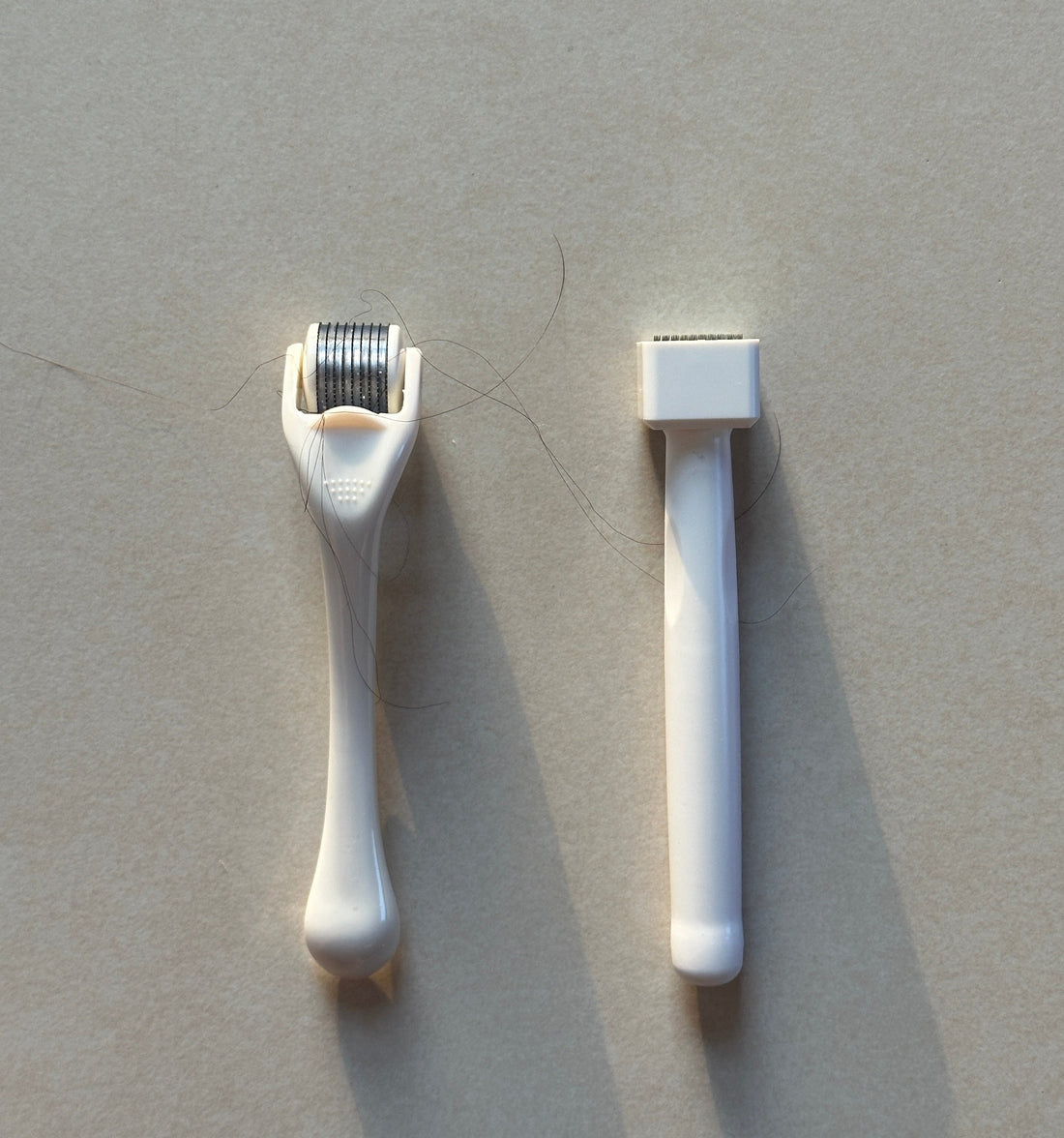
A derma roller is a handheld device equipped with a cylindrical roller covered in tiny needles. As you roll it over your skin, it creates micro-injuries, which stimulate collagen production and enhance skin texture. However, the rolling motion can sometimes lead to uneven pressure and dragging, potentially causing micro-tears on delicate areas of your skin.
Derma rollers are commonly used for:
-
Reducing fine lines and wrinkles
-
Improving the appearance of acne scars
-
Enhancing skin elasticity
-
Boosting absorption of serums and oils
What is a Derma Stamp?
Unlike the derma roller, the derma stamp is designed with a flat base that holds an array of microneedles. Instead of rolling, you gently press or "stamp" the tool onto your skin. This ensures precise, controlled application without the risk of dragging or uneven pressure. The derma stamp is particularly effective for targeting specific areas, such as acne scars, thinning hairlines, or fine lines.
Benefits of the derma stamp include:
-
Precise application for small or hard-to-reach areas
-
Reduced risk of skin irritation
-
Ideal for sensitive or acne-prone skin
-
Better suited for scalp treatments
Derma Roller vs. Derma Stamp: Key Differences
-
Application Technique: Derma rollers use a rolling motion, while derma stamps require a stamping motion for precise treatment.
-
Skin Impact: The derma stamp minimizes the risk of dragging and tearing, making it gentler on sensitive skin.
-
Precision: The derma stamp is better for targeting specific areas, while the derma roller is more suited for large surface areas like the forehead or cheeks.
-
Suitability for Hair Growth: The derma stamp pairs perfectly with hair growth treatments like our Peppermint Growth Oil, as it allows for even product absorption and stimulates the scalp without causing irritation.
Why the Derma Stamp is Better for Scalp and Skin Care
The derma stamp is a game-changer for anyone looking to improve their skin or scalp health. Its controlled application ensures minimal irritation while delivering maximum results. When used with the Peppermint Growth Oil, it enhances nutrient absorption, promotes blood circulation, and supports healthy hair regrowth.
For skincare, the derma stamp can:
-
Fade acne scars
-
Minimize fine lines
-
Improve skin tone and texture
For scalp care, it creates microchannels that allow growth-promoting oils to penetrate deeply, nourishing the hair follicles for thicker, healthier hair.
How to Use the Derma Stamp
Using the derma stamp is simple and effective when done correctly:
-
Cleanse Your Skin or Scalp: Ensure the area is clean and dry.
-
Sterilize the Tool: Disinfect the derma stamp with alcohol to ensure hygiene.
-
Apply Gentle Pressure: Press the derma stamp onto the desired area, lifting it between each stamp to avoid dragging.
-
Pair with Products: For hair growth, apply our Peppermint Growth Oil after using the derma stamp to maximize results. For skin, use a hydrating serum or cream.
-
Aftercare: Avoid sun exposure and use a soothing moisturizer like our All In One Butter or sunscreen post-treatment.
Who Should Use a Derma Stamp?
The derma stamp is ideal for anyone with:
-
Acne scars
-
Thinning hair or receding hairlines
-
Fine lines and wrinkles
-
Sensitive or easily irritated skin
Its versatility makes it a must-have for both skincare and scalp care routines.
Pairing the Derma Stamp with Oil in One Products
For optimal results, pair your derma stamp with Oil in One’s natural products. After stamping, apply our Peppermint Growth Oil to promote hair regrowth and scalp health. For skincare, use hydrating serums or creams to lock in moisture and boost collagen production.
Why Choose the Derma Stamp?
At Oil in One, we’re dedicated to offering tools and products that prioritize your health and wellness. Our derma stamp is designed for precision, safety, and effectiveness, ensuring you get the best results without compromising your skin or scalp health.
By choosing the derma stamp, you’re investing in a tool that delivers professional-grade results in the comfort of your home. It’s perfect for addressing acne scars, promoting hair growth, and enhancing overall skin health.