
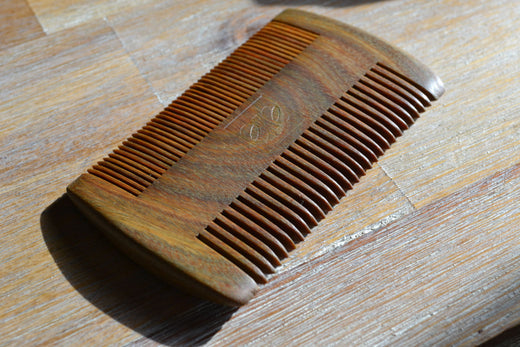
Discover the Benefits of Sandalwood Combs: The Best Sustainable and Durable Grooming Tool for Hair and Beard Care
The Oil In One TeamWhen it comes to choosing the right comb for your hair and beard, there are several options available in the market, each with its unique features and benefits. Neem wood, sandalwood, bamboo wood, and peach wood combs are some of the popular options that have gained popularity in recent times. In this blog, we will compare these four types of combs and explain why sandalwood combs are the best choice for beard and hair use, despite the benefits of neem wood combs.
Neem Wood Combs
Neem wood combs are made from the bark of the neem tree, which is a native tree in India. The neem tree is known for its medicinal properties, and neem wood combs are popular for their anti-bacterial and anti-fungal properties. They are also believed to help prevent dandruff and other scalp conditions. However, neem wood combs can be quite harsh on the hair and may cause hair breakage and split ends.
Bamboo Wood Combs
Bamboo wood combs are made from bamboo, which is a fast-growing and sustainable material. Bamboo combs are eco-friendly, lightweight, and durable. They are also gentle on the hair and can help prevent static and frizz. However, bamboo combs may not be as effective as neem, peach, or sandalwood combs in preventing scalp conditions.
Peach Wood Combs
Peach wood combs are made from the wood of peach trees, which is known for its anti-static properties. Peach wood combs are gentle on the hair and scalp, and they can help prevent hair breakage and split ends. They are also believed to improve hair texture and shine. However, peach wood combs may not have the same natural conditioning properties as sandalwood combs.
Sandalwood Combs
Sandalwood combs are made from the fragrant heartwood of the sandalwood tree, which is native to India. Sandalwood combs are known for their distinctive aroma and soothing properties. They are gentle on the hair and scalp, and their natural oils can help nourish and condition the hair. Sandalwood combs also help prevent static and frizz and can improve hair texture and shine.
Why Sandalwood Combs are the Best Choice
Incredible Natural Properties
Out of the four options, sandalwood combs are the best choice for beard and hair use. While neem wood combs have anti-bacterial and anti-fungal properties that may help prevent scalp conditions, they can be quite harsh on the hair and may cause hair breakage and split ends. On the other hand, sandalwood combs are gentle on the hair and scalp, have natural conditioning properties, and can improve hair texture and shine. Sandalwood combs also help prevent static and frizz.
Eco-friendly & Sustainable
In addition to their grooming benefits, sandalwood combs are also eco-friendly and sustainable. The sandalwood tree is a slow-growing tree that requires careful harvesting to ensure the tree's sustainability. By choosing a sandalwood comb, you are supporting sustainable harvesting practices and reducing your environmental impact.
Durability
We cannot forget that sandalwood combs are highly durable and long-lasting. Sandalwood is a dense and sturdy wood that can withstand wear and tear, making it an excellent choice for a grooming tool that will last a lifetime. Sandalwood combs are also resistant to water damage, which means they can be used in the shower or bath without losing their quality or shape. So, not only will a sandalwood comb provide you with superior grooming benefits, but it will also be a wise investment that you can rely on for years to come.
To Conclude...
While neem wood, bamboo wood, and peach wood combs have their benefits, sandalwood combs are the best choice for beard and hair use. They are gentle on the hair and scalp, have natural conditioning properties, and are sustainable and eco-friendly. So, if you are looking for a high-quality grooming tool that will help you achieve healthy, shiny hair and beard, a sandalwood comb is the perfect choice.