

Hair Oil for Low Porosity: A 2026 Guide
Editorial TeamTable of Contents
- Understanding Hair Porosity and Why It Matters
- Best Oils for Low-Porosity Hair
- How to Moisturize Low-Porosity Hair Without Buildup
- Baobab Oil for Low-Porosity Hair
- Hair Oil Buildup on Low-Porosity Hair and How to Prevent It
- Common Mistakes When Oiling Low-Porosity Hair
- Frequently Asked Questions
Last Updated: October 18, 2026
Understanding Hair Porosity and Why It Matters
Hair porosity determines how hair absorbs and retains moisture, the foundation of any routine, especially when choosing the right hair oil for low porosity.

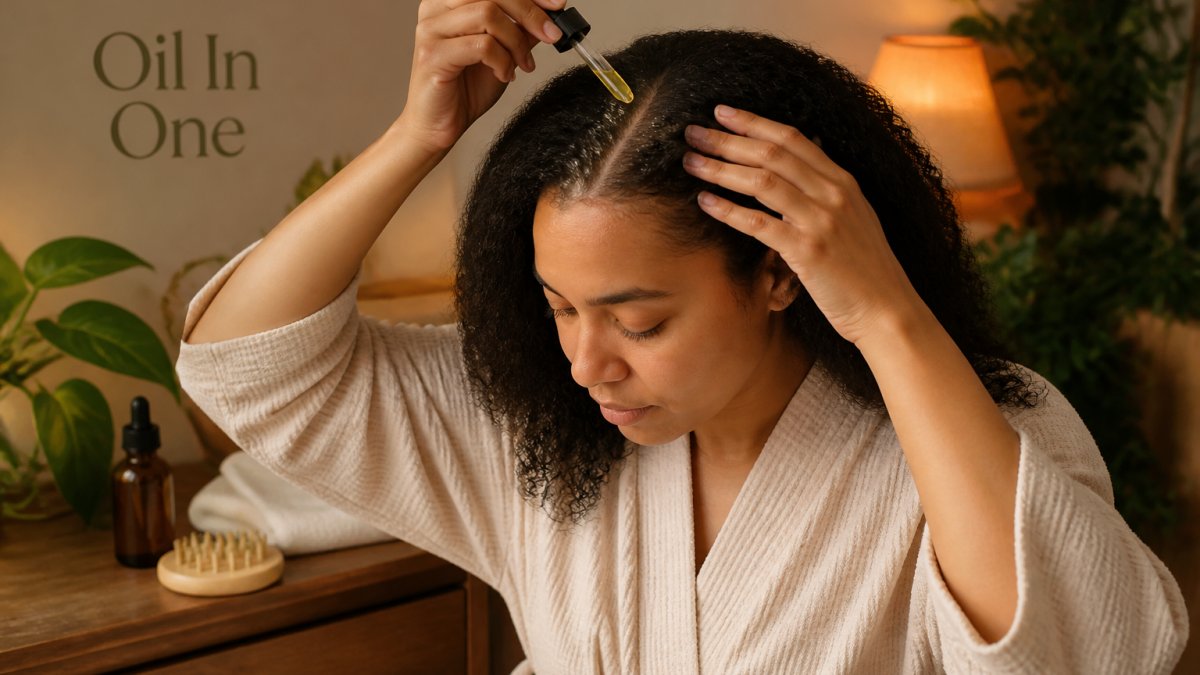
Porosity is set by how tightly your cuticles lay, think overlapping roof shingles.
The wrong products make low-porosity hair worse. Heavy oils sit on top of strands instead of moisturizing them, leaving hair greasy, weighed down, dull, and sticky.
How to Identify Low-Porosity Hair
Signs of low-porosity hair: water beads up instead of absorbing, hair takes a long time to dry, and products build up, leaving hair heavy or stiff.
To test at home, drop a single strand of clean hair into a glass of water: floating suggests low porosity, sinking quickly means high porosity, and hovering in the middle means medium.
Porosity tests aren't perfect, hair can have mixed porosity, with roots differing from ends, and climate, heat damage, and chemical treatments all affect behavior.
Why Low-Porosity Hair Resists Moisture Absorption
Low-porosity hair's tight cuticles are both strength and challenge: they protect hair and retain moisture once inside, but getting moisture in requires the right approach.
Heavy oils can't penetrate the cuticle layer, so they sit on top and create buildup, greasy, dull, hard-to-style hair while moisture stays locked outside.
Lightweight oils and proper application are essential: they slip between tight cuticles and hydrate without the weight.
Best Oils for Low-Porosity Hair
Naming jojoba and argan isn't enough when your hair repels heavy products. The useful question is which oil fits the job, scalp, strands, or sealing, without creating buildup.
A Practical Oil-Selection Guide by Weight and Use
Oil weight combines molecular size, fatty-acid profile, and spread. The practical test for low-porosity hair is how the oil feels on a single strand: does it disappear or sit?
| Oil | Likely weight and feel | Best use on low-porosity hair | Watch-outs |
|---|---|---|---|
| Jojoba | Very light, absorbs quickly, close to scalp sebum | Scalp oiling, light sealing on ends | Can feel dry on very coarse hair; layer with a richer oil if needed |
| Grapeseed | Very light, almost watery, low residue | Pre-wash on lengths, sealing fine hair | May not be nourishing enough alone for dry ends |
| Sweet almond | Light to medium, soft finish | Pre-wash, ends conditioning | Nut allergy caution; patch test first |
| Argan | Light to medium, silky finish | Sealing damp ends, adding shine | Can build up if applied to roots repeatedly |
| Baobab | Light, fast-absorbing, slightly rich | Pre-wash on damaged lengths | Less common; patch test for sensitivity |
| Rosemary (diluted) | Light carrier-dependent, tingling | Scalp oiling for circulation | Must be diluted; not for broken skin |
| Tea tree (diluted) | Light, medicinal | Scalp oiling for flaky, itchy scalp | Dilute well; strong sensitizer for some |
| Coconut | Heavy, solid at room temperature | Not ideal for low-porosity hair | High buildup risk; better for high-porosity hair |
| Castor | Very heavy, sticky | Not ideal for low-porosity hair | Difficult to wash out; can cause buildup |
Simple rule: the tighter your cuticles and finer your strands, the lighter the oil. If your hair is low-porosity but coarse or dry at the ends, use a light oil on the scalp and a slightly richer one only on the ends.
Matching the Oil to the Job
- Scalp oiling: Choose jojoba, diluted rosemary, or diluted tea tree. These spread easily, do not clog the scalp as readily, and let you massage without dragging. Keep the amount small, a few drops per section.
- Pre-wash treatment on lengths: Choose grapeseed, sweet almond, or baobab. These give slip and conditioning before shampoo without leaving a heavy film.
- Sealing damp ends: Choose argan or jojoba. Apply two to three drops to damp ends only, after conditioner, to slow moisture loss.
- Avoid for low-porosity hair: Coconut and castor oils are common recommendations for other hair types but are the most likely to sit on low-porosity strands and cause persistent coating.
Why Oil Weight Matters for Low-Porosity Hair
Oil weight determines whether a product helps or hurts. Heavier oils have larger molecules and a thicker feel, so they coat the surface instead of slipping between tight cuticles, trapping sweat, dirt, and other products.
Lightweight oils spread more readily and leave less residue, delivering nourishment without the same buildup risk. Our Organic Scalp & Hair Oil uses a jojoba and argan base, light enough for low-porosity hair, nourishing enough to matter, paired with rosemary, bhringraj, and black seed oil to stimulate roots, strengthen strands, and balance the scalp.
How to Tell Whether an Oil Is Helping or Causing Buildup
A few observable signs separate a helpful oil from one sitting on your hair:
- Helping: Hair feels soft after washing, ends look less dry, scalp feels calmer, and hair still gets wet quickly in the shower.
- Causing buildup: Hair feels coated or stiff even after shampooing, looks limp or dull, takes longer to get fully wet, or styling products stop working as well.
If you see buildup signs, reduce the amount, switch to a lighter oil, or use it only as a pre-wash rather than a leave-in. Persistent coating means the oil is too heavy for your hair.
How to Moisturize Low-Porosity Hair Without Buildup
Application method matters as much as product choice. Pre-wash treatment, scalp oiling, and sealing are not interchangeable, treating them as the same is a main reason low-porosity hair ends up greasy and weighed down.
Pre-Wash Treatment vs. Scalp Oiling vs. Sealing
Each method serves a different purpose.
Pre-wash treatment (pre-poo) applies oil to dry hair before shampooing, left on for 30 minutes to several hours.
Scalp oiling targets roots and scalp: apply directly, massage in, and leave at least 30 minutes.
Sealing means applying a few drops of oil to damp mid-lengths and ends after washing to slow moisture loss.
Low-porosity hair benefits most from pre-wash treatments and scalp oiling, which give oil time to penetrate without water and shampoo working against it.
Step-by-Step Application Guide
Start with dry hair for pre-wash and scalp oiling, sectioned into four to six parts.
Work the remaining oil through mid-lengths and ends without oversaturating, hair should feel moisturized, not greasy.
Leave it on at least 30 minutes, or overnight for deeper conditioning.
Most people with low-porosity hair do best with this routine three times per week; adjust to how your hair responds.
Amount, Placement, and Timing at a Glance
- Amount: Start with one teaspoon for a pre-wash on shoulder-length hair; use a few drops per scalp section; use two to three drops for sealing.
- Placement: Pre-wash on lengths and ends; scalp oiling on the scalp only; sealing on damp mid-lengths and ends.
- Timing: 30 minutes minimum for pre-wash and scalp oiling; overnight is optional but wash out the next morning; sealing is leave-in and needs no wash-out.
- Wash-out: Use regular shampoo; if hair still feels coated, wash a second time or use a clarifying shampoo occasionally.
Troubleshooting Wash-Out
If hair still feels oily after one shampoo, the oil was likely too heavy or you used too much. Wash once more with a small amount of shampoo and warm water. If coating persists past a wash or two, switch to a lighter oil and use less next time, persistent difficulty getting hair fully wet means oil is sitting on the surface.
Baobab Oil for Low-Porosity Hair
Baobab oil is gaining attention for low-porosity hair: it's lightweight, rich in vitamins A, D, E, and F, and absorbs without residue.
Like jojoba and argan, baobab penetrates low-porosity cuticles instead of sitting on top.
Use it like other lightweight oils, as a pre-wash treatment or scalp oil, starting with a small amount, since it absorbs quickly.
If you have very sensitive skin, patch test baobab oil first; most people tolerate it well, but reactions vary.
Hair Oil Buildup on Low-Porosity Hair and How to Prevent It
Buildup is the biggest risk with oils on low-porosity hair: product accumulates instead of absorbing, leaving hair dull, heavy, and hard to style.
Signs Your Oil Is Causing Buildup
Sticky or stiff hair even after washing, dullness, styling products failing, and unusual heaviness all signal that oil is sitting on your strands instead of nourishing them.
Buildup usually means one of three things: too much oil, an oil too heavy for your hair, or improper washing.
How to Reset Your Hair and Start Fresh
If buildup has already happened, you need to reset.
Then go back to basics: use half the oil, applied only to scalp and ends, avoiding mid-lengths where buildup accumulates.
Switch to a lighter oil, jojoba and grapeseed are your safest bets when selecting hair oil for low porosity.
Space out applications: if you oiled twice weekly, try once weekly until hair adjusts, then gradually increase once buildup stops.
Common Mistakes When Oiling Low-Porosity Hair
Using heavy oils. Coconut oil, shea butter, and thick creams sit on top and create buildup on low-porosity hair.
Using too much. More oil means more buildup, not better results, a little lightweight oil goes further than you think.
Skipping the scalp. Scalp health drives hair growth, so include your scalp in your oiling routine instead of focusing only on lengths.
Ignoring individual variation. Your hair's needs are unique; pay attention to how yours responds and adjust accordingly.
At Oil In One, we've learned that low-porosity hair responds best to consistent, lightweight routines. Our Organic Scalp & Hair Oil costs AED 120.00 and includes jojoba, argan, rosemary, bhringraj, black seed oil, and pumpkin seed oil, rosemary stimulates roots, black seed oil strengthens, pumpkin seed oil nourishes, and the light jojoba and argan base absorbs without buildup.
The key is consistency, low-porosity hair responds to a routine you stick with, not random applications.
Frequently Asked Questions
What are the best lightweight oils for low-porosity hair?
Jojoba oil, argan oil, grapeseed oil, and sweet almond oil are the top choices for low-porosity hair because they have a light molecular weight that won't sit heavy on the hair shaft. Jojoba oil is particularly effective because it mimics the scalp's natural sebum, making it easy for the hair cuticle to accept without causing buildup. The Organic Scalp & Hair Oil (AED 120) combines jojoba and argan with rosemary and bhringraj to support both moisture absorption and scalp balance without weighing down your strands.
How often should you apply oil to low-porosity hair?
Low-porosity hair typically needs oiling 2-3 times per week as a pre-wash treatment, rather than daily application. Because the water-resistant cuticle absorbs moisture slowly, frequent oiling can lead to buildup. A 30-minute pre-shampoo treatment once or twice weekly gives your scalp and hair the nourishment they need without overwhelming the hair shaft. If you live in a dry climate or have an itchy scalp, you may benefit from a light scalp oil on non-wash days, but always monitor for signs of product accumulation.
How do you tell if an oil is too heavy for low-porosity hair?
Signs that an oil is too heavy include greasy, limp hair that doesn't bounce back after washing, a dull appearance even after shampooing, or sticky buildup at the roots. Low-porosity hair struggles to absorb dense oils like coconut or heavy mineral oils, so they sit on the surface. If your hair looks weighed down or feels coated after oiling, switch to a lighter formula. Test new oils on a small section first, and always do a pre-wash treatment rather than applying oil to dry hair, which traps it on the cuticle.
Is baobab oil good for low-porosity hair?
Baobab oil can work for low-porosity hair when used correctly, as it has a lighter molecular structure than many plant oils. It provides hydration and strength without the heavy feel of denser oils. However, baobab is most effective when combined with even lighter oils like jojoba or argan, which help it penetrate the water-resistant cuticle. Use it as part of a pre-wash treatment rather than as a standalone oil, and limit application to 2-3 times weekly to avoid buildup. If your hair feels greasy after using baobab alone, blend it with a lighter oil or choose a formulation designed specifically for low-porosity hair.