

How to Build a Natural Hair Care Products Routine
Editorial TeamLast Updated: November 23, 2026
Quick Summary
Build a natural hair care routine by treating the scalp first: oil the scalp before washing, leave it on for at least 30 minutes, then shampoo and condition the lengths. Apply leave-in products and oils to damp ends last, and repeat the scalp oil three times a week.
- Oil the scalp before washing, not after, and leave it on for at least 30 minutes.
- Condition the lengths rather than the scalp to detangle without weighing down the root.
- Massage the scalp gently with fingertips or a bamboo scalp massager using light pressure.
- Detangle daily with a wide-tooth wooden comb, working from ends upward.
- One bottle of Organic Scalp & Hair Oil is AED 120 for 50 ml, about five weeks of use.
Table of Contents
- Why Natural Hair Care Products Start at the Scalp
- Natural Ingredients for Hair: What Each Botanical Actually Does
- How to Choose Hair Care Products by Hair and Scalp Type
- Natural Products for Dry Scalp: Calming Itch and Flaking
- Building a Natural Hair Care Routine That Fits Your Week
- How to Apply Scalp Oil So Hair Never Looks Greasy
- What Natural Hair Care Products Cost and What You Get
- Natural vs Organic vs Clean: Reading Labels Without Guesswork
- Start With One Bottle and See How Your Scalp Responds
- Frequently Asked Questions
Why Natural Hair Care Products Start at the Scalp
Natural hair care products work best when they treat the scalp first, because the scalp is where every strand begins. At Oil In One, we build our entire range around that idea: healthy roots come before shiny ends. If your scalp is dry, itchy or flaky, no conditioner will fix the hair growing out of it.
The logic is simple. Hair follicles sit in the scalp, and they draw nourishment from the skin around them. When that skin is irritated or congested, growth suffers. In practice, this means a natural hair care routine should open with cleansing and scalp treatment, not styling.
Here is what most guides get wrong: they start with shampoo and conditioner and treat the scalp as an afterthought. We would flip that order.
Watch out: layering heavy oils on a flaky scalp without cleansing first can trap dead skin and make itching worse, not better.
Natural Ingredients for Hair: What Each Botanical Actually Does
Every botanical in a well-made formula should have a job, and you should be able to say what that job is before you buy. That is the standard we hold ourselves to at Oil In One, and it is the standard you should apply to any natural hair care product you pick up. The table below separates what each ingredient is traditionally used for from what the evidence actually supports, so you can judge a label rather than trust it.
| Botanical | Traditional use | What the evidence supports | Practical note |
|---|---|---|---|
| Rosemary oil | Stimulating the root and supporting circulation at the follicle | Small trials suggest rosemary oil may support hair growth over several months, but the evidence is limited and results are modest | Dilute well; strong concentrations can irritate a sensitive scalp |
| Bhringraj | Strengthening and nourishing the scalp | Long traditional use in Ayurvedic practice; modern clinical evidence is thin | Best as part of a blend rather than a single-ingredient treatment |
| Black seed oil | Balancing and calming irritated skin | Some evidence for soothing irritated skin; not a treatment for a diagnosed scalp condition | Patch-test first if your scalp reacts easily |
| Pumpkin seed oil | Moisturising and supporting weak roots | Early research is promising for hair density but not conclusive | Useful in light carrier blends for fine hair |
| Jojoba and argan oil | Light carriers that seal in moisture without heaviness | Well established as occlusive moisturisers that reduce water loss from the hair shaft | |
| Castor oil | A thicker oil used sparingly at the root | Traditionally used for thickness; evidence is anecdotal and the texture is heavy | Use sparingly; it is difficult to wash out of fine hair |
What most labels miss is that the carrier matters as much as the active. A blend built on jojoba and argan stays light and washes out cleanly. A blend built on mineral oil sits on the surface and feels greasy for days. The same rosemary extract can feel completely different depending on what it is suspended in.
Natural does not mean risk-free. Before you commit to a new product, patch-test it: apply a small amount behind the ear or on the inner forearm, leave it for 24 to 48 hours, and check for redness, itching or swelling. If you have a diagnosed scalp condition such as seborrheic dermatitis or psoriasis, treat a cosmetic oil as a support to your prescribed care, not a replacement for it.
CosIng cosmetic ingredient database is a useful reference if you want to check what a listed ingredient is actually used for, and the product's registration record is the place to confirm it is cleared for sale locally.
A common pattern is that people react to a blend, not a single oil, so if a product irritates your scalp, note the full ingredient list before you try another. That record is what lets you and, if needed, a dermatologist narrow down the cause.
How to Choose Hair Care Products by Hair and Scalp Type
Choosing natural hair care products comes down to two questions: what is your scalp doing, and what is your hair doing? Answer those honestly and the shortlist writes itself.
Use this as a starting point:
| Scalp or hair concern | What to prioritise | What to avoid |
|---|---|---|
| Dry, flaky scalp | Calming botanicals, pre-wash scalp oil | Harsh clarifying agents |
| Oily scalp | Light oils, regular cleansing | Heavy butters at the root |
| Thinning or weak roots | Root-stimulating blends, gentle massage | Tight styles, aggressive brushing |
| Type 4 or coily hair | Moisture-sealing oils, wide-tooth detangling | Silicone-heavy leave-ins |
| Sensitive, eczema-prone skin | Short ingredient lists, no synthetic fragrance | Essential oil overload |
A common mistake is buying for hair texture alone. Someone with fine hair and a flaky scalp needs a different formula than someone with fine hair and an oily scalp. Match the scalp first, then the hair.
For a closer look at what to check on a bottle, our guide on how to read botanical hair oil ingredient labels walks through the fine print.
Natural Products for Dry Scalp: Calming Itch and Flaking
Itching and flaking usually point to a compromised skin barrier, and the fix is gentle, consistent care rather than a single strong treatment.
One customer, Hajer A., told us she barely gets an itchy scalp.
The practical steps:
- Oil the scalp before washing, not after, so the treatment has time to work
- Leave the oil on for at least 30 minutes
- Wash out with a gentle shampoo rather than a stripping one
- Repeat three times a week rather than daily
Watch out: scratching with fingernails during application can break the skin and invite infection. Use fingertips or a soft tool.
Building a Natural Hair Care Routine That Fits Your Week
A natural hair care routine only works if it survives your actual schedule and if the products are layered in the right order. Ours takes minutes, not hours, and that is deliberate. The sequence below is the one we recommend because each step prepares the hair and scalp for the next.
**** A pre-wash scalp oil goes on dry scalp before cleansing so it has time to work. Shampoo comes next to lift oil, sweat and dead skin. Conditioner goes on the lengths, not the scalp, to detangle without weighing down the root. Leave-in products and oils go on damp hair last, because they seal the water in. Apply them in any other order and you either block the treatment or leave a film that attracts dust.
Here is the weekly structure we recommend:
- Three times a week: apply scalp oil before washing, leave 30 minutes, then shampoo as normal.
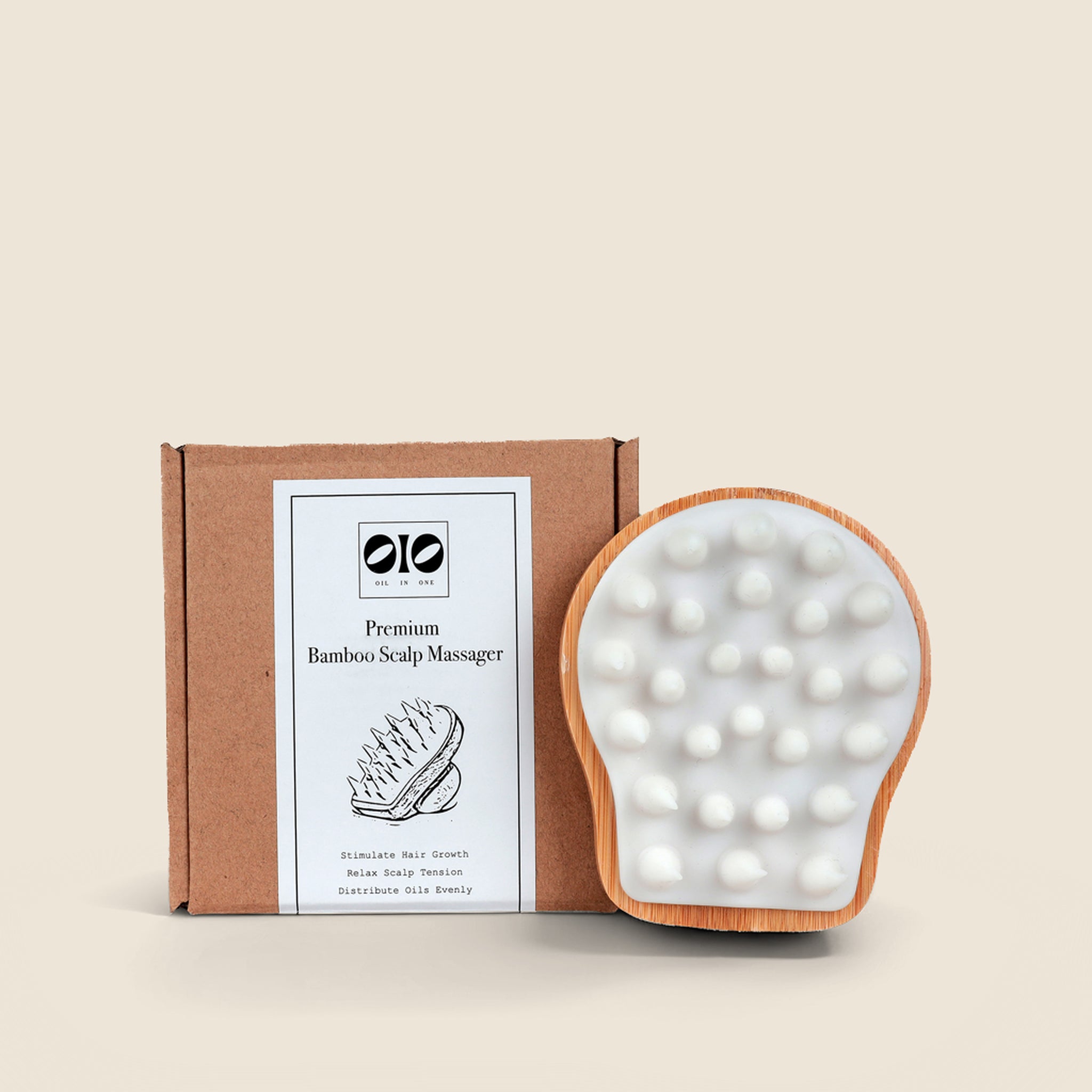
- Each wash: massage the scalp gently for a few minutes with fingertips or a bamboo scalp massager using light pressure.
- After each wash: condition the lengths, then apply a light leave-in or a few drops of oil to damp ends only.
- Daily: detangle with a wide-tooth wooden comb, working from ends upward.
- Weekly: deep condition the lengths while the oil works at the root.
That is five steps, and the frequency is adjustable. The routine should flex around your scalp, not the other way round.
Watch out: layering a heavy butter or oil on the scalp after a leave-in will trap product against the skin and can cause itching and buildup within a week. Keep the scalp for treatment and the lengths for sealing.
That is the whole system.
For anyone starting from scratch, our natural routines collection groups the steps into ready-made systems.
How to Apply Scalp Oil So Hair Never Looks Greasy
The greasy-hair problem is almost always an application problem, not a product problem. Apply too much, or apply to the lengths instead of the scalp, and any oil will look heavy.
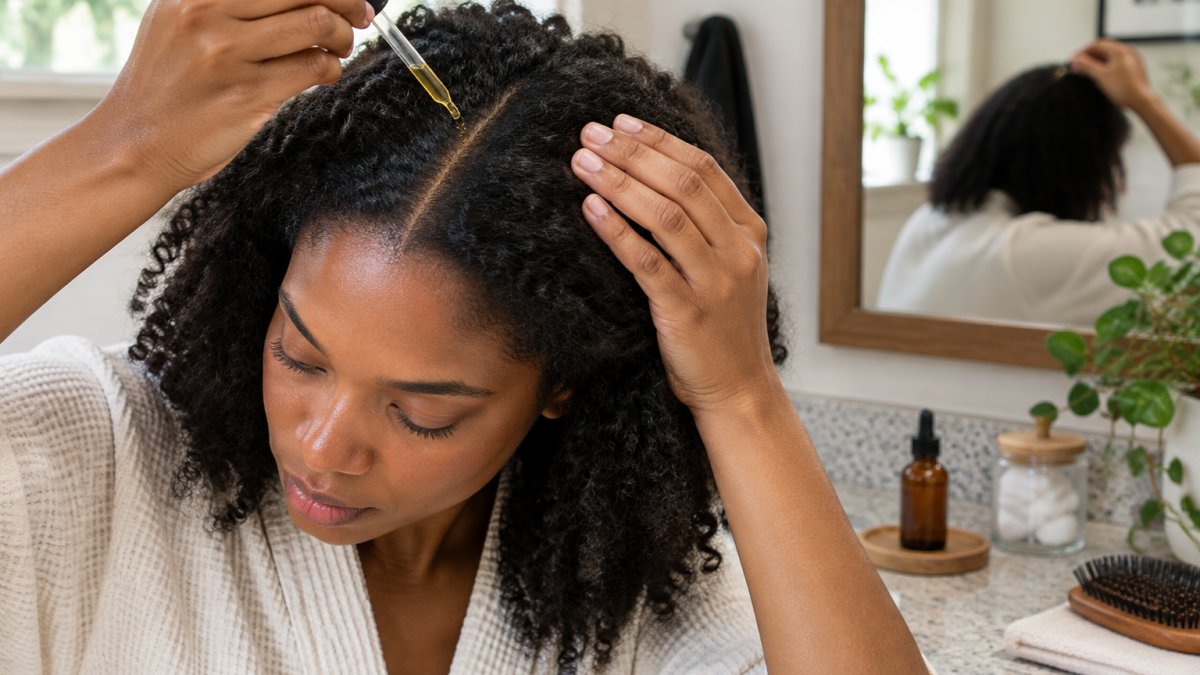
Here is the method we teach:
- Part the hair in sections, a few centimetres apart
- Place a few drops along each parting, directly on the scalp
- Massage gently with fingertips, never nails
- Leave for at least 30 minutes, then shampoo out once
A few drops is enough. More oil does not mean more benefit, and it does mean more washing. Our own formula is built on a light jojoba and argan base with no mineral oil or silicones. Noor H. told us it "is not greasy and it absorbs very well."
If you are still ending up heavy, our breakdown of non-greasy scalp oil mistakes covers the usual culprits.
What Natural Hair Care Products Cost and What You Get
Price is where natural hair care products get judged unfairly, so let us be direct about what you are paying for. A single bottle of our Organic Scalp & Hair Oil is AED 120 for 50 ml, which covers roughly five weeks of three-times-weekly use.
The value question is not "oil versus shampoo." It is what is inside the bottle. We use raw organic botanicals instead of deodorized oils, and our blend keeps a genuine herbal scent.
Here is how the sizes compare:
| Option | Price | Duration | Best for |
|---|---|---|---|
| 1 bottle | AED 120 | About 5 weeks | First-timers testing the ritual |
| 2 bottles | AED 216, save 10% | About 10 weeks | Milder concerns, occasional flaking |
| 3 bottles | AED 306, save 15% | About 15 weeks | Shedding, weak roots, thin-looking hair |
One bottle is genuinely too short to judge a scalp routine. Scalp care takes months, not days, so the three-bottle option exists for a fair trial.
Natural vs Organic vs Clean: Reading Labels Without Guesswork
The three words are not interchangeable. Natural generally means ingredients derived from plants or minerals. Organic means grown and processed under a certified farming standard. Clean has no legal definition at all, so it means whatever the brand decides it means.
That gap is where marketing lives. A product can call itself clean while containing synthetic fragrance, and a product can be genuinely natural while carrying a raw, earthy smell that puts people off. We chose the second path: our blend keeps its natural herbal scent rather than masking it.
Before buying from any brand, check three things:
- Is the business registered and legitimate?
- Is the product registered with Dubai Municipality, which reviews the analysis and confirms it is safe to use?
- What is the product's origin, and which oils does it actually contain?
Dubai Municipality product registration lets you verify registration directly. For a full walkthrough of label reading, see our guide on reading botanical hair oil labels.
Start With One Bottle and See How Your Scalp Responds
The sensible entry point is one bottle, not three. Start with our Organic Scalp & Hair Oil, run the three-times-weekly ritual for five weeks, and judge how your scalp feels rather than how your hair looks on day two.
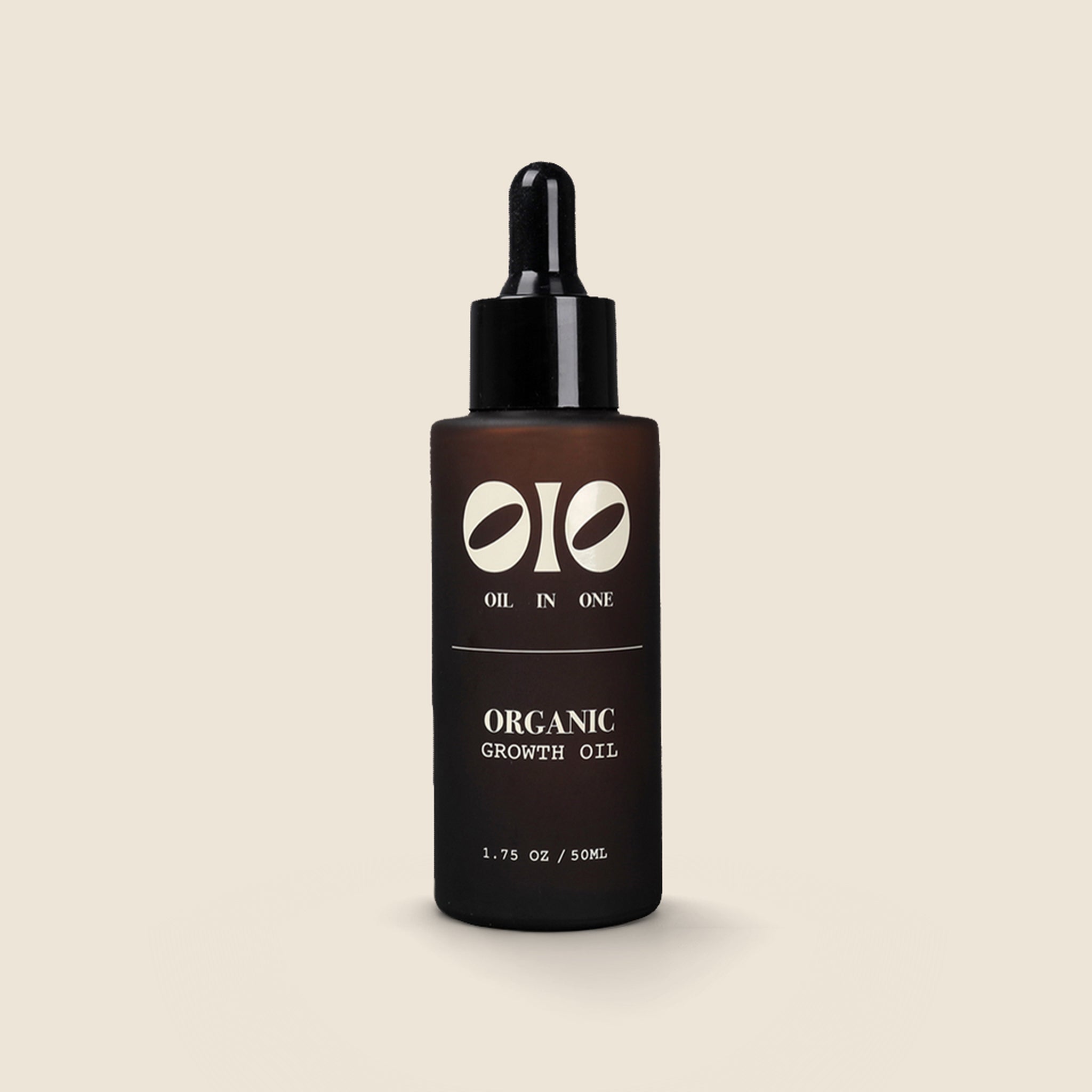
Maryam reported less shedding during her showers and brushing after using the Growth Oil.
We would rather you buy one bottle and come back than buy three and give up.
A scalp that itches, flakes or sheds needs a routine built for it, not another product stacked on top. Oil In One makes that routine simple: a scalp-first oil with 11 botanicals, transparent ingredient labelling, and a light base that washes out in one pass. Our Organic Scalp & Hair Oil supports active growth, calms itchy and flaky scalps, and seals in moisture without weighing hair down. Get started with Oil In One and give your scalp the 15 weeks it needs to respond.
Frequently Asked Questions
What are natural hair care products?
They are products built from plant-derived ingredients such as botanical oils, extracts and clays rather than mineral oil, silicones or synthetic fragrance. The category covers shampoo, conditioner, hair oil, hair masks and scalp treatments. What matters is the full ingredient list, not the word natural on the front of the bottle. At Oil In One, every botanical is listed in plain language with the job it does, so you can see whether the formula suits your scalp before you buy.
Can natural hair care products help with a dry or itchy scalp?
They can help, provided the formula is light enough to wash out and gentle enough not to irritate. Look for oils such as jojoba, argan and black seed that moisturise without sitting heavy, and avoid synthetic fragrance if your scalp reacts easily. Scalp care takes weeks rather than days, so give any new routine a fair run before judging it.
How often should I use natural oils on my hair?
Three times a week works well for most scalps as a pre-wash treatment. Apply a few drops along each parting at the root, massage gently with fingertips for a few minutes, leave it on for at least 30 minutes, then shampoo as normal. More oil does not mean more benefit, and over-applying is the fastest way to end up with a heavy-looking finish.
How long does it take to see results from a new natural hair care routine?
Plan on 15 weeks before judging a scalp routine fairly. A single 50 ml bottle of Oil In One lasts about five weeks, which is usually too short to draw a conclusion. The three-bottle set at AED 306 covers roughly 15 weeks, which is the window the brand recommends for a genuine trial.
