

Seamless Comb for Thin Hair: Stop Breakage When Detangling
Editorial TeamLast Updated: November 14, 2026
Quick Summary
A seamless comb stops breakage on thin hair because polished, rounded teeth glide instead of grabbing, removing the snag that stretches and snaps fine strands. Inspect any comb with the fingernail drag test, and choose medium-wide spacing of about 3 to 4 millimetres for fine hair.
- Run a fingernail along each tooth in both directions; any catch means the comb will catch your hair.
- Mold lines left by injection moulding act like a microscopic saw on fine strands.
- Wide-tooth combs suit fine hair better than detangling brushes because they use fewer contact points.
- Detangle from the ends upward in four to six sections, holding each section above the tangle.
- Damp hair is the safest state for detangling fine strands; dry hair is for surface smoothing only.
Table of Contents
- Why Thin Hair Breaks and What a Seamless Comb Changes
- How to Identify a Genuinely Seamless, Well-Finished Comb
- Comb Materials Compared: Cellulose Acetate, Carbon Composite and Wood
- Wide-Tooth Comb vs Detangling Brush for Fragile Hair
- Tooth Spacing and the Best Comb for Fine Hair
- How to Detangle Fine Hair Without Breakage, Step by Step
- Combing Wet Hair Without Breakage: Wet, Damp and Dry Technique
- Troubleshooting Breakage and Telling It Apart From Shedding
- Comb Care, Cleaning and When to Replace It
- Building a Gentle Combing Routine Around Your Scalp
- Frequently Asked Questions
Why Thin Hair Breaks and What a Seamless Comb Changes
Thin hair breaks because fine strands cannot absorb the tension that a poorly finished comb applies. When a tooth catches on a cuticle, the strand stretches before it snaps, and fine hair has less mass to distribute that force. A seamless comb for thin hair breakage prevention removes the snag at its source: smooth, polished teeth that glide instead of grabbing.
At Oil In One, we hear the same story repeatedly. Someone brushes daily, loses strands every time, and assumes the problem is their hair. Usually the tool is the problem.
Fine hair has fewer strands per square centimetre, so each one carries more of the load. Add hard water, heat, and a comb with a rough edge, and breakage becomes routine. The fix is mechanical, not magical.
Below, we show you exactly how to inspect a comb before you buy it, match tooth spacing to your hair, and comb in a way that stops breakage rather than causing it.
How to Identify a Genuinely Seamless, Well-Finished Comb
Most combs sold as "seamless" are moulded, not cut, and the difference is invisible until you test the teeth. Use this five-minute inspection before you buy or keep a comb, and repeat it monthly once the comb is in use.
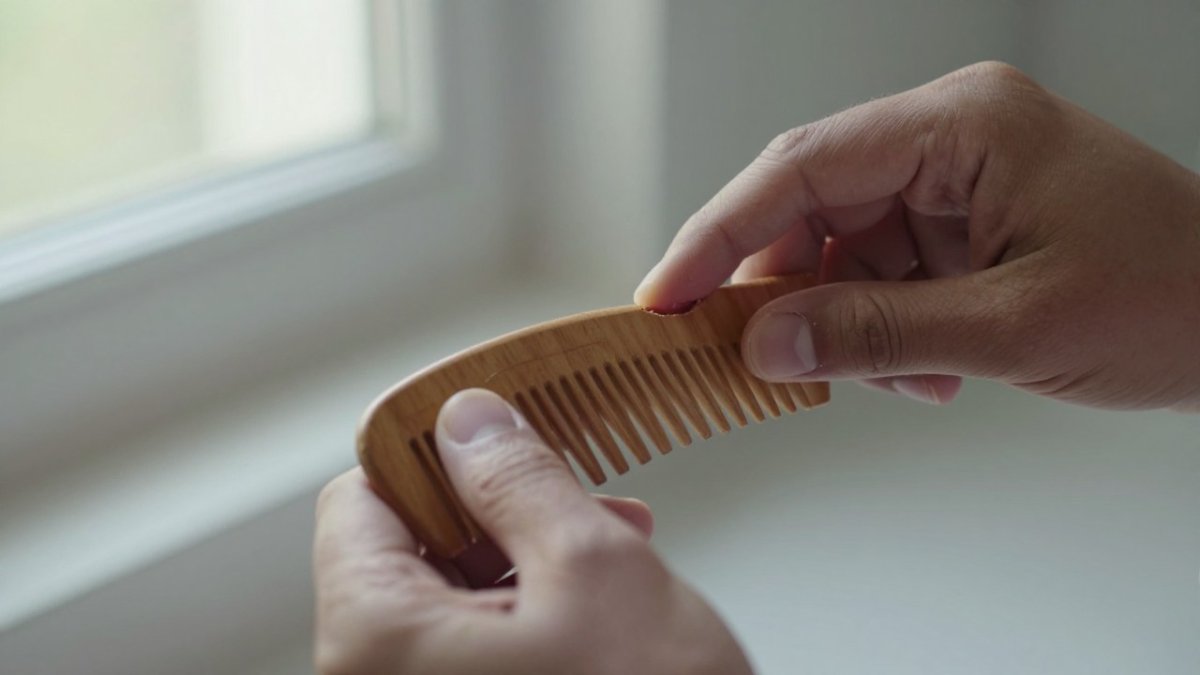
The five-point inspection
- The fingernail drag test. Run a fingernail along each tooth in both directions under good light. A genuinely seamless comb feels uniformly smooth with no ridge, no drag, and no sharp point at the tip. If your nail catches anywhere, the comb will catch your hair the same way.
- The mold-line check. Look down the centre of each tooth where the two halves of a mould met. A faint raised parting line is a mold line, and it acts like a microscopic saw on fine strands. Tilt the comb toward the light; mold lines show as a thin bright ridge.
- The tip test. Press the tip of a tooth against the pad of your finger. A rounded, polished tip sinks in slightly; a square or sharp tip digs.
- The edge test. Run a fingernail along the outer edge of the spine and the ends of the teeth. Sawn teeth leave a square, abrasive edge unless the manufacturer finishes it. Any burr or flake is a snag waiting to happen.
- The damage scan. Hold the comb up to the light and look for cracks, chips, or missing tips. A cracked tooth is a sharp edge, and no amount of smoothing will make it safe for fragile hair.
Mold lines, sawn teeth and polished teeth explained
Mold lines are the raised seams left by injection moulding. They sit on the tooth edge and act like a microscopic saw.
Sawn teeth are cut from sheet material, which leaves a square, abrasive edge unless the manufacturer finishes it.
Polished teeth have been tumbled or hand-finished until the edge is rounded and glass-smooth.
The difference matters more for thin hair than thick hair, because a fine strand has less structural reserve. A single rough edge can fray a cuticle that then travels up the shaft.
What marketing labels do and do not tell you
"Seamless" on a package usually means the manufacturer intends the teeth to be smooth, not that every tooth has been inspected. A common pattern is that budget moulded combs pass a visual check but fail the fingernail drag test on two or three teeth. Treat the label as a starting point and let the five-point inspection decide.
Watch out: a comb that passes when new can develop rough spots after repeated washing or exposure to heat, so repeat the drag test monthly and retire the comb at the first catch.
Comb Materials Compared: Cellulose Acetate, Carbon Composite and Wood
| Material | Feel on Fine Hair | Static | Seamless Possible | Price Band |
|---|---|---|---|---|
| Cellulose acetate | Smooth, slightly flexible | None | Yes, when polished | Mid to high |
| Carbon composite | Rigid, very smooth | Low | Sometimes | Mid |
| Wood | Warm, gentle | None | Yes, when finished | Low to mid |
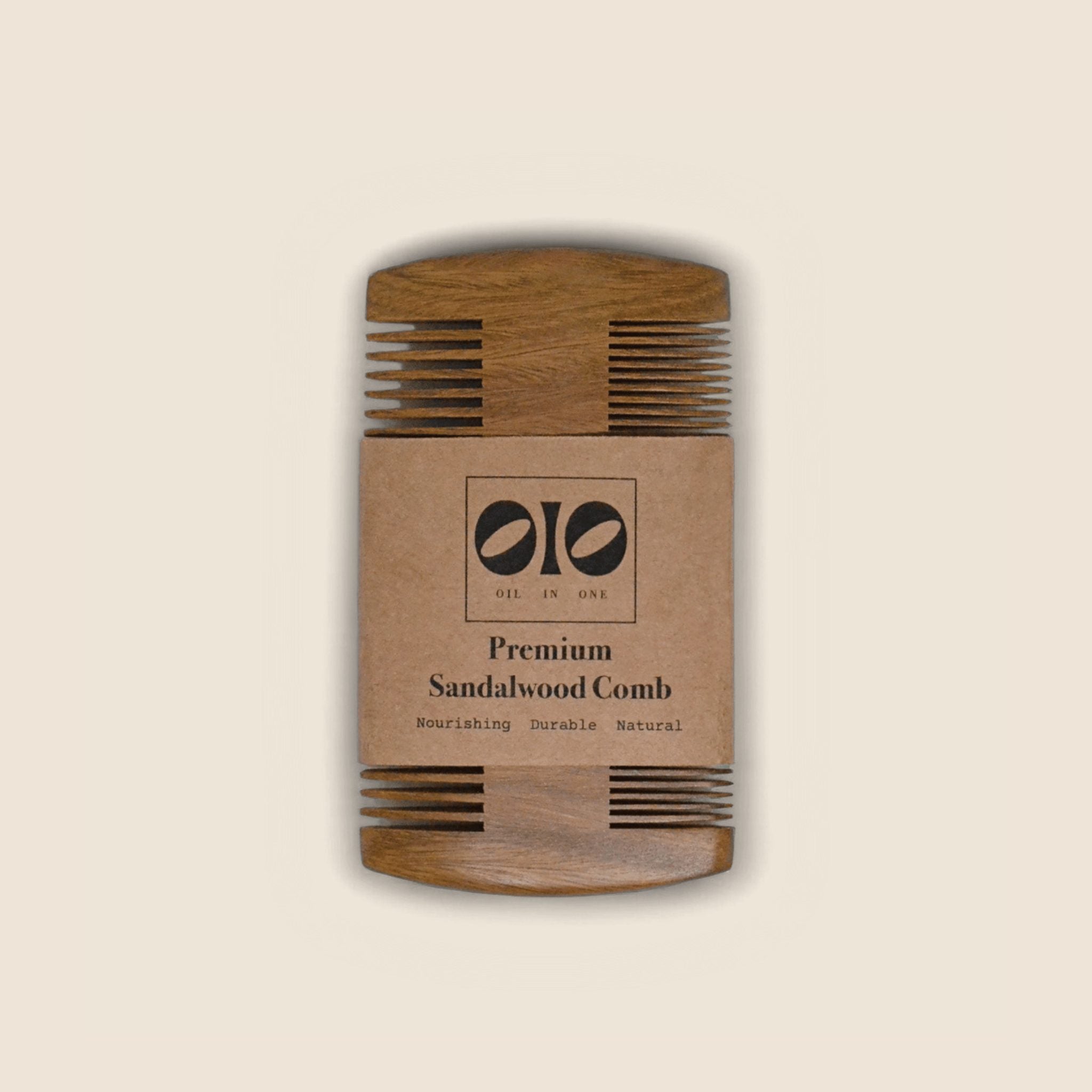
Wood suits readers who want a natural option. Our sandalwood comb is designed with a wide-tooth design that gently detangles hair, with polished, rounded teeth that glide smoothly without pulling or snagging.
Wide-Tooth Comb vs Detangling Brush for Fragile Hair
A wide-tooth comb is the better choice for fine hair in most cases, because it separates strands with fewer contact points and less friction. A detangling brush moves faster through knots but applies broader tension across the strand, which fine hair tolerates poorly. Use the comb for daily detangling and reserve the brush for thick, dense hair.
Tooth spacing decides how much the tool pulls. Wide spacing lets strands pass without dragging; tight spacing forces the tooth through the tangle. For fine hair, medium-wide spacing around 3 to 4 millimetres between teeth is the practical sweet spot.
Bristle brushes add a second problem: they create friction along the whole length of the hair shaft, not just at the tangle. That friction dulls shine and roughens the cuticle over time.
If you are weighing tools for weak strands, our guide to choosing a comb for weak hair goes deeper into matching tooth shape and spacing to your hair's condition.
Tooth Spacing and the Best Comb for Fine Hair
The best comb for fine hair has medium-wide tooth spacing, rounded tips, and a smooth, polished finish. Teeth spaced too closely grip fine strands and increase pulling; teeth spaced too widely fail to separate them at all. Match the spacing to your hair's density, not its length.
Fine hair is dense in strand count but small in diameter, so it tangles easily and releases tension slowly. A comb with roughly 3 to 4 millimetres between teeth gives each strand room to slide free.
- Fine, straight hair: medium spacing, rounded tips
- Fine, wavy hair: medium-wide spacing to handle soft bends
- Fine, curly hair: wide spacing, and comb only when damp
- Thinning at the crown: wide spacing, and start at the ends
Hair density changes with age and season, so revisit your comb choice rather than keeping the same tool for years.
How to Detangle Fine Hair Without Breakage, Step by Step
Detangle fine hair by working from the ends upward in small sections, never from root to tip in one stroke. This single change removes most of the tension that causes breakage. The full routine takes about three minutes.
- Separate the hair into four to six sections. Clip the rest out of the way.
- Hold the section above the tangle. This absorbs tension before it reaches the root.
- Comb the last few centimetres first. Work upward in short strokes.
- Stop at a knot and use your fingers. Pulling through a knot snaps strands.
- Finish with slow, full-length strokes. Let the comb glide, not force.
- Check the comb after each section. Strands on the teeth mean you are pulling too hard.
Watch out: combing a section you have not held at the root transfers the full pull to the follicle, which is how shedding after brushing happens.
Combing Wet Hair Without Breakage: Wet, Damp and Dry Technique
Wet hair stretches and breaks more easily than dry hair, so comb it with conditioner in and a wide-tooth comb only. Damp hair is the safest state for detangling fine strands. Dry hair should be combed gently and never forced through a tangle. The technique changes by state, and the preparation matters as much as the stroke.
Wet hair: comb with conditioner in, not after rinsing
Apply conditioner first and leave it in while you comb. The conditioner provides slip so the comb glides rather than drags. Work from the ends upward in small sections, holding each section above the tangle to absorb tension before it reaches the root. Use a wide-tooth comb with medium-wide spacing, and keep strokes short. Do not comb wet hair after rinsing out conditioner unless you add a leave-in product, because wet strands without slip are at their most fragile.
- Preparation: conditioner applied, hair saturated but not dripping
- Tool: wide-tooth comb, rounded tips
- Stroke: short, ends-first, section by section
- Limit: minimal passes; stop when the comb runs free
Damp hair: the main detangling window
Damp hair is the safest state for detangling fine strands because the cuticle is slightly raised and the strand has some elasticity without being waterlogged. This is where you do the full detangle, in small sections, with light pressure. Pat hair with a towel rather than rubbing, apply a light leave-in if your hair tangles easily, then comb from the ends upward. Hold each section above the tangle and let the comb glide.
- Preparation: towel-patted, not rubbed; light leave-in if needed
- Tool: wide-tooth comb, medium-wide spacing
- Stroke: full detangle in small sections, light pressure
- Check: strands on the teeth mean you are pulling too hard
Dry hair: smooth the surface, do not detangle
Dry fine hair is for surface smoothing only. Never rip through knots when dry. If you meet a tangle, stop, use your fingers to separate it, or dampen the section slightly before continuing. Dry combing is where most breakage happens because there is no slip and the strand has no stretch reserve.
- Preparation: none; hair fully dry
- Tool: wide-tooth comb or a smooth-finished comb
- Stroke: slow, surface-only, ends-first if you must detangle
- Limit: stop at any resistance
How technique changes by hair condition
Fine, straight hair tolerates damp detangling well but breaks easily when dry-combed through tangles. Fine, wavy hair needs medium-wide spacing and more sectioning because soft bends create hidden knots. Fine, curly hair should be combed only when wet with conditioner and never dry, because dry curls snap at the bend. Thinning at the crown needs wide spacing and ends-first strokes with extra care at the root, where strands are weakest.
For the full sequence, our guide to preventing hair breakage after washing covers the wash-to-comb routine in detail.
Watch out: combing wet hair without conditioner, or combing dry hair through a knot, causes the exact breakage this routine is meant to prevent.
Troubleshooting Breakage and Telling It Apart From Shedding
Breakage and shedding look similar in the drain but have different causes. Shedding is whole strands with a small white bulb at one end, and it is normal. Breakage is shorter fragments without a bulb, and it points to friction, tension, or a rough tool.
Check the evidence:
- Length: short pieces mean breakage; full-length strands mean shedding
- Tip: a white bulb means the strand shed naturally
- Location: breakage clusters where you comb most
- Timing: breakage rises when you change tools or technique
If the fragments are short and concentrated mid-shaft, the comb is the first suspect. Swap to a seamless comb and a gentler technique for a few weeks before assuming anything else. For a structured plan, our routine for strengthening weak hair without heat walks through the steps.
Comb Care, Cleaning and When to Replace It
Residue from oils, conditioner, and dust collects between the teeth and turns a smooth comb rough. Replace a comb when the teeth feel rough, when tips chip, or when a tooth cracks.
Watch out: a cracked tooth is a sharp edge. Retire the comb immediately rather than smoothing it down.
Keeping hair easy to comb starts in the shower. A conditioner routine for weak hair reduces the friction the comb has to overcome.
Building a Gentle Combing Routine Around Your Scalp
Scalp care and combing are the same habit. Do it deliberately, not as an afterthought.
Our approach at Oil In One is scalp-first, because healthy roots are the foundation for growth. Apply a few drops along each parting right at the root, and massage gently with fingertips, never nails, for a few minutes before you comb. Our customers tell us the difference shows up in the shower: "I don't lose as much hair during my showers and brushing," says Maryam, who uses our Growth Oil.
The routine is simple. Oil before washing three times a week, massage gently for a few minutes, then shampoo as normal. Comb damp, in sections, from the ends up. Judge the results after a full 15 weeks, because scalp care takes weeks, not days.
Thin hair does not have to mean daily breakage. The tool, the technique, and the scalp underneath it all decide how much hair stays on your head. Oil In One builds simple, transparent scalp routines around 100% natural botanical oils that calm itchy, flaky scalps, seal in moisture, and wash out without leaving hair heavy. Start with a single bottle at AED 120 and see how the ritual fits your wash week, then move to the 15-week supply when you are ready to judge the results properly.
Frequently Asked Questions
What is a seamless comb and why does it matter for thin hair?
A seamless comb is cut and polished so the teeth have no mold lines, burrs or sharp edges. On thin or fragile hair, those rough spots catch individual strands, add friction and snap them mid-shaft. A well-finished seamless comb lets teeth glide through with less pulling and tension at the root. Before buying, run a fingernail along a few teeth: if you feel a ridge or a seam, it will snag hair.
Should you comb thin hair when it is wet or dry?
Wet hair stretches and is more elastic, so it breaks more easily under tension. Comb dry or damp hair with a wide-tooth seamless comb, working from the ends upward in small sections. If you must detangle in the shower, load the hair with conditioner first and use fingers or a wide-tooth comb only, never a fine-tooth one. Blot with a towel rather than rubbing, then comb once hair is damp, not dripping.
Is a wide-tooth comb better than a detangling brush for fine hair?
For fine, low-density hair, a wide-tooth comb usually wins because fewer, smoother teeth mean less drag and less tension at the root. A detangling brush suits thicker or curlier hair that needs flexible bristles to separate clumps. If you use both, comb first to loosen tangles, then brush. Whichever you pick, check the teeth or bristles for rough seams, since that is what causes snagging.
How do you tell breakage from normal shedding?
Shed hairs have a small white bulb at one end and are full length. Broken hairs are shorter, often uneven, and have no bulb. If you see lots of short pieces in the comb or on the pillow, the cause is usually mechanical: rough teeth, combing wet hair, or pulling through tangles. Cut back on tension, switch to a seamless wide-tooth comb, and give it a few weeks before judging.
