

How to Stop Hair Breakage From Heat Damage
Editorial TeamLast Updated: November 16, 2026
Quick Summary
To stop hair breakage from heat damage, cut back on hot tools for four to six weeks, use a heat protectant before styling, and keep tools at the lowest temperature that works in one or two passes. Deep condition weekly and handle hair gently, because a broken hair shaft cannot be repaired, only protected while it grows out.
- Heat damage shows up as mid-shaft breakage, dryness, split ends and a burnt smell during styling.
- Apply heat protectant to damp or dry hair before styling, using a coin-sized amount split across four to six sections.
- Fine hair should use a straightener at 120-150°C, while thick or coarse hair can take 180-200°C.
- Aim for at least 90% dry hair before a straightener or curler touches it, and drop the setting 20-30°C for the ends.
- Hair grows roughly 1 cm a month, so damaged length takes months to grow out or be trimmed away.
Table of Contents
- Why Heat Damaged Hair Breaks So Easily
- How to Tell Heat Damage Apart From Other Breakage
- How to Prevent Heat Damage to Hair Before Your Next Wash
- Choosing a Heat Protectant for Hair That Actually Shields the Shaft
- Picking a Safer Temperature for Your Straightener, Curler and Blow-Dryer
- How to Repair Heat-Damaged Hair With a Realistic Routine
- How Long Does It Take for Heat-Damaged Hair to Grow Out
- The First Four Weeks: A Breakage-Reduction Routine
- When to See a Trichologist or Dermatologist
- Building Your Scalp-First Recovery Kit
- Frequently Asked Questions
Why Heat Damaged Hair Breaks So Easily
Heat damage happens when styling tools strip moisture from the hair shaft faster than the hair can replace it. That leaves strands brittle, and brittle hair snaps.
The science is simple. Hair is mostly protein held together by water. A straightener at high heat boils that water off. The cuticle, the outer layer of each strand, lifts and cracks. Once the cuticle is gone, nothing holds the inner fibres together.
So the hair breaks. It breaks when you brush it. It breaks when you wash it. It breaks when you tie it back.
Heat damage is the weakening of the hair shaft caused by repeated exposure to high temperatures from hot tools. It shows up as dryness, split ends, and snapping strands.
The key point most guides miss: you cannot repair a broken hair shaft. You can only protect the healthy part and let the damaged part grow out. That single fact should shape everything you do next.
How to Tell Heat Damage Apart From Other Breakage
Not all breakage is heat damage. Before you change your whole routine, check which problem you actually have.
Heat-damaged hair has a signature look and feel:
- Dry and rough, even after conditioning
- Split ends that keep coming back
- Breakage mid-shaft, not just at the tips
- Strands that snap when wet or when combed
- A burnt smell during styling
Other causes look different. Breakage from hard water tends to come with dullness and a chalky feel. Breakage from tight hairstyles shows up along the hairline. Breakage from poor nutrition or scalp conditions often comes with shedding from the root, not snapping along the shaft.
Here is a quick way to tell them apart:
| Sign | Heat damage | Other causes |
|---|---|---|
| Where it breaks | Mid-shaft and ends | Root or hairline |
| Feel | Dry, rough, brittle | Dull or greasy |
| Timing | Worse after styling | Worse after washing or styling tight |
| Ends | Split and frayed | Often intact |
If your hair snaps easily along the length and feels straw-like, heat is the likely culprit. If strands fall out whole, with a small white bulb at the root, that is shedding, and it usually points to the scalp or to general health.
How to Prevent Heat Damage to Hair Before Your Next Wash
Prevention starts before you ever plug in a tool. The habits you build around washing and drying decide how much heat your hair can take.
Start with these steps:
- Wash less often. Daily shampooing strips natural oils that act as a built-in heat buffer.
- Use a conditioner every wash. guidance from the American Academy of Dermatology notes that conditioning smooths the cuticle and reduces friction, which is exactly what fragile hair needs.
- Pat, don't rub. Rough towel drying creates friction that weakens wet hair. Wet hair stretches and breaks more easily than dry hair. For practical wash-day habits that protect fragile hair, see how to prevent hair breakage after washing.
- Air-dry when you can. Let hair air-dry before any hot tool touches it.
- Never brush wet hair with a fine-tooth comb. Use a wide-tooth comb or your fingers.
A common mistake is skipping conditioner because hair feels greasy. That usually means the scalp needs care, not that the ends should go without.
Choosing a Heat Protectant for Hair That Actually Shields the Shaft
A heat protectant is a product that forms a protective layer on the hair shaft to reduce heat transfer from styling tools. It buys your hair time, but it does not make heat safe. Most guides treat all protectants as equal. They are not.
A useful way to think about it: a protectant works on three fronts. First, it coats the cuticle so the tool glides instead of dragging, which cuts friction. Second, humectants pull water into the shaft so it does not dry out and crack as fast. Third, some formulas contain film-formers that temporarily hold the cuticle flat. None of these reverse damage. They slow the rate at which new damage accumulates.
Look for these things on the label:
- Silicones or plant oils that coat the strand and slow heat transfer, dimethicone, cyclopentasiloxane, argan oil, and coconut oil are common
- Humectants like glycerin or panthenol that hold moisture in the shaft
- No alcohol high on the list, since alcohol dries hair out and works against the point of the product
- A clear temperature rating if the brand publishes one, a protectant rated to 230°C is not the same as one rated to 180°C
Format matters as much as ingredients. A spray is light and easy to distribute on fine hair but can leave thick hair under-coated. A cream or milk suits medium to thick hair and doubles as a leave-in. A serum is concentrated and best for the ends only, where hair is oldest and weakest. Match the format to your hair, not to the loudest label.
Application is where most people lose the benefit. Apply to damp or dry hair before styling, not after. Section your hair and use a light layer on each part, roughly a coin-sized amount for shoulder-length hair, split across four to six sections. Comb it through so the coating is even. Too much product weighs hair down and makes it look greasy; too little leaves bare patches that take the full heat.
Watch out: spraying protectant only on the top layer of hair leaves the under-layers unprotected, and those are often the sections that break first.
What most guides miss: a protectant on already-damaged hair only slows further damage. It does not undo the damage already there. If your ends are splitting, no spray will fix them. And a protectant is not a substitute for turning the tool down, it is a second layer of defence, not the first.
Picking a Safer Temperature for Your Straightener, Curler and Blow-Dryer
Lower heat, used less often, is the single biggest lever you control. Most people set their tools far hotter than their hair needs. The numbers below are a starting point, not a rule, your hair, your tool, and how you use it all shift the safe range.
Here is a practical guide by hair type:
| Hair type | Straightener | Curling iron | Blow-dryer |
|---|---|---|---|
| Fine or thin | 120-150°C | 120-140°C | Medium heat |
| Medium | 150-180°C | 140-160°C | Medium heat |
| Thick or coarse | 180-200°C | 160-180°C | Medium-high |
| Relaxed or damaged | 120°C or avoid | 120°C or avoid | Low heat |
A few rules that matter more than the numbers:
- One pass, not five. Repeated passes on the same section multiply the damage. If one pass at a lower temperature does not smooth the section, the tool is too cool or the section is too thick, fix that instead of adding passes.
- Keep the tool moving. Holding a straightener still on one spot scorches the cuticle. A slow, even glide beats a fast, repeated one.
- Dry hair fully first. Water trapped in the shaft boils and cracks the cuticle when a hot tool hits it. Aim for at least 90% dry before a straightener or curler touches the hair.
- Turn the heat down for the ends. The last few centimetres are the oldest and weakest part of the strand. Drop the setting by 20-30°C for the ends, or skip them entirely.
- Match the tool to the job. A blow-dryer concentrates heat through airflow, so medium heat with strong airflow is gentler than high heat with weak airflow. A straightener transfers heat through direct contact, so plate material matters: ceramic and tourmaline plates heat more evenly than bare metal, which can create hot spots.
How to check what your tool is actually doing. Many dials are approximate, and a tool that says 180°C may run hotter or cooler. If your tool has a digital display, trust it more than a numbered dial. If it does not, start one setting lower than you think you need and add heat only if the style does not hold. A simple test: style one small section at your chosen setting. If it takes more than two passes to smooth, the temperature is too low for that section, but if the hair smells hot or looks shiny in a glassy way, it is too high.
If your tool has no temperature control, that is a warning sign. You want a dial, not a fixed setting. A fixed high setting gives you no way to adapt to fine hair, damaged ends, or a quick touch-up.
Watch out: a tool that heats unevenly can scorch one section while leaving another under-styled, which tempts you to go over the scorched section again. If you notice hot spots, replace the tool rather than working around it.
What most guides miss: the right temperature is not a single number, it is the lowest setting that does the job in one or two passes on your hair, on that day. Hair that is freshly washed, air-dried, and well conditioned can take a lower setting than hair that is dry, coated in product, or already fragile. Adjust to the condition of the hair in front of you, not to the label on the tool.
How to Repair Heat-Damaged Hair With a Realistic Routine
You cannot repair a broken hair shaft. You can strengthen what is left and stop new damage. That is the honest version of "how to repair heat-damaged hair," and it works better than any product promise.
A routine that actually helps has four parts:
- Cut back on heat. Pause hot tools for four to six weeks, or drop to once a week at the lowest setting.
- Deep condition weekly. A hair mask or rich conditioner left on for 15 to 20 minutes adds moisture back to dry hair.
- Use a leave-in conditioner. It smooths the cuticle and makes detangling easier, which means less friction and less breakage.
- Handle hair gently. Comb from the ends upward, never rip through a knot, and skip tight styles.
For a full no-heat plan you can follow alongside this, see our step-by-step routine for strengthening weak hair without heat. And if your hair is brittle and snaps when wet, the right conditioner for detangling wet hair without breakage makes a real difference.
What most guides miss: bond repair treatments can improve how hair feels and reduce further damage, but they do not rebuild a fully broken strand. Treat them as support, not a cure.
How Long Does It Take for Heat-Damaged Hair to Grow Out
Heat-damaged hair grows out, it does not heal. Hair grows roughly 1 cm a month, so a damaged section takes months to replace.
The honest timeline:
- 4 weeks: hair feels softer and breaks less, if you have cut back on heat
- 8 to 12 weeks: new growth is visible at the roots
- 6 months and beyond: the damaged length has largely grown out or been trimmed away
How long it takes for heat-damaged hair to grow out depends on how much length is damaged. A few split ends can be trimmed in one visit. Damage running halfway up the shaft means months of patient trimming.
The good news: the part that grows in while you protect your hair is stronger. The bad news: no product makes the damaged part repair itself. Anyone who promises otherwise is selling you something.
The First Four Weeks: A Breakage-Reduction Routine
The first month is about stopping the bleeding. You are not fixing damage yet, you are stopping new damage from piling up.
Here is what the first four weeks look like:
- Week 1: Put hot tools away. Wash with a gentle shampoo and use conditioner every wash.
- Week 1: Switch to a wide-tooth comb for detangling.
- Week 2: Add a weekly deep-conditioning mask.
- Week 2: Book a trim to remove split ends.
- Week 3: Start a leave-in conditioner on damp hair.
- Week 3: Check your pillowcase and hair ties. Smooth fabric and loose ties reduce friction.
- Week 4: Assess. Is hair breaking less? If yes, keep going. If not, look at other causes.
A gentle comb matters more than people think. Our seamless comb for thin hair is built to detangle fragile strands without snagging, and it is the tool we would start with.
Watch out: pulling a comb through a wet knot is one of the fastest ways to snap fragile hair. Work from the ends up, in small sections, and never force it.
When to See a Trichologist or Dermatologist
Some breakage needs more than a better routine. See a professional if you notice any of these:
- Hair falling out in patches
- Shedding from the root in large amounts, with white bulbs at the ends
- Scalp pain, redness, or persistent itching
- Breakage that continues despite stopping all heat
- Thinning at the crown or along the part
A trichologist specialises in hair and scalp health (What is Trichology). A dermatologist can check for skin conditions, thyroid issues, or nutritional gaps that cause shedding. In the UAE, you can ask your doctor for a referral to a specialist if your scalp symptoms do not settle.
The distinction matters. Heat damage is a shaft problem. Shedding is often a scalp or health problem. Treating one as the other wastes months.
Building Your Scalp-First Recovery Kit
Healthy hair starts at the scalp. If the roots are weak, the strands that grow from them are weak too. That is why we build every Oil In One routine around the scalp first.
A practical recovery kit has four things:
- A gentle shampoo that cleans without stripping.
- A conditioner for every wash.
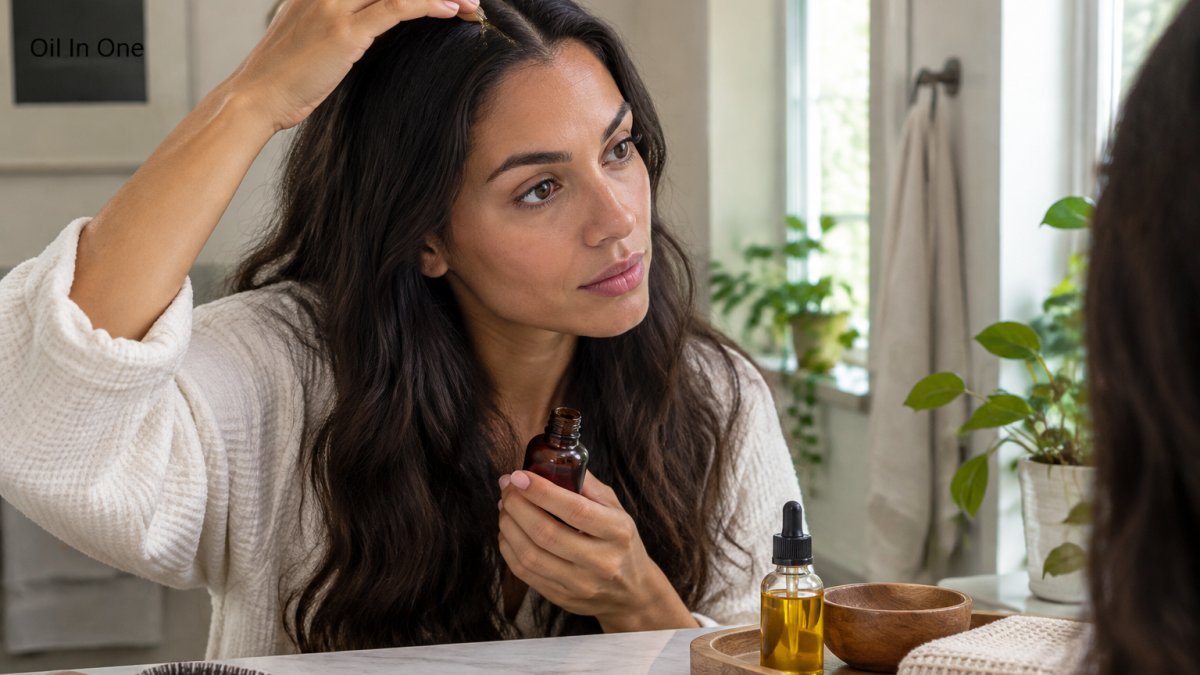
- A scalp oil applied a few drops at a time along the partings, before washing, three times a week.
- A gentle comb for detangling.
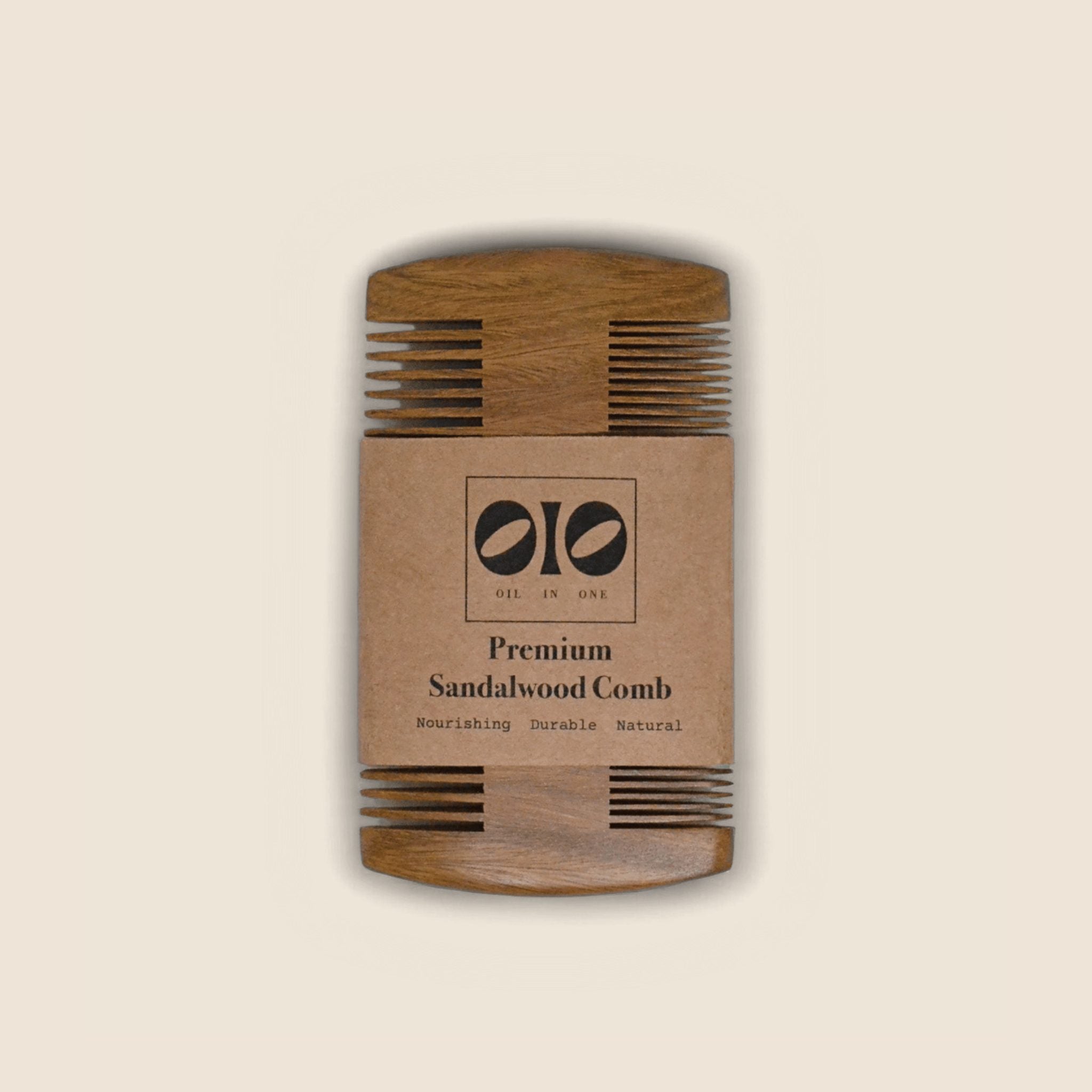
Our sandalwood comb fits that kit well. It has polished, rounded teeth and is described as anti-static and frizz-free. At AED 60, it is a simple upgrade.
For scalp care, our all-in-one scalp solution uses 11 raw organic botanicals, including rosemary, bhringraj, black seed, and castor. It is light, not greasy, and washes out easily. One bottle is AED 120 for 50 ml, about five weeks of use. Three bottles are AED 306 and cover roughly 15 weeks, which is the window we recommend before judging results.
Check that any product you buy is registered with Dubai Municipality before you use it.
Heat damage is stubborn, and the fix is slower than most people want. But it is not complicated: cut the heat, protect the shaft, and care for the scalp that grows the hair. That is the whole method, and it works.
At Oil In One, we make it simple. Our scalp-first routine uses 100% natural botanical oils with every ingredient listed in plain language. The formula is light, non-greasy, and washes out easily, so it fits into a normal wash day without extra steps. It calms itchy, flaky scalps and seals in moisture to protect fragile strands.
Shop Oil In One and give your scalp time to respond over a full 15 weeks.
Frequently Asked Questions
Can heat-damaged hair be repaired?
Partly. Heat damage changes the protein structure of the hair shaft, and once a strand is brittle or split it cannot be rebuilt. What you can do is stop further damage, keep the surviving length hydrated and conditioned, and trim the worst ends. A leave-in conditioner, weekly hair mask and bond repair treatment improve how the hair feels and how well it resists friction, but they work on the surface. The genuinely damaged section has to grow out and be cut away, which is why prevention matters more than repair.
What temperature should I use to reduce heat damage?
Stay at the lowest setting that still styles your hair. Fine or chemically treated hair usually responds well below 150°C, medium textures around 150-170°C, and thick or coarse hair may need up to 180°C. Very high temperatures are more likely to damage the hair shaft. Always dry hair fully before using hot tools, and never pass a straightener over the same section more than once.
How often should I use heat on my hair?
Aim for once or twice a week at most, and give hair at least one full week off heat styling each month. Styling frequency matters more than temperature for most people, because repeated heat exposure compounds. On days off, air-dry and use a wide-tooth comb on damp hair instead of a brush. If you swim, rinse hair with fresh water first and apply a leave-in conditioner before and after, since chlorine plus heat styling is a harsh combination.
How long does it take for heat-damaged hair to grow out?
Hair grows roughly 1 cm per month, so regrowing a damaged section takes months, not weeks. If the damage reaches 10 cm up the shaft, expect around 10 months of steady growth and regular trims before it is fully gone. Scalp care supports that timeline: Oil In One's Growth Oil is applied a few drops along each parting before washing, three times a week, and the brand recommends judging results over a full 15 weeks. A 3-bottle set (AED 306, save 15%) covers that period.
