

Scalp Massager After Beach Days: A Step-by-Step Routine
Editorial TeamLast Updated: November 7, 2026
Quick Summary
To use a scalp massager after beach days, first remove loose sand from dry hair with a wide-tooth comb, then rinse with lukewarm water for a full minute and shampoo the scalp before massaging. Use the scalp massager on damp hair for three to five minutes with light pressure, and skip it entirely if the scalp is sunburned or badly tangled.
- Remove sand from dry hair with a wide-tooth comb before wetting it, since water makes sand stick.
- Rinse with lukewarm water for a full minute before shampoo touches the scalp.
- Massage damp hair for three to five minutes once a day at most.
- Wait two to three days after mild sun exposure before resuming massage on tender skin.
- Rinse the massager under warm water after every beach-day session and air-dry it fully.
Table of Contents
- Why Your Scalp Needs a Different Routine After the Beach
- How to Remove Sand From Hair and Scalp Before You Massage
- How to Wash Hair After Swimming in the Sea
- Scalp Massager Wet or Dry Hair: Which Works After a Beach Day
- Step-by-Step: How to Use a Scalp Massager on a Post-Beach Scalp
- How Long to Use a Scalp Massager Without Overdoing It
- Sunburned, Irritated or Tangled: When to Skip the Massager
- Cleaning Your Scalp Massager After Beach Use
- Frequently Asked Questions
Why Your Scalp Needs a Different Routine After the Beach
Salt, sand, sunscreen and sun exposure leave your scalp in a different state than it was in before you left home.
At Oil In One, we build every routine around one idea: healthy roots come first.
Here is what the beach actually leaves behind:
- Salt crystals that dry on the scalp and pull moisture out of the skin
- Fine sand that lodges at the hairline and behind the ears
- Sunscreen residue that mixes with sweat and oil
Massaging over that mix pushes grit across the skin. It also drags sand through wet strands, which is how small tangles become real knots.
So the routine below runs in a fixed order: remove the sand, wash out the salt, then massage. For the wider sand-and-sun protection picture, read our guide on protecting your hair from sand and sun.
How to Remove Sand From Hair and Scalp Before You Massage
Removing sand from hair and scalp starts with dry hair, not wet hair. Water makes sand stick to strands. Brushing dry hair first lets most of it fall away before it turns into grit.
Work through it like this:
- Stand outside or over a bath and shake your hair loose with your fingers.
- Use a wide-tooth comb, starting at the ends and moving up.
- Never pull through a knot. Hold the strand above it and tease it apart.
- Check the hairline, behind the ears and the nape of the neck by hand.
- Only move to the shower once the loose grit is gone.
A common mistake is jumping straight into the shower. Wet sand clings, and it takes far more rubbing to shift it, which is exactly when hair snaps.
How to Wash Hair After Swimming in the Sea
Washing hair after swimming in the sea means rinsing with clean water first, then shampooing gently. The rinse removes most of the salt before shampoo touches the scalp, so you need less rubbing and less product.
Here is the sequence we recommend:
- Rinse for a full minute with lukewarm water. Lukewarm, not hot. Hot water strips moisture from a scalp that is already sun-exposed.
- Apply shampoo to the scalp only, not the lengths, and work it in with your fingertips.
- Let the lather run through the ends as you rinse. That is enough for most hair types.
- Skip the second wash unless the hair still feels coated. Over-washing irritates a dry or sun-tired scalp.
Use a gentle shampoo that lifts salt and residue. Our purifying organic shampoo pairs well with the massage step that follows.
Scalp Massager Wet or Dry Hair: Which Works After a Beach Day
Scalp massager wet or dry hair is not a free choice after the beach. Wet, damp hair is the safer option on this particular day. Dry hair is fine on a normal evening, but post-beach hair is weaker and more prone to pulling.
Here is the honest comparison:
| Situation | Wet or Damp Hair | Dry Hair |
|---|---|---|
| After sea and sand | Best choice, less friction | Risky, sand can snag |
| During shampooing | Works well, helps spread lather | Not suitable |
| With a scalp oil | Good for even distribution | Good for a quick massage |
| Very tangled hair | Detangle first, then massage | Avoid until combed |
Damp hair stretches and moves. Dry, salty hair snaps. That single difference decides it.
Step-by-Step: How to Use a Scalp Massager on a Post-Beach Scalp
Using a scalp massager correctly takes three to five minutes and a light touch. The goal is stimulation, not scrubbing. Think of it as waking up the scalp, not cleaning it a second time. After a beach day, the sequence matters as much as the technique: rinse, detangle, shampoo, massage, condition. Do not start with the massager.
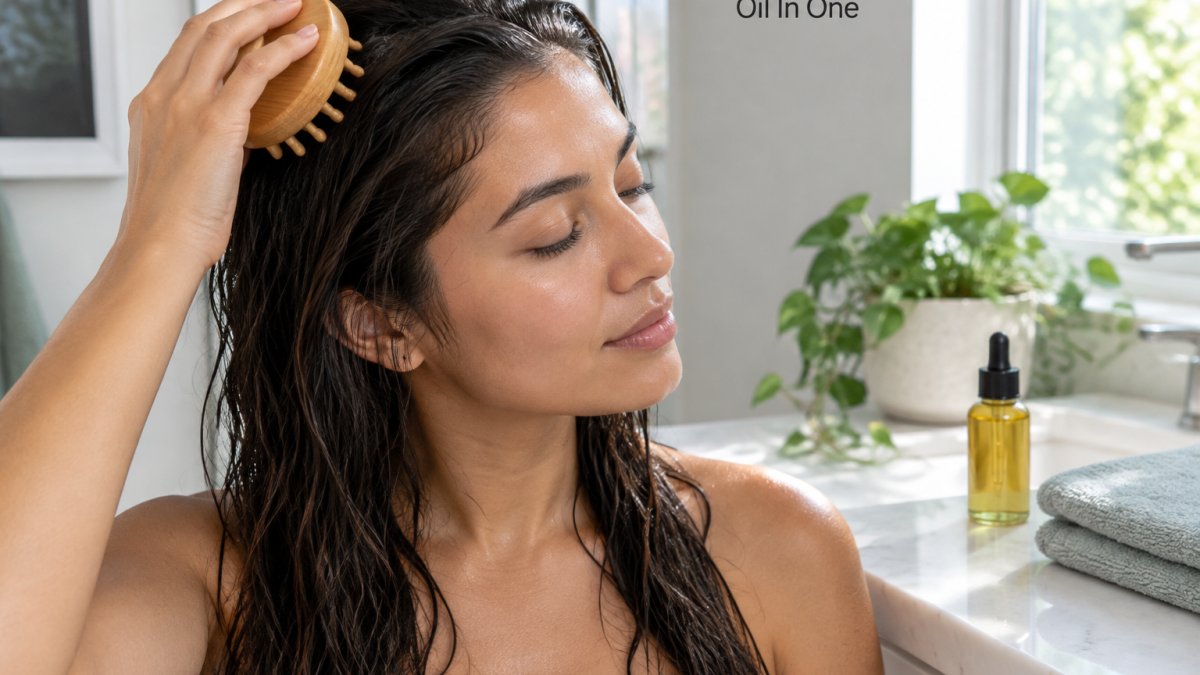
Our bamboo scalp massager suits all hair types and can be used during shampooing or an oil treatment.

The Beach-Day Order of Operations
Follow this order every time you come back from the beach:
- Remove loose sand on dry hair with a wide-tooth comb, working from ends to roots.
- Rinse with lukewarm water for a full minute to lift salt before shampoo touches the scalp.
- Detangle fully with a wide-tooth comb or your fingers. Do not massage over knots.
- Shampoo the scalp only, using fingertips, then let lather run through the ends as you rinse.
- Massage with the scalp massager on damp hair for three to five minutes.
- Condition the lengths, keep it off the scalp, and rinse cool.
This order prevents the most common post-beach mistake: massaging gritty, salty hair before the sand and salt are gone. That pushes grit across the skin and drags sand through wet strands, which is how small tangles become real knots.
Start at the Front and Work in Sections
Begin at the front of the scalp, just behind the hairline. Move slowly toward the crown, then down each side, then the back.
Split the hair into sections as you go. Thick or long hair needs smaller sections, otherwise the tool catches and pulls.
Hold the massager at a shallow angle so the bristles contact the scalp rather than raking through the hair.
Pressure, Circles and Coverage
Use light to medium pressure. Keep the movements slow.
- Front of the scalp: small circles, light pressure
- Sides: short back-and-forth strokes
- Crown: medium pressure, slow circles
Cover the whole scalp in a slow pass rather than scrubbing one spot. Firm pressure is not better. It irritates skin that has already spent hours in the sun. If you feel any stinging or heat, stop and move to a cooler area of the scalp or end the session.
Wet or Dry After the Beach?
Damp hair is the safer choice on a beach day. Dry, salty hair snaps; damp hair stretches and moves. If you prefer to massage on dry hair, do it only after the sand and salt are fully removed and the hair is combed through.
Watch out: massaging over wet sand that has not been rinsed out can grind particles into the hairline and behind the ears, where the skin is thin and easily irritated.
How Long to Use a Scalp Massager Without Overdoing It
How long to use a scalp massager comes down to three to five minutes per session. That is enough for good coverage and stimulation. Longer sessions do not add benefit and can leave the skin sore.
A simple rule set:
- Three to five minutes for a full pass over the scalp
- Once a day is plenty, and a few times a week is fine
- Stop immediately if the skin feels hot or tender
If you use a scalp oil, apply a small amount first and let the massager spread it evenly. A light, non-greasy oil washes out easily and will not weigh hair down.
Sunburned, Irritated or Tangled: When to Skip the Massager
Skip the massager when the scalp is sunburned, broken, or badly tangled. Massage can feel uncomfortable on burned skin. If the scalp is pink, hot to the touch or stinging, leave it alone for a few days.
Watch out: massaging a sunburned scalp can turn mild redness into real soreness, and the damage shows up the next morning.
How to Tell Normal Warmth From Sunburn
A scalp that feels warm after a beach day is not automatically burned. Look for these signs before you massage:
- Tenderness when you touch it lightly, a sign to wait
- Visible pink or red patches along the part line, a sign to wait
- Tightness or stinging when water hits it, a sign to wait
If the redness spreads, blisters appear, or you feel unwell, seek medical advice rather than treating it at home. A pharmacist can advise on soothing after-sun products for the scalp.
Sensitive Scalps, Curly Hair, Extensions and Fragile Hair
Beach exposure affects scalps and hair types differently. Adjust the routine rather than skipping it entirely:
- Sensitive scalps: use the lightest pressure and shorten the session to two to three minutes. Stop at the first sign of stinging.
- Curly or textured hair: detangle fully with conditioner and fingers before using the massager. Work in smaller sections and avoid pulling through coils; use the massager only on damp, conditioned hair.
- Extensions and braids: do not massage over attachment points or tight braids. Massage only the exposed scalp between rows, with very light pressure.
Tangled Hair: Detangle First, Always
Tangled hair is the other stop sign. Comb the knots out first, from the ends upward. If your hair is fragile after washing, our guide on preventing hair breakage after washing covers the detangling steps in detail.
For an irritated or itchy scalp, soothing comes before stimulation. Our walkthrough on how to soothe an itchy scalp naturally sets out the steps to calm the skin first.
When to Resume Massage
Wait until the scalp feels neutral to the touch, with no stinging when water runs over it. Most mild sun exposure settles within two to three days; deeper redness can take longer. When you restart, use a shorter session and lighter pressure for the first few days.
Cleaning Your Scalp Massager After Beach Use
Cleaning the massager after beach use is not optional. Salt, sand and sunscreen collect between the bristles, and the next massage pushes that residue back onto the scalp.
The full clean:
- Rinse under warm running water to flush out sand
- Work a drop of mild soap through the bristles
- Rinse again until the water runs clear
- Shake off excess water and air-dry fully
Do this after each beach-day session, and give it a deeper clean once a week.
Your scalp goes through a lot on a beach day, and the fix is a fixed order: clear the sand, rinse the salt, then massage with a light touch.
Frequently Asked Questions
Should I use a scalp massager before or after shampooing?
Use it during shampooing, after you have rinsed out sand and salt. Apply shampoo, then work the scalp massager in small circular motions for two to three minutes before rinsing. A dry pre-wash pass is fine for loosening surface buildup, but never massage over gritty sand because it can scratch the scalp. If you apply a scalp oil, massage it in first, then shampoo as normal.
Can I use a scalp massager on a sunburned scalp?
No. Skip the massager while the scalp is red, tender or peeling. Friction on sunburned skin can be uncomfortable. Wait until the skin feels comfortable to touch before you restart massage. If soreness lasts more than a few days, speak to a pharmacist or doctor.
How often should I use a scalp massager after swimming in the sea?
Once per wash day is enough, which for most people means every two to three days. Daily use is fine if your scalp is not irritated, but keep each session to three to five minutes. After a beach day, always remove sand first, then massage during shampooing. If your scalp feels tight or itchy, reduce to twice a week and use light pressure until it settles.
Can a scalp massager help remove sunscreen from my scalp?
Sunscreen and salt sit on the scalp and in the hairline, so massage during shampooing lifts them so the shampoo can rinse them away. Use small circular motions along the hairline and part lines, where product collects most, then rinse thoroughly. Follow with a light scalp oil if your scalp feels dry after sun exposure.
