

What Causes Hair Breakage and How to Prevent It
Editorial TeamLast Updated: November 17, 2026
Quick Summary
Hair breakage is the snapping of the hair shaft along its length, usually caused by heat styling, chemical processing, dryness, rough washing and brushing, tight hairstyles, or nutritional gaps. To prevent it, wash and detangle gently, use heat protection, seal in moisture, and trim split ends every 8 to 12 weeks.
- A shed strand has a white bulb at one end; a broken strand has a blunt or frayed end.
- Never apply heat to damp hair, because water boils inside the shaft and fractures it.
- Detangle from the ends upward, since working from the roots down is the most common cause of wet-hair breakage.
- Switch to a silk or satin pillowcase to reduce friction, the cheapest change with the fastest payoff.
- Deep condition once a week and trim split ends every 8 to 12 weeks.
Table of Contents
- Hair Breakage vs Hair Loss: How to Tell the Difference
- The Most Common Causes of Hair Breakage
- Signs of Hair Breakage You Should Not Ignore
- How Washing, Brushing and Towel Drying Cause Wear and Tear
- Best Natural Oils for Hair Strength
- Preventing Hair Breakage While Sleeping
- Building a Moisturizing Hair Routine
- A Realistic Recovery Timeline for Damaged Hair
- Start Your Scalp-First Routine with Oil In One
- Frequently Asked Questions
Hair Breakage vs Hair Loss: How to Tell the Difference
Hair breakage is the snapping of the hair shaft along its length, while hair loss happens at the root when a strand sheds from the follicle. That distinction decides everything about how you treat it. This confusion is common: people treat breakage as if it were a shedding problem, then wonder why nothing improves.
Here's a simple test. Collect the strands on your pillow or in the shower drain and look at them. A shed strand has a small white bulb at one end. A broken strand has no bulb, just a blunt or frayed end, and it's usually shorter than the rest of your hair.
That single check changes your whole plan. Breakage responds to gentler handling, moisture and protein balance. Shedding often needs a scalp and health review. If you're losing full-length strands with bulbs attached, the problem is upstream of the shaft.
The Most Common Causes of Hair Breakage
Most cases trace back to one of six culprits. Here they are:
- Heat styling without protection
- Chemical processing, including dye, bleach and relaxers
- Dryness and dehydration, worsened by hard water
- Rough washing, brushing and towel drying
- Tight hairstyles and harsh hair ties
- Nutritional gaps and stress
The pattern worth noticing: five of the six are mechanical or environmental. That means most breakage is preventable with changes you control, not genetics. But the fix is not the same for every hair type, so the sections below explain the mechanism behind each cause and who is most at risk.
Heat Styling and Heat Damage
Heat damage is cumulative, and that's what makes it sneaky. A straightener at high temperature strips moisture from the cuticle, and repeated passes can cause the cuticle scales to lift and crack. Once the outer layer is compromised, the cortex underneath loses protein and the strand snaps.
Watch out: applying heat to damp hair is a common mistake. Water boils inside the shaft and fractures it from within. Always dry fully first, use a heat protectant, and keep the tool moving. For a deeper, step-by-step guide, see how to stop hair breakage from heat damage.
Fine hair is the most heat-sensitive because it has fewer cuticle layers to lose. If your hair is fine, keep tools on the lowest effective setting and limit direct heat to once a week. Curly and coily hair can usually tolerate slightly higher heat but is more vulnerable to mechanical damage from brushing after styling, so detangle before you apply heat, not after.
Chemical Processing: Dye, Bleach and Relaxers
Chemical processing breaks bonds inside the hair shaft by design. Bleach and relaxers are the harshest, and overlapping treatments on already-processed hair is where serious damage starts. If you colour and relax, space the services apart and tell your stylist exactly what's been applied in the past year.
Breakage can appear at the point where two chemical services overlap, such as where previously relaxed hair meets new colour. If you process your hair, ask your stylist about a strand test before any new service.
Dryness, Dehydration and Hard Water
Dry hair loses elasticity, and low-elasticity hair snaps instead of stretching. Hard water adds to the problem: the minerals in it leave deposits that coat the shaft and block moisture from getting in. If your hair feels rough after washing and your taps leave chalky marks, hard water is likely part of your breakage story. Our guide to hair shedding from hard water covers the causes and solutions in detail.
Coily and curly hair is naturally drier because the shape of the follicle makes it harder for sebum to travel down the shaft. That means moisture sealing matters more for textured hair than for straight hair. A leave-in conditioner followed by a light oil is not optional for coily hair, it is the baseline.
Rough Washing, Brushing and Towel Drying
Wet hair is at its most fragile. Water swells the shaft and lifts the cuticle, so the strand stretches further and breaks more easily. Most of the mechanical damage we see happens in the ten minutes after you step out of the shower. The full low-breakage routine is covered in the washing and detangling section below.
Tight Hairstyles and Harsh Hair Ties
Traction breakage happens where tension is constant: the hairline, the temples, and the nape. Tight ponytails, braids, and buns pull on the same strands day after day, and the cuticle wears away at the point of stress. If you wear your hair up daily, rotate the position and use a silk scrunchie rather than an elastic band. Loosen the style before bed so the hairline gets a rest overnight.
Nutritional Gaps and Stress
Hair is one of the first places the body cuts resources when something is off. Iron deficiency, low vitamin D, and insufficient protein intake are the gaps most often linked to poor hair strength, but supplements should not be taken indiscriminately. If you suspect a nutritional cause, ask for a blood test rather than guessing. Stress raises cortisol, which can push more hairs into the shedding phase, that is a shedding problem, not a shaft problem, and it needs a different response.
Signs of Hair Breakage You Should Not Ignore
The clearest signs of hair breakage appear long before you notice thinner ends. Look for:
- Split ends that keep returning after trims
- Short, frizzy pieces standing up around your crown
- Strands that snap when you stretch a wet one gently
- Rough, dull texture that no conditioner fixes
- Uneven length with a "staircase" look near the ends
That last one matters. Uneven length usually means the ends are breaking off at different rates, not growing unevenly. If you spot several of these together, act now rather than waiting for visible thinning.
How Washing, Brushing and Towel Drying Cause Wear and Tear
Wet hair is at its most fragile. Water swells the shaft and lifts the cuticle, so the strand stretches further and breaks more easily. Most of the mechanical damage we see happens in the ten minutes after you step out of the shower.
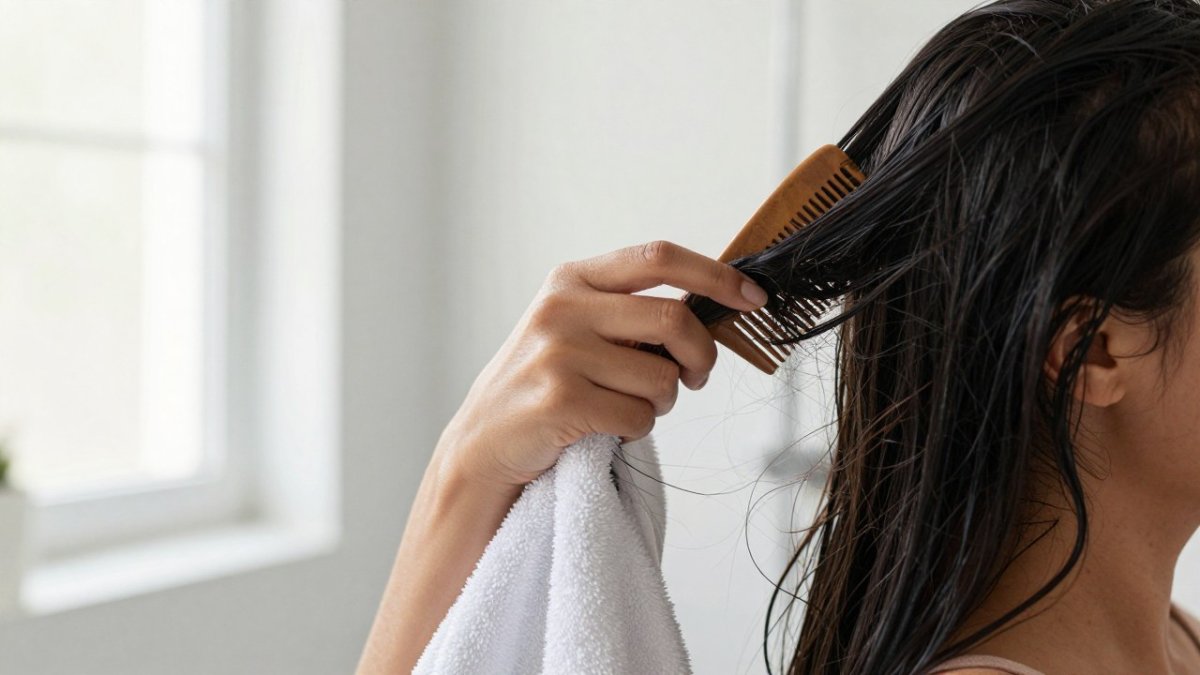
A low-breakage routine looks like this:
- Shampoo the scalp, not the lengths. Let suds rinse down the strands.
- Apply conditioner from mid-length to ends and detangle with fingers first.
- Use a wide-tooth comb on damp hair, working from ends upward.
- Skip the rough towel rub. Press and squeeze with a soft towel or cotton shirt instead.
- Never brush wet hair with a fine-tooth or bristle brush.
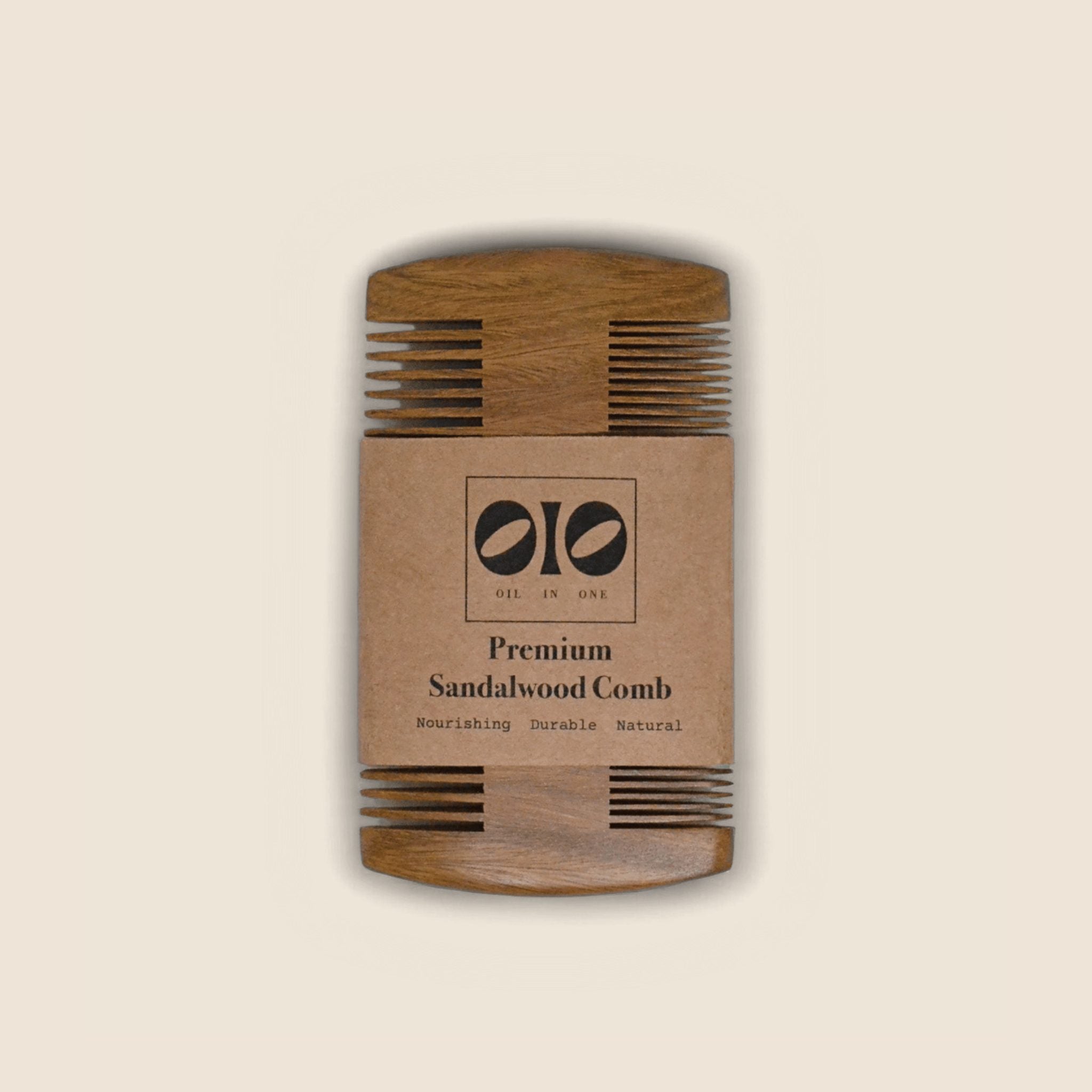
A wide-tooth wooden comb makes a real difference here because it glides rather than snags. Our sandalwood comb is built exactly for this step, with rounded teeth that detangle without pulling. For the full post-wash routine, see our guide on preventing hair breakage after washing.
Adjust the Routine to Your Hair Type
The steps above are the baseline, but the details change by texture:
- Fine hair: wash every one to two days if your scalp gets oily, use a lightweight conditioner only on the ends, and detangle with a comb rather than a brush. Fine hair breaks under weight, so avoid heavy leave-ins.
- Curly hair: detangle in the shower with conditioner still in, using fingers first and then a wide-tooth comb. Wash two to three times a week, and never brush dry curls, that is where most curly-hair breakage starts.
- Coily hair: section the hair before washing so you are not pulling through tangles, and detangle in smaller sections with conditioner. Wash less often, once a week or every ten days, and seal moisture with a leave-in and oil after every wash.
- Color-treated or chemically processed hair: reduce wash frequency to twice a week, use a sulfate-free shampoo, and add a protein treatment every four to six weeks to replace what processing removed.
Frequency and Tool Guidance
How often you wash matters less than how you wash. Washing daily with a harsh shampoo and then compensating with heavy conditioner can weigh hair down and contribute to snapping. If your scalp is oily, wash the scalp daily but condition only the ends. If your hair is dry, stretch washes to twice a week and use a co-wash in between.
For tools, a wide-tooth comb is the safest option for wet hair. A brush with flexible bristles is fine on dry hair for distributing oil, but not for detangling wet strands. Microfibre towels or a cotton t-shirt absorb water faster than a terry towel and create less friction, which matters most in the first few minutes after washing.
Watch out: detangling from the roots downward is the single most common cause of wet-hair breakage. Always start at the ends and work upward in small sections, adding more conditioner if the comb drags.
What This Routine Can and Cannot Fix
A gentler wash and detangling routine can help reduce new breakage over time. But it cannot repair strands that are already split or fractured, those need to be trimmed. The routine protects the hair you have while new growth comes in, which is why the recovery timeline later in this article separates what improves with care from what requires a trim.
Best Natural Oils for Hair Strength
Natural oils support strength in two ways: they seal moisture into the shaft and deliver fatty acids that keep hair flexible. The best natural oils for hair strength are the ones that penetrate rather than sit on top.
- Rosemary oil is widely used in scalp routines for supporting circulation at the root.
- Jojoba oil closely mimics the scalp's own sebum, so it conditions without heaviness.
- Argan oil is rich in vitamin E and smooths the cuticle.
- Castor oil is thick and best blended rather than used neat.
- Black seed and pumpkin seed oils are popular in botanical scalp blends.
The practical point most guides miss: oil works best on the scalp and mid-lengths before washing, not as a heavy leave-in. A light blend that rinses clean gives you the conditioning benefit without the weighed-down feeling.
Preventing Hair Breakage While Sleeping
Preventing hair breakage while sleeping comes down to reducing friction. Cotton pillowcases grip the hair, and the average sleeper turns dozens of times a night. Each turn creates friction against the cuticle.
Try these:
- Switch to a silk or satin pillowcase to cut friction.
- Loosely braid or twist long hair before bed.
- Skip tight topknots, which pull at the hairline overnight.
- Use a silk scrunchie instead of an elastic band.
A satin pillowcase is the single cheapest change with the fastest payoff. We'd start there before buying anything else.
Building a Moisturizing Hair Routine
A moisturizing hair routine is about layering water, conditioner and a sealing oil in the right order. Moisture is not a product you apply once; it's a cycle you repeat.
Here is the framework we recommend:
- Pre-wash: apply a few drops of oil along each parting, massage gently with fingertips, leave for 30 minutes.
- Wash: shampoo the scalp, condition the lengths, rinse with cool water.
- Post-wash: press out excess water, apply a light leave-in to the ends only.
- Weekly: deep condition once, and trim split ends every 8 to 12 weeks.
At Oil In One, our organic scalp and hair oil is designed for the pre-wash step: a few drops at the root, three times a week, then shampoo as normal. It's light enough to rinse out without leaving hair heavy.
A Realistic Recovery Timeline for Damaged Hair
Damaged hair does not repair overnight, and any product promising otherwise is overselling. The cuticle can smooth, but a broken strand stays broken until it grows out or gets trimmed.
A realistic timeline:
| Stage | What to expect |
|---|---|
| Weeks 1-4 | Less snapping during washing and brushing |
| Weeks 5-10 | Smoother texture, fewer flyaways, calmer scalp |
| Weeks 11-15 | Noticeably less shedding at the wash, stronger-feeling roots |
| Month 4 onward | New growth visible at the hairline, ends holding shape longer |
Scalp care takes weeks, not days. Give any scalp routine a full 15 weeks before judging results.
Start Your Scalp-First Routine with Oil In One
Breakage is a shaft problem with a root cause, and the root is where we start. A scalp-first routine protects new growth before it ever reaches the fragile stage.
Our organic scalp and hair oil is a blend of botanical oils chosen for a clear purpose. It's designed to be non-greasy and easy to wash out. A 50 ml bottle is AED 120.
One customer, Maryam, said she doesn't lose as much hair during showers and brushing. Another, Hajer A., said she barely gets an itchy scalp. Noor H. said the oil absorbs very well and isn't greasy.
If your hair is snapping faster than it grows, the fix starts at the root, not the ends. Oil In One makes a single, transparent scalp oil with every ingredient listed in plain language, formulated for the heat and hard water this climate throws at your hair. Apply a few drops before washing three times a week, massage gently, and give it 15 weeks. Get started with Oil In One and give your scalp the routine it has been missing.
Frequently Asked Questions
Is hair breakage the same as hair loss?
No. Hair breakage is mechanical damage along the hair shaft, so you see short snapped strands and split ends rather than a receding root. Hair loss involves the follicle itself and often shows as thinning at the part or temples. Check the shed hair: a strand with a white bulb came from the root, while one without a bulb broke off. If you notice patchy thinning or sudden shedding, see a dermatologist, because that pattern points to a medical cause rather than breakage.
How often should I use a scalp oil to prevent breakage?
Three times a week is a sensible rhythm. Apply a few drops along each parting right at the root, massage gently with fingertips or a bamboo scalp massager for a few minutes, leave it briefly, then shampoo as normal. More oil does not mean more benefit, and a light blend that rinses out cleanly keeps hair from feeling heavy. Stick with it for a full 15 weeks before judging results, since scalp and strand recovery runs in months, not days.
Can hard water and a dry scalp lead to hair breakage?
Yes. Mineral-heavy water leaves deposits on the cuticle that make strands feel rough and brittle, and a dry, tight scalp gives roots a weaker foundation. Both raise friction during washing and brushing, which is when most snapping happens. Rinse with filtered water where you can, use a gentle shampoo, and finish with a light botanical oil that seals moisture into the hair shaft. If your scalp stays itchy or flaky, treat that first, because healthy roots support stronger strands.
What are the first signs of hair breakage I should watch for?
Look for short flyaway strands around the crown, split ends that travel up the shaft, and more hair than usual on your pillow or in the shower drain. Roughness when you run fingers down a dry strand is another early signal, as is a widening part. Take a photo now and again in eight weeks under the same light so you can compare properly. Catching these signs early lets you fix heat, brushing and washing habits before the damage climbs further up the hair shaft.
