

Best Scalp Oils Without Synthetic Fragrance for Healthier Roots
Editorial TeamLast Updated: October 29, 2026
Quick Summary
The best scalp oils without synthetic fragrance are fragrance-free formulas built on gentle carrier oils like jojoba, squalane, or fractionated coconut oil, with every ingredient named on the label. Choose products labeled fragrance-free rather than unscented, since unscented oils may hide a masking fragrance. Skip essential-oil blends if your scalp is reactive.
- Fragrance-free means no added fragrance of any kind, while unscented may use a masking fragrance.
- Check labels for linalool, limonene, citronellol, geraniol, eugenol, benzyl salicylate, hexyl cinnamal, and coumarin.
- Apply oil to the scalp line only, parting hair in sections roughly 2-3 cm apart.
- Sensitive or reactive scalps should leave oil on for 15-20 minutes once per week or less.
- Patch test a small amount behind the ear for 24 hours before a full application.
Table of Contents
- Why Synthetic Fragrance Doesn't Belong on Your Scalp
- Fragrance-Free vs Unscented: What the Label Actually Means
- How to Choose Scalp Oil for Sensitive Skin
- The Best Oil for Dry Scalp: What to Look For
- How to Oil Your Scalp Without the Grease
- Essential Oils for Hair: What the Evidence Supports
- Common Mistakes That Undo a Good Scalp Oil Routine
- Building a Simple Scalp-First Routine with Oil In One
- Frequently Asked Questions
Why Synthetic Fragrance Doesn't Belong on Your Scalp
If a scented hair oil makes your scalp tingle, itch, or tighten within minutes, you have met synthetic fragrance, one of the most common reasons a scalp oil backfires, and almost invisible on the label.
Synthetic fragrance is a catch-all term for lab-made scent compounds added to make a product smell pleasant.
Your scalp is thinner than the skin on your arm, packed with hair follicles and sebaceous glands, and absorbs what you apply far more readily.
How to Spot Synthetic Fragrance on an Ingredient List
Read the full ingredient list, not the front of the bottle. "Natural," "botanical," and "herbal" are marketing words, not regulated claims.
Look for these entries:
- Fragrance, parfum, aroma - the three most common hiding places
- Linalool, limonene, citronellol, geraniol, eugenol - fragrance allergens that must be listed individually in many markets
- Benzyl salicylate, hexyl cinnamal, coumarin - more fragrance components often flagged as allergens
A genuinely transparent label names every plant oil by its common and botanical name. If a brand will not tell you what is in the bottle, that is your answer.
Fragrance-Free vs Unscented: What the Label Actually Means
Fragrance-free and unscented are not the same thing. Fragrance-free means no fragrance has been added at all, whether synthetic or natural, so the formula smells only of its raw ingredients. Unscented means the product has no noticeable smell, often achieved by adding a masking fragrance to cover the natural scent of the base oils.
That is the trap. An unscented oil can still contain fragrance ingredients. A fragrance-free oil cannot.
Here is how the two compare in practice:
| Label claim | What it means | Risk for sensitive scalps |
|---|---|---|
| Fragrance-free | No added fragrance of any kind | Lowest |
| Unscented | No detectable smell; may use masking fragrance | Can still irritate |
| Natural fragrance | Plant-derived scent compounds | Variable; essential oils can irritate |
| Perfume / parfum | Undisclosed synthetic blend | Highest |
Our advice is simple: for a reactive or eczema-prone scalp, choose products that state fragrance-free and list every ingredient. Anything vaguer is a gamble.
How to Choose Scalp Oil for Sensitive Skin
The best scalp oil for sensitive skin is a short, transparent formula built on gentle plant oils with no added fragrance. Fewer ingredients means fewer chances of a reaction.
Work through this checklist before you buy:
- The label says fragrance-free, not just unscented
- Every ingredient is named, including the botanical name of each oil
- The base is a light, non-comedogenic oil such as jojoba or fractionated coconut oil
If you want to see what a formula that meets all of these criteria looks like, our organic scalp and hair oil lists every botanical in plain language.
The Essential Oils Question: Helpful or Irritating?
Essential oils are natural, but natural does not mean harmless. Peppermint, tea tree, eucalyptus, and rosemary are common in scalp oils, and all can cause contact irritation or allergic reactions in sensitive people, especially undiluted. Tea tree oil can irritate some skin types.
That does not make them useless, they need to be properly diluted, clearly listed, and avoided altogether if your scalp is already inflamed. If you want to know which botanicals genuinely calm an itchy scalp rather than aggravate it, our guide to the best oil for itchy scalp breaks down seven options and how each one behaves.
The Best Oil for Dry Scalp: What to Look For
The best oil for dry scalp mimics the scalp's own sebum closely enough to restore moisture without clogging follicles, and lists every ingredient so you can verify it contains no synthetic fragrance.
What a dry scalp actually needs
A dry, flaky scalp usually needs three things from an oil:
- Humectant support from ingredients that help the scalp hold water
- Occlusive protection to slow moisture loss through the day
- Soothing botanicals such as moringa or amla that calm rather than stimulate
The carrier oils worth shortlisting
| Oil | Why it suits a dry scalp | Watch-outs |
|---|---|---|
| Jojoba | Structure close to human sebum; light and absorbent | Choose a fragrance-free, cold-pressed version |
| Fractionated coconut oil | Lighter than solid coconut oil; absorbs quickly; resists rancidity | Confirm it is fractionated, not whole coconut oil |
| Squalane (plant-derived) | Light, non-greasy, well tolerated by sensitive skin | Check the source and that no fragrance is added |
| Sweet almond oil | Emollient and soothing for dry patches | Avoid if you have a tree-nut allergy |
| Moringa oil | Soothing, with a long traditional use on scalp and skin | Verify the botanical name on the label |
This is a shortlist of carrier oils, not a ranking of branded products. Each can be bought as a single-ingredient, fragrance-free oil, which makes label-checking straightforward.
How to verify a product contains no synthetic fragrance
Before you buy, check three things:
- The label says fragrance-free, not just unscented. Unscented products may use a masking fragrance to cover the natural scent of the base oils.
- The full ingredient list is published. A transparent brand names every plant oil by common and botanical name. If the list is not available before purchase, treat that as a red flag.
- No fragrance allergens appear. Look for linalool, limonene, citronellol, geraniol, eugenol, benzyl salicylate, hexyl cinnamal, and coumarin. Their presence usually signals added fragrance or essential oils.
Matching the oil to your concern
If your scalp is dry and reactive, start with a single-ingredient jojoba or squalane oil and patch test before a full application. If it is dry but not reactive, a light blend of jojoba and moringa is a reasonable step up. If you also have flakes, avoid heavy occlusives until the flaking settles. For more, see our guide on how to choose hair care products for dry scalp.
How to Oil Your Scalp Without the Grease
Greasy results usually come from three mistakes: using too much oil, applying it to the hair instead of the scalp, and leaving it on too long. Fix those and even a rich oil can feel light.
How much to use
Use a small amount for a full scalp application, and far less than most people instinctively pour. More oil does not mean more benefit; it means more buildup and a harder wash-out.
Where to place it
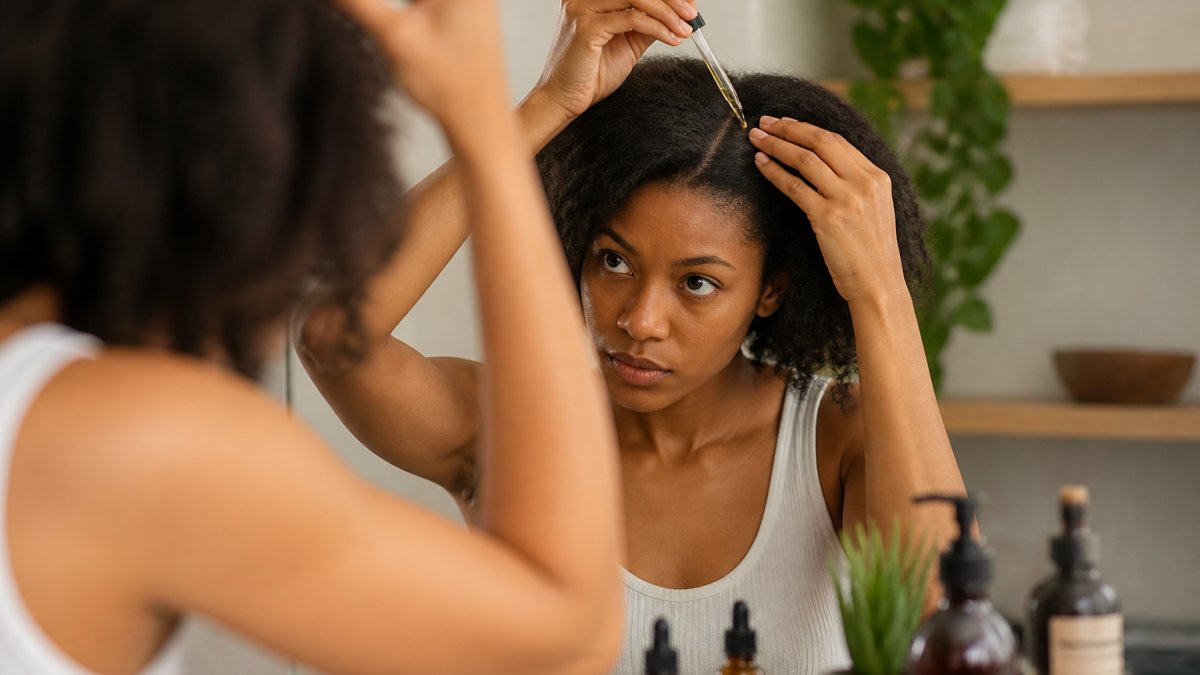
Apply to the scalp line only, not the lengths. Part the hair in sections roughly 2-3 cm apart so you can see the scalp directly, then place the dropper tip against the skin and release a few drops per section. Massage with fingertips, not nails, for one to two minutes to spread the oil and lift buildup without tugging at roots.
How long to leave it on
| Scalp type | Suggested contact time | Frequency |
|---|---|---|
| Normal | 30-60 minutes before washing | 1-2 times per week |
| Dry or flaky | 1-2 hours before washing | 1-2 times per week |
| Oily or buildup-prone | 20-30 minutes before washing | Once per week |
| Sensitive or reactive | 15-20 minutes, patch test first | Once per week or less |
Overnight application is not necessary for most people. Long contact time can increase irritation risk and make buildup worse. If you do leave oil on overnight, wash it out first thing in the morning and do not repeat it every night.
How to wash it out
Wash out thoroughly with a gentle cleanser, using lukewarm rather than hot water. Shampoo the scalp first, working the cleanser into the roots with fingertips, then let it run through the lengths as you rinse.
Adjusting for an oily or sensitive scalp
If your scalp is oily, oiling is not off the table, but it should be shorter, less frequent, and light and non-comedogenic. If your scalp is sensitive, patch test behind the ear for 24 hours, keep contact time short, and skip essential-oil blends entirely.
The non-sticky, light base matters here. As Noor H. put it, "This oil is not greasy and it absorbs very well." If you are still working out how often to oil for your goals, our guide on how often to oil scalp for hair growth covers frequency in detail.
Essential Oils for Hair: What the Evidence Supports
Essential oils are used in many hair care products, but their benefits for hair are not firmly established.
More essential oil does not mean better results. Undiluted essential oils can irritate the scalp. If you use them, dilute them in a carrier oil and patch test first.
For anyone with a sensitive or eczema-prone scalp, we would skip essential oils entirely and rely on gentle plant oils for nourishment.
Common Mistakes That Undo a Good Scalp Oil Routine
Applying oil to dirty hair. Oil on top of product buildup and sebum clogs follicles.
Leaving oil on overnight every night. Long contact time increases irritation risk and makes buildup worse.
Using fragrance-heavy oils on a reactive scalp. This is the single biggest cause of itching and flaking after oiling.
Expecting overnight growth. Scalp health is a slow build. Consistency over weeks matters more than any single application.
If you want to avoid the timing mistakes specifically, our guide on how long to leave oil in your hair covers best practices and wash-out guidance.
Building a Simple Scalp-First Routine with Oil In One
A scalp-first routine does not need to be complicated.
Our approach is deliberately simple: a light botanical oil, applied to a clean scalp, left for a set time, then washed out.
Our customers have shared their experience. "I don't lose as much hair during my showers and brushing," says Maryam, who uses our Growth Oil. Hajer A. reports, "I barely get an itchy scalp."
Frequently Asked Questions
How can I tell if a hair oil contains synthetic fragrance?
Read the ingredient list, not the front label. Synthetic fragrance usually appears as 'fragrance', 'parfum' or 'perfume', and may hide behind terms like linalool, limonene or geraniol, which are fragrance allergens. A genuinely fragrance-free scalp oil lists only carrier oils and plant butters, with no scent-related entries at all. If the smell is strong but the label says 'natural', check whether essential oils are listed, since those are natural but can still irritate sensitive skin.
Are fragrance-free scalp oils better for sensitive skin?
For most reactive scalps, yes. Fragrance is one of the most common causes of contact irritation on the scalp, and removing it reduces one variable you have to rule out. That said, fragrance-free does not automatically mean non-irritating: some carrier oils and essential oils can still cause reactions. Patch test any new scalp oil on the inner forearm for 24 to 48 hours before applying it to your scalp, especially if you have eczema-prone skin.
Can natural oils still contain fragrance allergens?
Yes. Essential oils such as tea tree, peppermint, rosemary and eucalyptus contain naturally occurring fragrance compounds, including limonene and linalool, which are regulated allergens in many markets. A product can be 100% natural and still trigger a reaction. If your scalp is sensitive, look for short ingredient lists built on carrier oils like jojoba, argan or fractionated coconut oil, and treat any essential oil as a potential irritant until you have patch tested it.
How often should I apply oil to my scalp?
For most people, once or twice a week is enough. Apply oil to the scalp, massage gently for a few minutes, and leave it on for 30 minutes to a few hours before washing out with a mild shampoo. Overnight application suits very dry scalps but can clog pores if you do it nightly. If your scalp is oily or prone to buildup, start with once a week and adjust based on how your scalp feels, not on how your hair looks.
If your scalp is itchy, flaky, or reactive and you are tired of guessing what is in the bottle, start with a formula that tells you everything. Oil In One gives you transparent, fragrance-free botanical care built for a scalp-first routine. Get started with Oil In One and give your roots the calm, nourished base they need to grow.
