

7 Steps to Clarify Hair With Shampoo Without Drying It Out
Editorial TeamLast Updated: November 6, 2026
Quick Summary
A clarify hair shampoo is a deep-cleansing shampoo that removes oil, styling product residue, silicones, waxes and mineral deposits that regular shampoo leaves behind. Use it occasionally, not daily, and follow a step-by-step wash routine to clear buildup without stripping hair completely.
- Clarifying shampoo removes oil, product residue, silicones, waxes and mineral deposits.
- Use a pre-rinse for 60 to 90 seconds to loosen surface oil and reduce shampoo needed.
- Apply shampoo to the scalp first; the ends are the oldest and driest part of hair.
- Leave on for one minute for fine or dry hair, two to three minutes for oily scalps.
- Curly hair should clarify only every two to four weeks, scalp only, followed by deep conditioner.
Table of Contents
- What Clarifying Shampoo Does and How It Works
- Signs Your Hair and Scalp Need a Clarifying Wash
- How to Use Clarifying Shampoo: A Step-by-Step Wash Routine
- How Often to Use Clarifying Shampoo for Your Hair Type
- Clarifying Shampoo for Curly Hair
- Clarifying Shampoo vs Regular Shampoo and Detox Shampoo
- Troubleshooting Dryness and Build-Up After Clarifying
- Booking Your Next Scalp-First Routine With Oil In One
- Frequently Asked Questions
What Clarifying Shampoo Does and How It Works
A clarify hair shampoo is a deep-cleansing shampoo built to strip away the oil, product residue and mineral deposits that regular shampoo leaves behind.
A clarifying shampoo uses stronger cleansing agents than a daily shampoo. These agents pull dirt, silicones, waxes and minerals off the hair shaft and scalp.
The key difference is intent. Regular shampoo keeps hair clean. Clarifying shampoo resets it. Used correctly, it removes buildup without stripping the hair completely.
- Removes: oil, styling product, silicones, waxes and mineral residue
- Leaves behind: a clean base that conditioner and oils can work on
- Best used: occasionally, not daily
Signs Your Hair and Scalp Need a Clarifying Wash
Your hair and scalp usually give clear signals when buildup is building. Watch for these:
- Hair looks greasy within a day of washing
- Styling products stop working or leave a crunchy finish
- Scalp feels itchy or coated, even after a normal wash
Watch out: if your scalp is flaking and itchy, buildup may not be the only cause. Dryness and irritation can look similar.
How to Use Clarifying Shampoo: A Step-by-Step Wash Routine
Most guides give one fixed routine for a clarify hair shampoo. Hair length, density and buildup level change how much shampoo you need, where you apply it and how long you leave it on.
- Pre-rinse for 60 to 90 seconds. Stand under warm, not hot, water and work your fingers through the scalp until the hair is fully saturated. A thorough pre-rinse loosens surface oil and means you need less shampoo. For dense or long hair, section the hair into four parts before wetting so water reaches the scalp.
- Measure by hair length, not by habit. Short hair needs about a 5-dirham-coin-sized amount; shoulder-length hair needs roughly double that; hair past the shoulders needs a portion about the size of a AED 1 coin. Very dense hair may need a second small application on the crown and nape only.
- Apply to the scalp first, in sections. Dab the shampoo along the part lines and massage with fingertips, not nails, for 30 to 60 seconds per section. The scalp holds most of the oil and residue, so it gets the majority of the product and the friction.
- Dilute for heavy buildup or sensitive scalps. If your scalp stings easily or you have not clarified in over a month, mix the shampoo with an equal amount of water in your palm before applying. This slows the cleansers down and spreads them more evenly.
- Carry the lather down the lengths only on the final pass. Squeeze the suds through the mid-lengths and ends for 10 to 15 seconds. Do not scrub the ends, they are the oldest, driest part of the hair and the least in need of strong cleansers.
- Leave on for one to three minutes, capped. One minute suits fine or dry hair; two to three minutes suits oily scalps or heavy product users. Leaving it on longer does not remove more buildup and raises the risk of a tight, itchy scalp.
- Rinse until the water runs completely clear, then 15 seconds more. Residue from the shampoo itself is a common cause of dullness after clarifying. Tilt your head back and run your fingers along the scalp line to check for slick patches.
- Condition the lengths and ends only. Apply conditioner from the ears down, keep it off the roots, and leave it on for the time stated on the label. For very dry or curly hair, use a deep conditioner instead of a daily one.
- Finish with cool water for 20 to 30 seconds. Cool water helps smooth the cuticle and reduces the rough feel that follows a strong wash.
- Add a light scalp oil only if the scalp feels tight after drying. A few drops massaged into the scalp, not the lengths, is enough. Applying oil before clarifying defeats the purpose of the wash.
Adjustments by hair profile:

- Fine or thin hair: Use the smaller amount, skip the second application, and keep the leave-on time to one minute. Fine hair coats quickly, so over-application is the usual mistake.
- Thick or dense hair: Section first, use the larger amount, and expect to spend two to three minutes just on application and massage.
- Long hair (past the shoulders): Apply in two rounds, scalp first, then a small amount squeezed through the mid-lengths, and rinse longer than feels necessary.
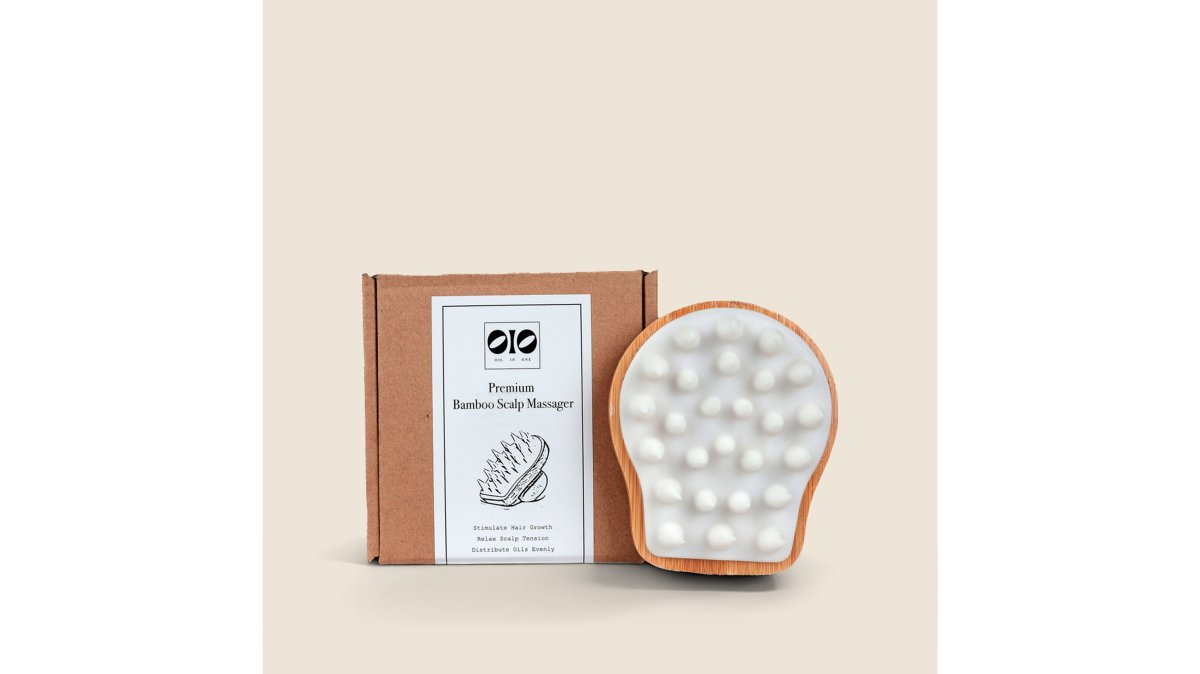
Pairing this routine with the Oil In One Bamboo Scalp Massager (AED 60.00) can help distribute the cleanser during the massage. Use the massager on the scalp for three to five minutes. Shop the Bamboo Scalp Massager.
!Close-up of hands massaging shampoo into wet hair at a bathroom sink with a bamboo scalp massager on the counter
How Often to Use Clarifying Shampoo for Your Hair Type
A fixed schedule is the wrong tool. The right frequency depends on four observable inputs: how often you wash, how much styling product you use, how oily your scalp gets, and how your hair behaves in the 48 hours after a clarifying wash.
Question 1: How often do you wash?
- Daily or every other day: start at once every two weeks.
- Two to three times a week: start at once every 10 to 14 days.
- Once a week or less: start at once every three to four weeks, since each wash is already doing more cleansing work.
Question 2: How much styling product do you use?
- None or a light leave-in only: add nothing to the baseline.
- Gel, mousse, cream or serum most days: shorten the interval by about three to four days.
- Heavy pomade, wax, dry shampoo or oil-based stylers several times a week: start at weekly and reassess after two washes.
Question 3: How oily does your scalp get?
- Scalp looks greasy within 24 hours of washing: weekly is a reasonable start.
- Scalp is oily by day two or three: every 10 to 14 days.
- Scalp is normal to dry: every two to four weeks, and never on consecutive weeks.
Question 4: How does your hair respond after washing?
- Soft, bouncy and easy to style for three or more days: the interval is working, keep it.
- Dry, tangled or straw-like within a day: stretch the interval by a week and add a deep conditioner.
- Buildup returns within two to three days: shorten the interval by three to four days, but check whether your daily products are the real cause before clarifying more.
Starting points by hair type:
- Oily scalp, fine hair: every 7 to 10 days.
- Normal scalp, medium hair: every 10 to 14 days.
- Dry scalp or dry ends: every two to three weeks, with a moisturizing mask after each wash.
A simple tracking method: Note the date of each clarifying wash and one sentence on how your hair felt on days one, two and three afterward. After three or four cycles, the pattern tells you more than any general rule. If two consecutive washes leave the hair dry, you are clarifying too often; if buildup returns before day three both times, you are clarifying too rarely or your daily products are too heavy.
Following a clarifying wash with a moisturizing conditioner can help keep hair from feeling stripped. Read our guide on how often to oil your scalp to plan your routine around both steps.
Clarifying Shampoo for Curly Hair
Curly hair needs extra care with clarifying shampoo. Curls are naturally drier because oil travels down the twisted strand more slowly.
For curly hair, use clarifying shampoo sparingly, about once every two to four weeks. Apply it to the scalp only, and follow with a deep conditioner on the curls.
A cleansing bar can also suit curly hair in some cases. Compare a curly hair cleansing bar and shampoo to see which fits your curls.
- Use clarifying shampoo on the scalp, not the curls
- Follow with a rich conditioner every time
- Never clarify on consecutive weeks without checking dryness
Clarifying Shampoo vs Regular Shampoo and Detox Shampoo
Clarifying shampoo, regular shampoo and detox shampoo overlap, but they are not the same.
| Product | Main purpose | Strength | Best for | How often |
|---|---|---|---|---|
| Regular shampoo | Daily cleansing | Gentle | Most hair types | Daily or every other day |
| Clarifying shampoo | Remove buildup | Strong | Oily hair, heavy product use | Every 1-2 weeks |
| Detox shampoo | Draw out impurities | Varies | Scalp feeling heavy or congested | As directed |
Pros of clarifying shampoo:
- Removes buildup that regular shampoo misses
- Restores softness and bounce to hair
- Helps conditioners and oils work better
Cons of clarifying shampoo:
- Can dry out hair if overused
- Not suited for daily use
- May feel harsh on color-treated hair
Pros of detox shampoo:
- Often targets scalp congestion
- Can feel refreshing
Cons of detox shampoo:
- Claims vary widely between products
- Results are harder to judge
For most people, clarifying shampoo is the right tool for buildup. Detox shampoo is more of a scalp-focused product. Learn how to choose the right shampoo for hair growth and scalp health if you are deciding between them.
Troubleshooting Dryness and Build-Up After Clarifying
Sometimes a clarifying wash backfires. Hair may feel straw-like, scalp may itch, or buildup may return fast. Here is how to fix common problems:
- Hair feels dry or straw-like: Skip clarifying for two to three weeks. Use a deep conditioner once a week.
- Scalp feels tight or flaky: Switch to a gentler cleanser and reduce wash frequency. A light scalp oil after drying can help.
- Buildup returns within days: Check your product use. Lighter products or less frequent styling may be the answer.
If dryness or flaking lasts more than a few weeks, see how to choose hair care products for a dry scalp. Persistent symptoms are worth a conversation with a doctor or dermatologist.
Booking Your Next Scalp-First Routine With Oil In One
A clarifying wash works best as part of a complete scalp routine, not a one-off fix. Start with a clarifying wash every one to two weeks, follow with conditioner, and use a light oil between washes if your scalp feels dry. Adjust based on how your hair responds.
Frequently Asked Questions
What does clarifying shampoo do?
Clarifying shampoo uses stronger cleansing agents to remove product residue, oil, dirt and mineral deposits that regular shampoo can leave behind. Hard water, which is common across the UAE, is a frequent source of mineral build-up on the scalp and strands. A clarifying wash helps hair feel lighter, look fresher and respond better to conditioning and styling. It is a periodic reset rather than an everyday shampoo, so using it too often can leave hair and scalp feeling dry.
How do you clarify your hair with shampoo?
Wet your hair thoroughly with warm water, then apply clarifying shampoo to the scalp and work it into a lather with your fingertips. Rinse fully, then repeat once if you notice heavy product build-up. Follow with a light conditioner on the lengths and ends only, since clarifying shampoo strips moisture. Keep the wash brief, and avoid scrubbing hard at the scalp, which can irritate sensitive skin.
How often should you use clarifying shampoo?
Most people do well with a clarifying wash once every one to four weeks, depending on how much product they use and how often they swim or sweat. Watch for observable signs such as dull hair, a limp root area, or products that stop absorbing, and adjust from there. People with dry, coloured or textured hair should stay at the lower end of that range.
Should you condition your hair after using clarifying shampoo?
Yes, condition after clarifying, but apply it selectively. Focus the conditioner on mid-lengths and ends, where hair is most prone to dryness, and keep it off the scalp so roots stay light. Leave it on for a minute or two, then rinse with cool water to help the cuticle lie flat. If hair still feels rough, a lightweight botanical oil on the ends can restore softness without weighing hair down.
